
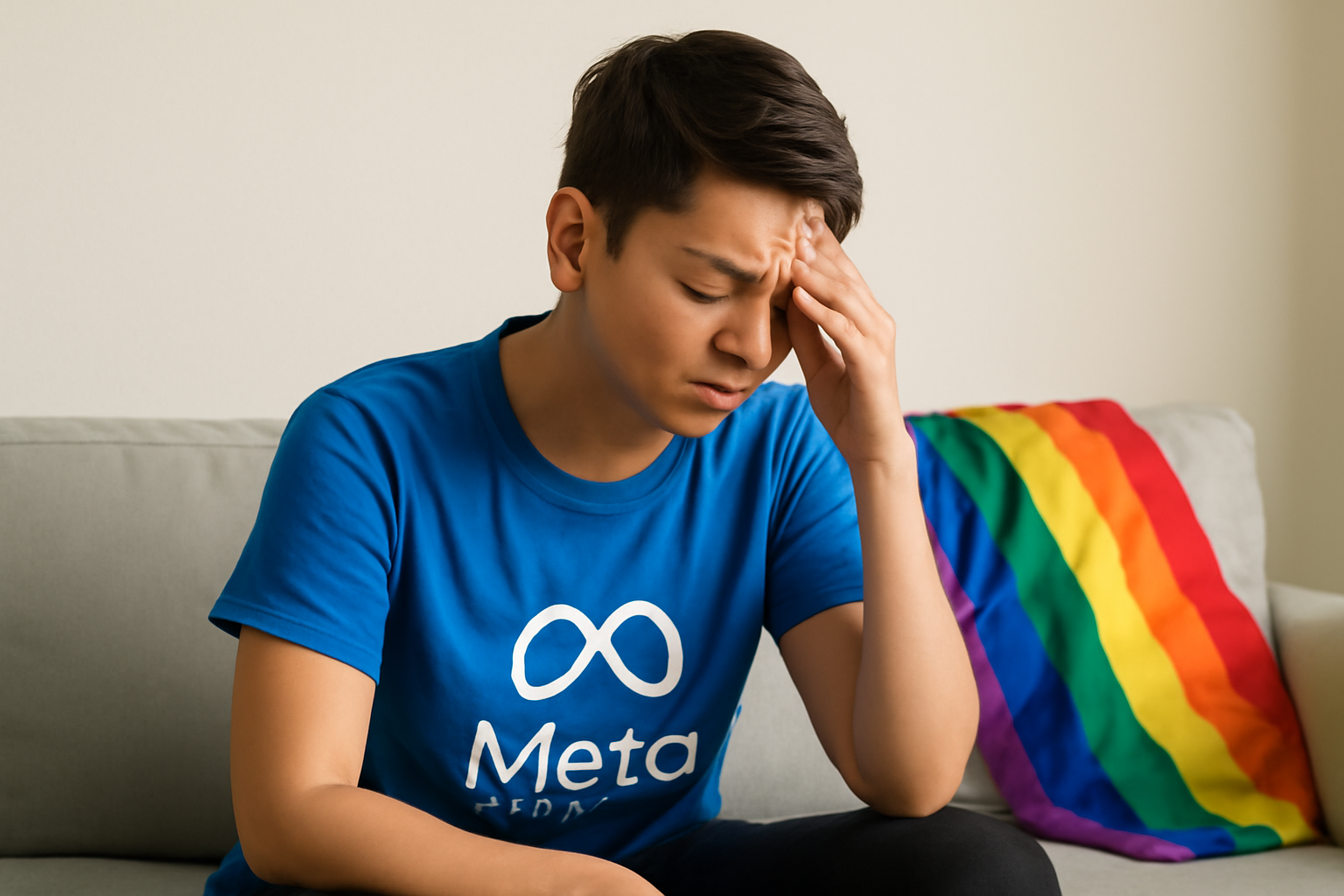
LGBTQ+ employees at Meta are reportedly expressing concerns about their mental health and are taking time off work following a controversial change in the company's hate speech policy.
Meta, led by CEO Mark Zuckerberg, recently revised its content policies, which has caused significant unrest among its LGBTQ+ workforce. The new guidelines allow users to make comments suggesting that LGBTQ+ individuals are "mentally ill" due to their sexual orientation or gender identity. This decision has been met with backlash and has led many employees to take a stand in protest.
On January 7th, Zuckerberg announced several changes to Meta's content policy, including the removal of independent fact checkers and content moderation. These changes mean that statements labeling LGBTQ+ individuals as having mental health issues can now be posted without challenge or removal. The policy revision has been described as a move to "restore free expression" on Meta's platforms, which include Facebook, Instagram, and Threads.
The decision to allow such comments has not only sparked outrage but has also had a notable impact on the mental well-being of LGBTQ+ employees at the company. Reports indicate that some staff members are taking leave to focus on their mental health in response to the policy shift.
Employee Reactions
According to internal communications from Meta, some employees have openly stated their dissatisfaction with the new policy. One employee wrote on the company's internal platform, Workplace, "I am LGBT and mentally ill. Just to let you know that I’ll be taking time out to look after my mental health." This sentiment reflects a broader concern among the workforce about the potential implications of the policy change.
The co-chair of Meta's Oversight Board, Helle Thorning-Schmidt, has expressed significant concern over the decision to eliminate independent moderation. In an interview, she highlighted the risks posed to minority groups, particularly in terms of potential real-world harm resulting from unchecked hate speech.
"We’re very concerned about gender rights, LGBTQ+ rights, and the rights of transgender people on the platforms. We have seen many instances where hate speech translates into real-life violence and discrimination, so we will be observing the developments on these platforms very carefully," Thorning-Schmidt stated.
Broader Implications
The policy change at Meta has wider implications beyond the immediate effects on its employees. Critics have noted that the timing of these changes coincides with significant political developments, such as the return of Donald Trump to the White House. Some speculate that the policy revisions are a response to political pressures, aiming to align with broader narratives around "free speech."
However, this shift has been met with widespread criticism from advocacy groups and users who fear it will lead to an increase in hate speech against vulnerable communities. The removal of fact-checking processes and moderation tools may create an environment where misinformation and harmful rhetoric can flourish unchecked.
Looking Forward
As Meta continues to navigate the backlash from its policy changes, the concerns raised by its LGBTQ+ employees and advocates remain at the forefront of discussions. The company faces the challenge of balancing its commitment to free expression with the need to protect its users from harmful content.
While Zuckerberg has emphasized a desire to return to the company's "roots" by simplifying policies, the complexities of moderating a global platform with billions of users require careful consideration and a nuanced approach.
The ongoing situation at Meta highlights the broader conversation about the responsibilities of tech companies in shaping online discourse and protecting marginalized communities. As the dialogue continues, stakeholders both inside and outside the company are advocating for policies that prioritize inclusivity and safety.
Ultimately, the future of Meta's content policies remains uncertain, and the company will need to address the concerns of its employees and users to maintain its reputation and integrity.
Conclusion
The recent changes to Meta's hate speech policy have had a profound impact on its LGBTQ+ employees, who are taking steps to safeguard their mental health in light of the controversial revisions. As Meta navigates the resulting backlash, the need for effective content moderation and protection for marginalized groups remains a critical issue. The company's actions in the coming months will be closely watched by both its workforce and the broader public.
Related Posts
Supreme Court to Address State Bans on Trans Women in Female Sports
The upcoming U.S. Supreme Court term promises to be a pivotal moment for transgender rights, as the nation's highest court has agreed to evaluate whether states have the authority to prohibit transgender women from participating in female sports competitions. This case, scheduled to be argued in the next term beginning October, is expected to have a significant impact on the future of sports inclu [...]
Megan Rapinoe and Sue Bird Announce Amicable Separation After Ten Years Together
In a heartfelt announcement that resonated deeply within the sports and LGBTQ+ communities, soccer star Megan Rapinoe and basketball legend Sue Bird have revealed their decision to part ways after nearly a decade together. The couple, who have been icons both on and off the field, shared the news with their fans through a joint statement on social media, expressing that the choice was made with mu [...]
Groundbreaking Ruling Ends Sodomy Ban for Police and Military in the Dominican Republic
The Constitutional Court of the Dominican Republic recently delivered a landmark decision on November 18th, ruling that the nation’s police and armed forces are not permitted to criminalize consensual same-sex relations among their personnel. This pivotal ruling is a significant stride towards equality and the protection of LGBTQ+ rights within these institutions. A Resounding Victory for Equal [...]