
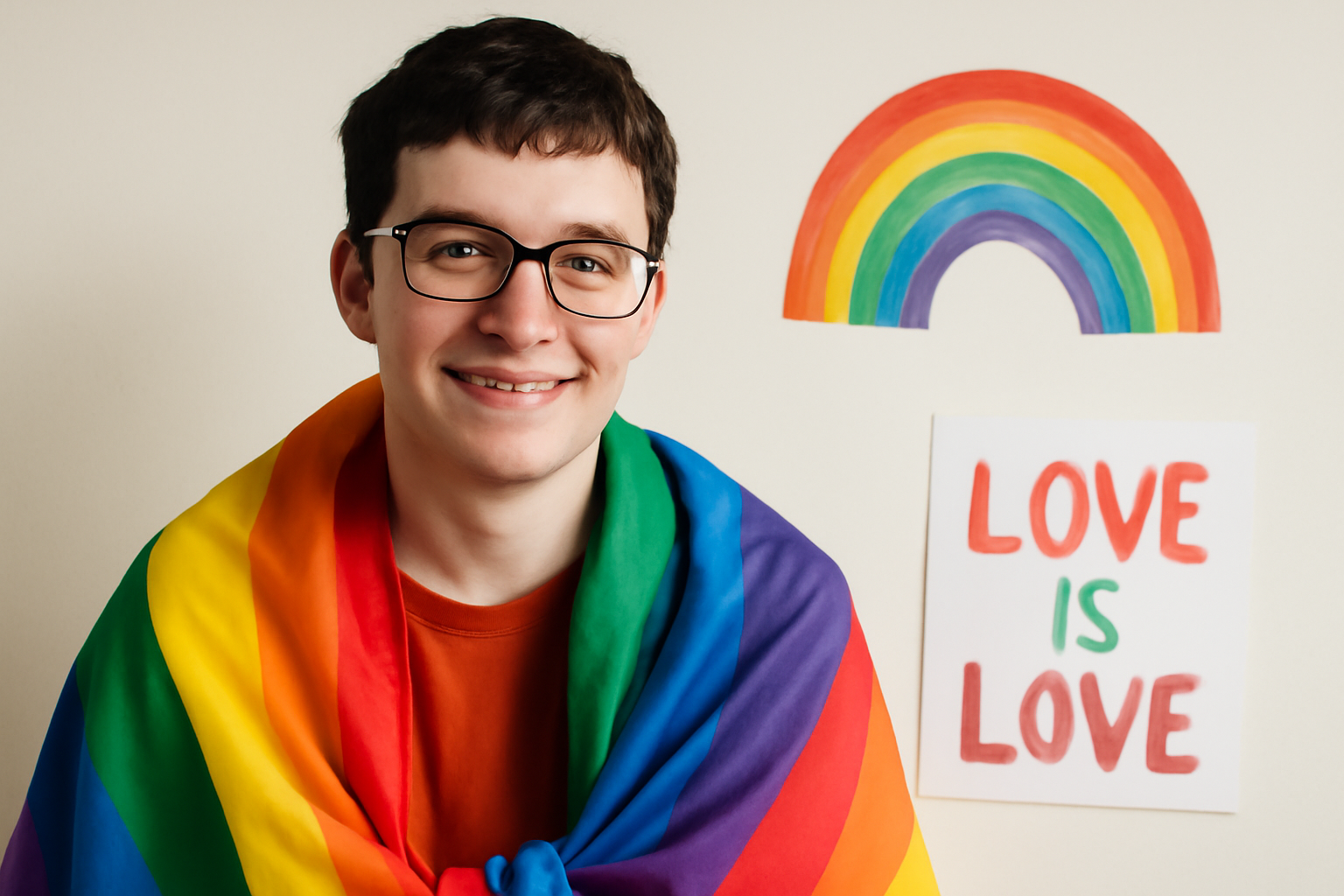
Over the past decade, I have been dedicated to a project that evolved into the “Autistic Initiative for Civil Rights,” the pioneering self-advocacy group for autistic individuals in Russia and Ukraine. Created by autistic people for autistic people, this initiative emerged in regions where misconceptions about autism were rampant, often being confused with schizophrenia or dismissed as a child's only condition. The notion seemed radical, particularly as I championed a neurodiversity paradigm: the belief that the variety of human minds is natural and normal. The challenges faced by autistic individuals stem more from societal discrimination and stereotypes than autism itself. For me, being autistic is as integral to my identity as being transgender. Autistic individuals need support, not a cure.
It's unsurprising that our early allies were LGBTQ organizations, as they understood the pain of being labeled as unhealthy or broken due to societal prejudices.
There exists a profound connection between the autistic and LGBTQ communities. Research indicates that individuals who do not identify with their assigned birth gender are three to six times more likely to be autistic. Additionally, the prevalence of lesbian, gay, and bisexual identities is two to three times higher among the autistic population.
Communicating this intersectionality, I began writing in Russian, creating digital platforms dedicated to LGBTQ autistic narratives since Russian is the most widely spoken language in the post-Soviet space. Despite my disdain for Russian politics, my goal was a broader reach.
I translated numerous compelling personal stories of LGBTQ autistic individuals from English into Russian, with most narratives originating from the United States. Historically, autistic communities globally have looked to the American autistic movement as a beacon, given the wealth of disability rights activism originating there.
As a young teenager discovering my own autism, I was inspired by news such as the appointment of Ari Ne’eman, the first openly autistic nominee to the U.S. National Council on Disability by President Obama in 2009. At a time when Russian and Ukrainian resources were scarce and often portrayed a bleak future for people like me, American activists challenged these misconceptions.
American autistic and LGBTQ activists have been foundational for those like me, providing much-needed hope and guidance.
However, recent developments in the United States pose a significant threat not only to American autistic communities but globally. The current U.S. administration's stance, particularly under figures like Robert F. Kennedy at the Department of Health and Human Services, perpetuates damaging myths, such as the discredited linkage of autism to vaccines—a stereotype prevalent in Russia, complicating efforts to promote vaccination and prevent disease.
Moreover, the administration's executive orders, including the creation of a commission to ostensibly reduce the prevalence of autism, misconstrue the situation as a crisis. In truth, the perceived increase in autism diagnoses is due to improved awareness and diagnostic methods, not an "epidemic." Autistic individuals are not a threat to any economy or security.
In consultation with Sam Crane, a seasoned autistic disability policy expert, it becomes clear that the administration's rhetoric undermines years of advocacy aimed at removing the stigma of autism as a health crisis.
We need robust access to healthcare, community-based supports, education, and civil rights, all of which are under threat. The cessation of funding for quality-of-life research, particularly by and for autistic individuals, disproportionately affects marginalized groups, including autistic people of color and LGBTQ individuals.
The current political climate in the U.S. endangers both autistic and LGBTQ communities—especially those who are transgender—by treating them as issues to be resolved rather than people deserving of rights and recognition.
LGBTQ autistic people, due to systemic barriers, may suffer most acutely, facing compounded discrimination and potentially having less support from broader LGBTQ communities.
The visibility and influence of American activist groups means these stereotypes, once confined, now cross borders as quickly as the advocacy movements themselves.
Global initiatives, once supported by programs such as USAID, which assisted disabled and LGBTQ individuals, are now compromised.
In this landscape, during Autism Acceptance Month in April, it is crucial for autistic activists, particularly those within the LGBTQ community, to reclaim their narratives. Our stories must be told by us, not through the lens of a flawed system. The support of the wider LGBTQ community is vital in this pivotal moment. The question remains: will the LGBTQ community stand alongside us in this critical fight for visibility and rights?
Related Posts
Supreme Court to Address State Bans on Trans Women in Female Sports
The upcoming U.S. Supreme Court term promises to be a pivotal moment for transgender rights, as the nation's highest court has agreed to evaluate whether states have the authority to prohibit transgender women from participating in female sports competitions. This case, scheduled to be argued in the next term beginning October, is expected to have a significant impact on the future of sports inclu [...]
Megan Rapinoe and Sue Bird Announce Amicable Separation After Ten Years Together
In a heartfelt announcement that resonated deeply within the sports and LGBTQ+ communities, soccer star Megan Rapinoe and basketball legend Sue Bird have revealed their decision to part ways after nearly a decade together. The couple, who have been icons both on and off the field, shared the news with their fans through a joint statement on social media, expressing that the choice was made with mu [...]
Groundbreaking Ruling Ends Sodomy Ban for Police and Military in the Dominican Republic
The Constitutional Court of the Dominican Republic recently delivered a landmark decision on November 18th, ruling that the nation’s police and armed forces are not permitted to criminalize consensual same-sex relations among their personnel. This pivotal ruling is a significant stride towards equality and the protection of LGBTQ+ rights within these institutions. A Resounding Victory for Equal [...]