
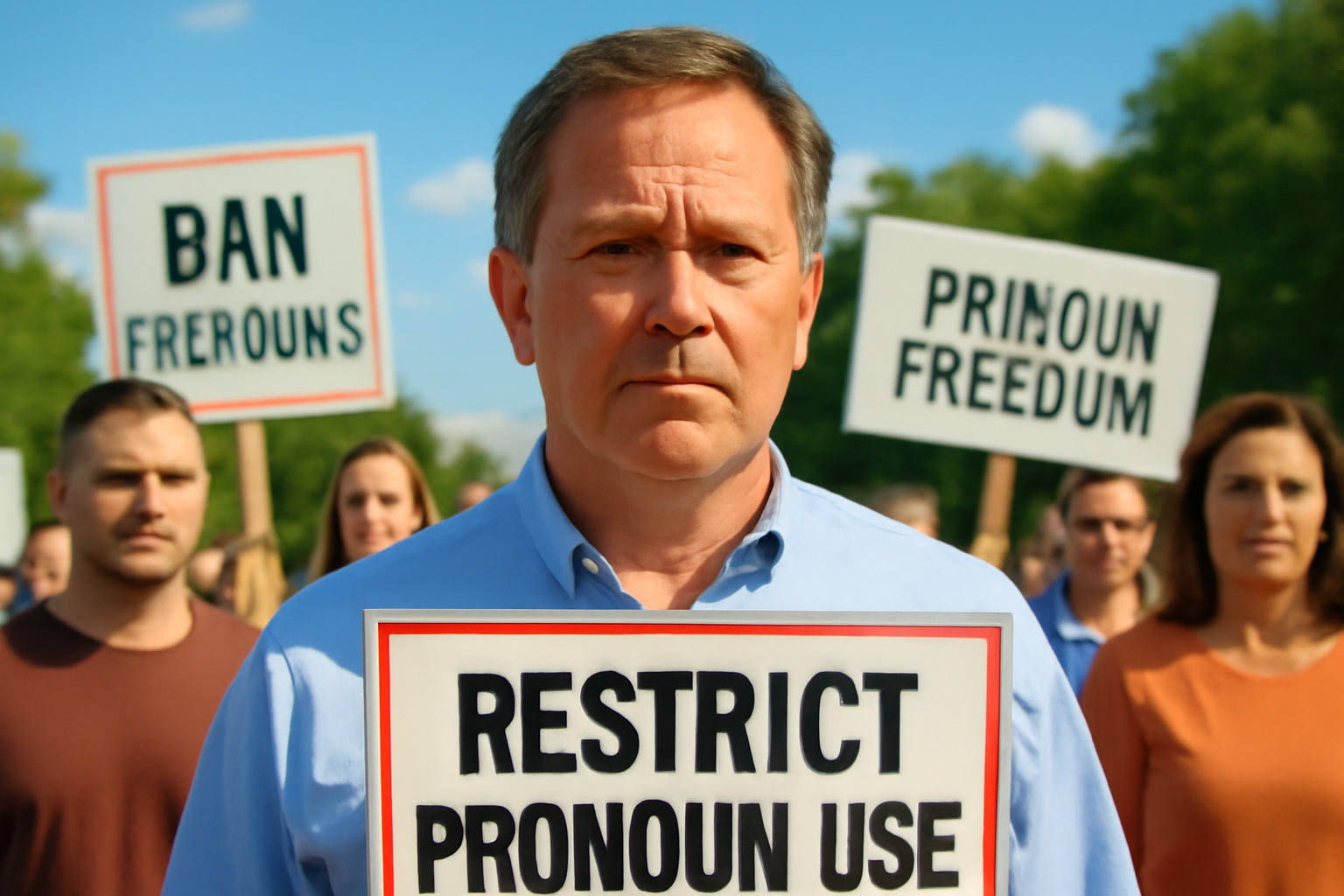
In recent developments, advocacy groups in Florida are pushing state lawmakers to consider expanding current legislation that restricts the use of preferred pronouns in educational settings. These groups are now calling for additional measures that would apply these restrictions to local government entities, including city and county administrations.
Currently, Florida's legislation limits how pronouns can be used in schools, aiming to enforce the use of pronouns that align with a person's biological sex as recorded at birth. However, these advocacy groups argue that the existing laws do not go far enough and that extending these restrictions to broader governmental contexts would ensure a more uniform approach across the state.
Arguments for Expansion
Proponents of the expanded legislation argue that the use of preferred pronouns complicates communication and administration within public institutions. They claim that allowing individuals to choose pronouns based on gender identity rather than biological sex introduces unnecessary complexity and potential for confusion in official communications and records.
These groups suggest that by standardizing pronoun usage across all public sectors, including municipal and county offices, the state can maintain consistency and avoid misinterpretations or legal challenges. They believe that such measures would reinforce the state's commitment to traditional values and norms.
Opposition to the Proposed Measures
On the other hand, many LGBTQ+ advocates and allies strongly oppose these proposed expansions. They argue that such measures infringe upon the rights and identities of transgender and non-binary individuals, effectively erasing their identities and experiences. Supporters of gender diversity emphasize the importance of respecting individuals' chosen pronouns as a matter of dignity and recognition of their identity.
Critics of the legislation fear that broadening pronoun restrictions could lead to increased discrimination and marginalization of LGBTQ+ communities, particularly in rural and conservative areas where acceptance may already be limited. They argue that respecting gender identity through the acknowledgment of preferred pronouns can foster inclusivity and understanding in public spaces.
Impact on Local Governments
If the legislation is expanded, local government entities across Florida would be required to adhere to these guidelines, significantly impacting how they interact with the public and manage their internal operations. City and county officials would need to revise their communication protocols and training procedures to align with the new regulations.
Implementation challenges, such as retraining staff and updating official documents, are anticipated if these changes take effect. Local governments might face logistical and financial burdens associated with adapting to the new rules, which may include revising forms, signage, and public-facing materials to comply with state mandates.
Public Reaction and Debate
The proposal has sparked widespread debate across Florida, with strong opinions on both sides. Public forums and discussions have been held, highlighting the deep divisions within communities regarding gender identity and the role of government in regulating language.
Some residents support the idea of a standardized approach, citing clarity and uniformity. However, many others argue that such measures infringe upon personal freedoms and individual rights, advocating instead for policies that promote acceptance and diversity.
As the debate continues, legislators are expected to carefully consider the implications of their decisions. The outcome of this legislative proposal could set a precedent for other states grappling with similar issues, potentially influencing national discussions on gender identity and rights.
Ultimately, the decision will reflect broader societal attitudes towards gender and identity in Florida. As the state navigates these complex and often contentious issues, the voices and experiences of its diverse communities will play a critical role in shaping the future of its policies.
Related Posts
Supreme Court to Address State Bans on Trans Women in Female Sports
The upcoming U.S. Supreme Court term promises to be a pivotal moment for transgender rights, as the nation's highest court has agreed to evaluate whether states have the authority to prohibit transgender women from participating in female sports competitions. This case, scheduled to be argued in the next term beginning October, is expected to have a significant impact on the future of sports inclu [...]
Megan Rapinoe and Sue Bird Announce Amicable Separation After Ten Years Together
In a heartfelt announcement that resonated deeply within the sports and LGBTQ+ communities, soccer star Megan Rapinoe and basketball legend Sue Bird have revealed their decision to part ways after nearly a decade together. The couple, who have been icons both on and off the field, shared the news with their fans through a joint statement on social media, expressing that the choice was made with mu [...]
Groundbreaking Ruling Ends Sodomy Ban for Police and Military in the Dominican Republic
The Constitutional Court of the Dominican Republic recently delivered a landmark decision on November 18th, ruling that the nation’s police and armed forces are not permitted to criminalize consensual same-sex relations among their personnel. This pivotal ruling is a significant stride towards equality and the protection of LGBTQ+ rights within these institutions. A Resounding Victory for Equal [...]