
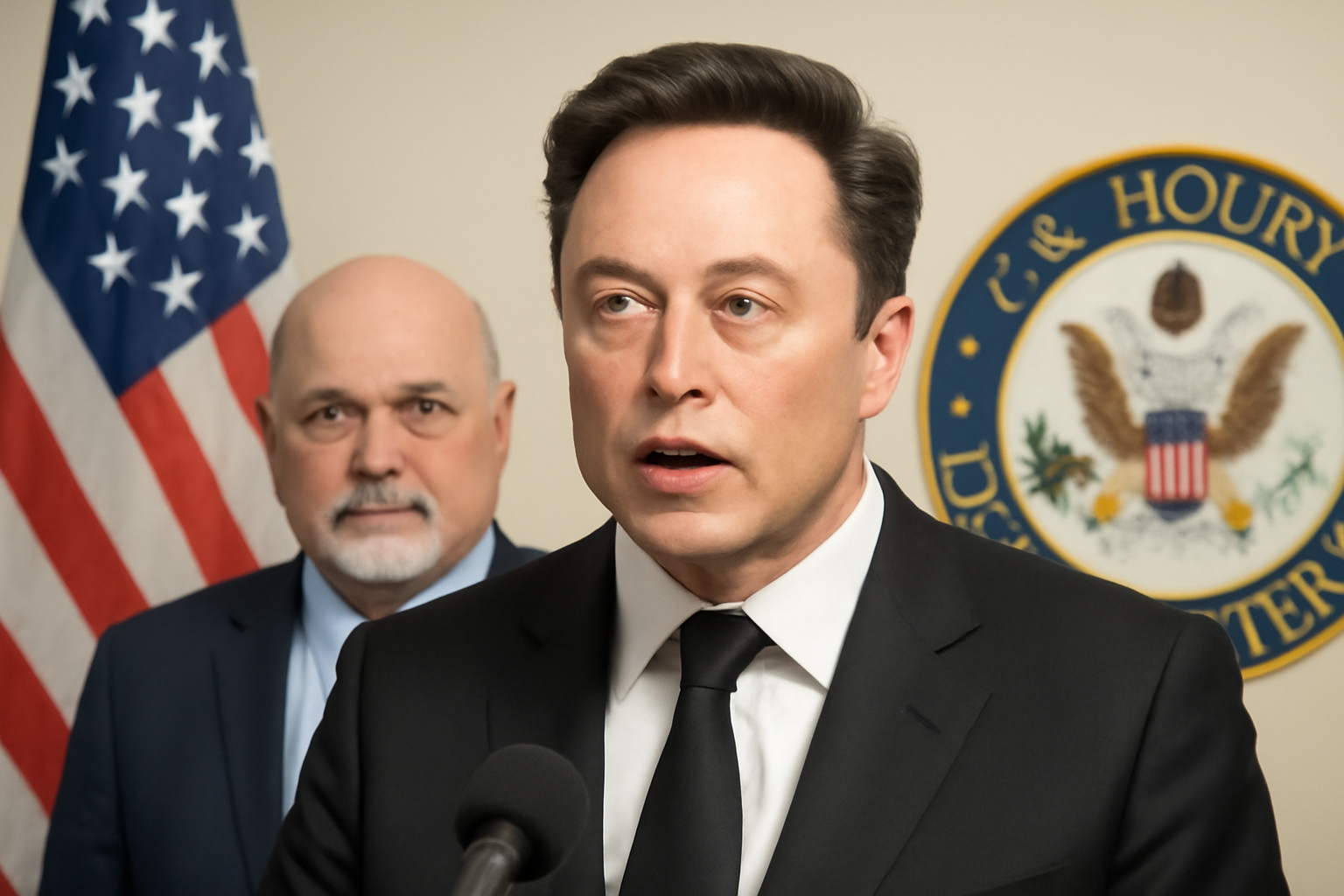
Representative Mark Pocan (D-WI) has put forward a provocative piece of legislation aimed at curbing the unprecedented influence of billionaire Elon Musk over U.S. government operations. The bill, humorously dubbed the Eliminate Looting of Our Nation by Mitigating Unethical State Kleptocracy (ELON MUSK) Act, seeks to address the concerns over Musk’s alleged inappropriate involvement in governmental affairs.
Unchecked Influence
Musk, the outspoken CEO of the social media platform X and aerospace company SpaceX, has accumulated an estimated $20 billion in U.S. government contracts. Critics argue that his growing influence within the government presents a clear attempt to bypass conventional democratic processes and impose policies that align with his personal and political interests.
One of the most controversial aspects of Musk's involvement is his control over the Treasury’s payment system, a crucial mechanism for disbursing federal funds such as Social Security and tax refunds. This move has raised alarms about potential breaches in governance and accountability.
Constitutional Concerns
Senator Chris Murphy (D-CT) has voiced concerns that Musk's actions have precipitated a constitutional crisis, particularly in light of Musk’s opposition to USAID. USAID is responsible for international aid, including critical HIV/AIDS prevention and treatment programs. Musk’s stance, reportedly supported by former President Trump, threatens to dismantle these initiatives.
Musk's shift from a private citizen to a 'special government employee' without pay—a role that sidesteps the financial disclosure requirements faced by traditional federal employees—has further fueled controversy. This designation ostensibly allows him to exert influence without the transparency that typically accompanies public service roles.
The ELON MUSK Act
Pocan’s proposed legislation aims to enforce a stricter separation between business interests and government functions. Specifically, it would require federal agencies to terminate contracts with individuals serving as special government employees. "No one should have the ability to direct funds towards their personal interest if they are working for the federal government," Pocan asserted.
The bill underscores the importance of protecting taxpayer interests by preventing conflicts of interest that could arise from such dual roles. Pocan emphasized that Musk’s substantial financial gains since the 2024 election—marked by a $154 billion increase in wealth—underscore the need for rigorous oversight.
Legislative Challenges
Despite its potential impact, the ELON MUSK Act faces significant hurdles. With Republicans holding the majority in both the House and the Senate, and likely opposition from Trump, the bill’s future remains uncertain. Nonetheless, it has sparked a critical conversation about the boundaries between private enterprise and public governance.
Senators Elizabeth Warren (D-MA) and Ron Wyden (D-OR) are also advocating for increased scrutiny. They have requested the Government Accountability Office to investigate how Musk gained access to the Treasury's payment infrastructure. Meanwhile, efforts by the House Oversight and Government Reform Committee to subpoena Musk narrowly failed, highlighting the contentious nature of this issue.
A Call for Accountability
As the debate unfolds, Pocan's initiative represents a broader call for accountability and ethical governance. "No government employee, ‘Special’ or not, should have any financial interest in who the government does business with," Pocan stated, denouncing Musk as emblematic of potential abuses within the system.
The discussion around the ELON MUSK Act reflects wider concerns about the influence of wealthy individuals in politics and the safeguarding of democratic institutions. For the LGBTQ+ community and others advocating for transparent governance, such measures are seen as essential in preserving the integrity of public service.
As this story develops, many are watching closely to see how it will impact the relationship between business leaders and government, as well as its implications for democracy and accountability in the United States.
Stay informed with our newsletter for more updates on how political and economic shifts impact the LGBTQ+ community and beyond.
Related Posts
Supreme Court to Address State Bans on Trans Women in Female Sports
The upcoming U.S. Supreme Court term promises to be a pivotal moment for transgender rights, as the nation's highest court has agreed to evaluate whether states have the authority to prohibit transgender women from participating in female sports competitions. This case, scheduled to be argued in the next term beginning October, is expected to have a significant impact on the future of sports inclu [...]
Megan Rapinoe and Sue Bird Announce Amicable Separation After Ten Years Together
In a heartfelt announcement that resonated deeply within the sports and LGBTQ+ communities, soccer star Megan Rapinoe and basketball legend Sue Bird have revealed their decision to part ways after nearly a decade together. The couple, who have been icons both on and off the field, shared the news with their fans through a joint statement on social media, expressing that the choice was made with mu [...]
Groundbreaking Ruling Ends Sodomy Ban for Police and Military in the Dominican Republic
The Constitutional Court of the Dominican Republic recently delivered a landmark decision on November 18th, ruling that the nation’s police and armed forces are not permitted to criminalize consensual same-sex relations among their personnel. This pivotal ruling is a significant stride towards equality and the protection of LGBTQ+ rights within these institutions. A Resounding Victory for Equal [...]