
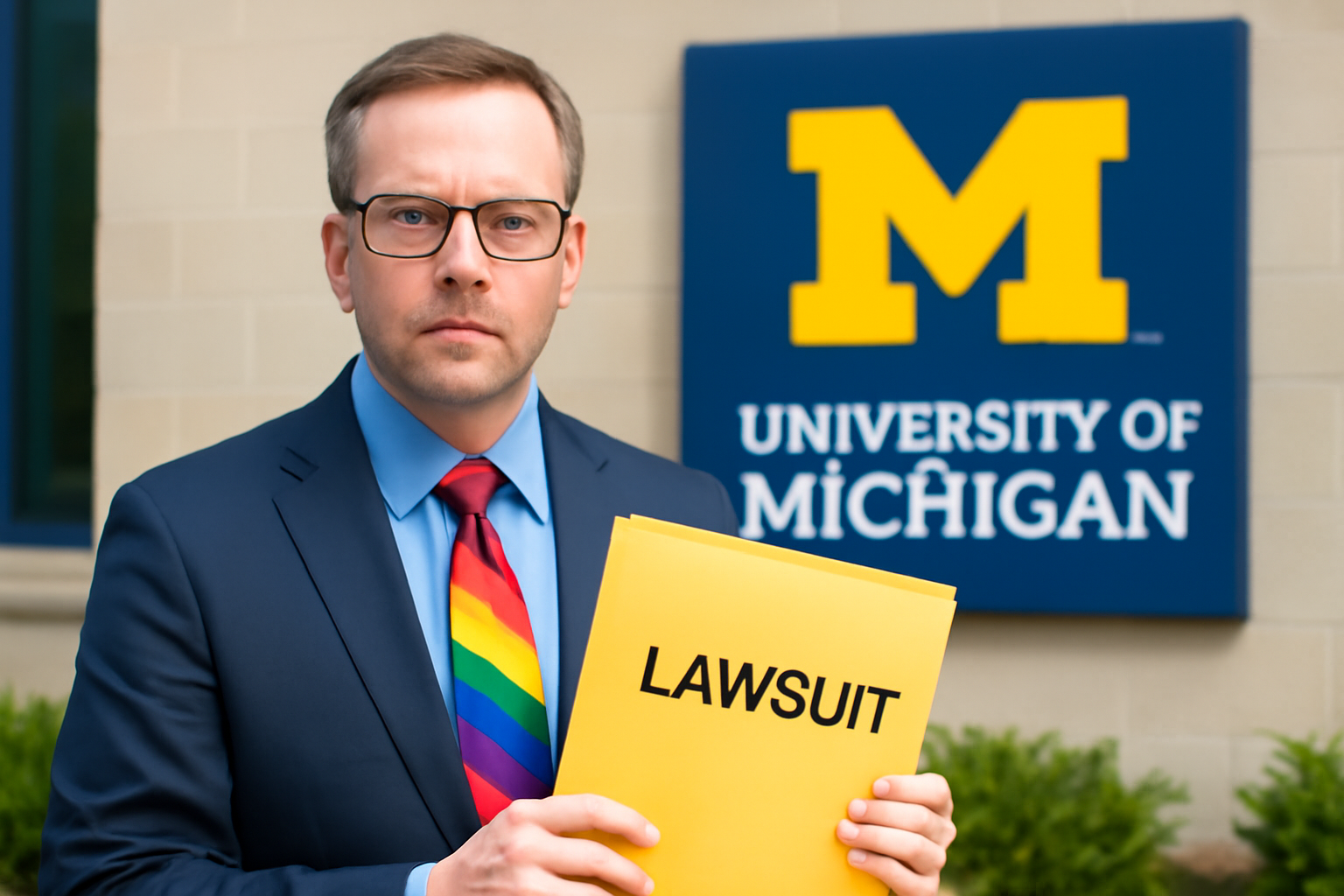
lawsuit challenges diversity policies at University Of Michigan
An anti-diversity group called Faculty, Alumni, & Students Opposed To Racial Preferences (FASORP) has taken legal action against both Michigan Law School and its student-run journal, Michigan Law Review. They claim that straight white cisgender men face discrimination due, allegedly, because meritocracy in academic selection has been compromised.
Filed in a Detroit federal court, FASORP argues that Michigan Law Review considers race and sex when choosing members and articles—actions they believe infringe upon Title VI and Title IX, laws that prohibit federally-funded programs from discriminating based on these criteria.
accusations about biased selection in law review
The lawsuit points out that around 60% staff selection involves a "Holistic Review Committee." This committee takes many factors under consideration, including a 750-word personal statement where applicants might disclose their race, gender, and sexual orientation.
FASORP believes this selection process leads primarily diverse recruits: women, non-Asian racial minorities, and LGBTQ+ students, leaving straight white cisgender men at a disadvantage. They argue this detracts from a merit-based system and results in discrimination.
This legal battle isn't happening in a vacuum. It's part and parcel with wider discussions about affirmative action and diversity in education. The complaint resonates with critiques about using personal essays that might indirectly reveal a student's race during admissions—a practice even questioned by officials at The Department Of Education.
the university defends its diversity practices
The University Of Michigan insists it's acting within legal bounds, committing itself both compliance and diversity. They plan on "vigorously" defending against FASORP's allegations, maintaining their commitment aligns with legal requirements and fosters inclusion.
Represented by FASORP in this case are four individuals—all straight white cisgender men. They include three law professors whose articles were turned down by Michigan Law Review and one student applicant. Despite this, their identities remain undisclosed.
Interestingly, FASORP previously tried similar action against Harvard Law Review in 2019, but that case was dismissed due lack identifying its members
what this could mean diversity in academia
This case stirs up an ongoing conversation about diversity's place in academic selections. Those who support diversity argue that it enriches education through varied perspectives, while critics feel it can be unfairly disadvantageous
Depending on where this lawsuit lands, it could send ripples through U.S. school systems, affecting how institutions juggle merit and diversity.
Both advocates and skeptics—along with schools trying navigate these tricky waters—will watch keenly as things develop.
If you're looking keep up with this case and other LGBTQ+-related news, consider subscribing our newsletter. It offers timely updates on political issues insights matter.
Related Posts
Supreme Court to Address State Bans on Trans Women in Female Sports
The upcoming U.S. Supreme Court term promises to be a pivotal moment for transgender rights, as the nation's highest court has agreed to evaluate whether states have the authority to prohibit transgender women from participating in female sports competitions. This case, scheduled to be argued in the next term beginning October, is expected to have a significant impact on the future of sports inclu [...]
Megan Rapinoe and Sue Bird Announce Amicable Separation After Ten Years Together
In a heartfelt announcement that resonated deeply within the sports and LGBTQ+ communities, soccer star Megan Rapinoe and basketball legend Sue Bird have revealed their decision to part ways after nearly a decade together. The couple, who have been icons both on and off the field, shared the news with their fans through a joint statement on social media, expressing that the choice was made with mu [...]
Groundbreaking Ruling Ends Sodomy Ban for Police and Military in the Dominican Republic
The Constitutional Court of the Dominican Republic recently delivered a landmark decision on November 18th, ruling that the nation’s police and armed forces are not permitted to criminalize consensual same-sex relations among their personnel. This pivotal ruling is a significant stride towards equality and the protection of LGBTQ+ rights within these institutions. A Resounding Victory for Equal [...]