
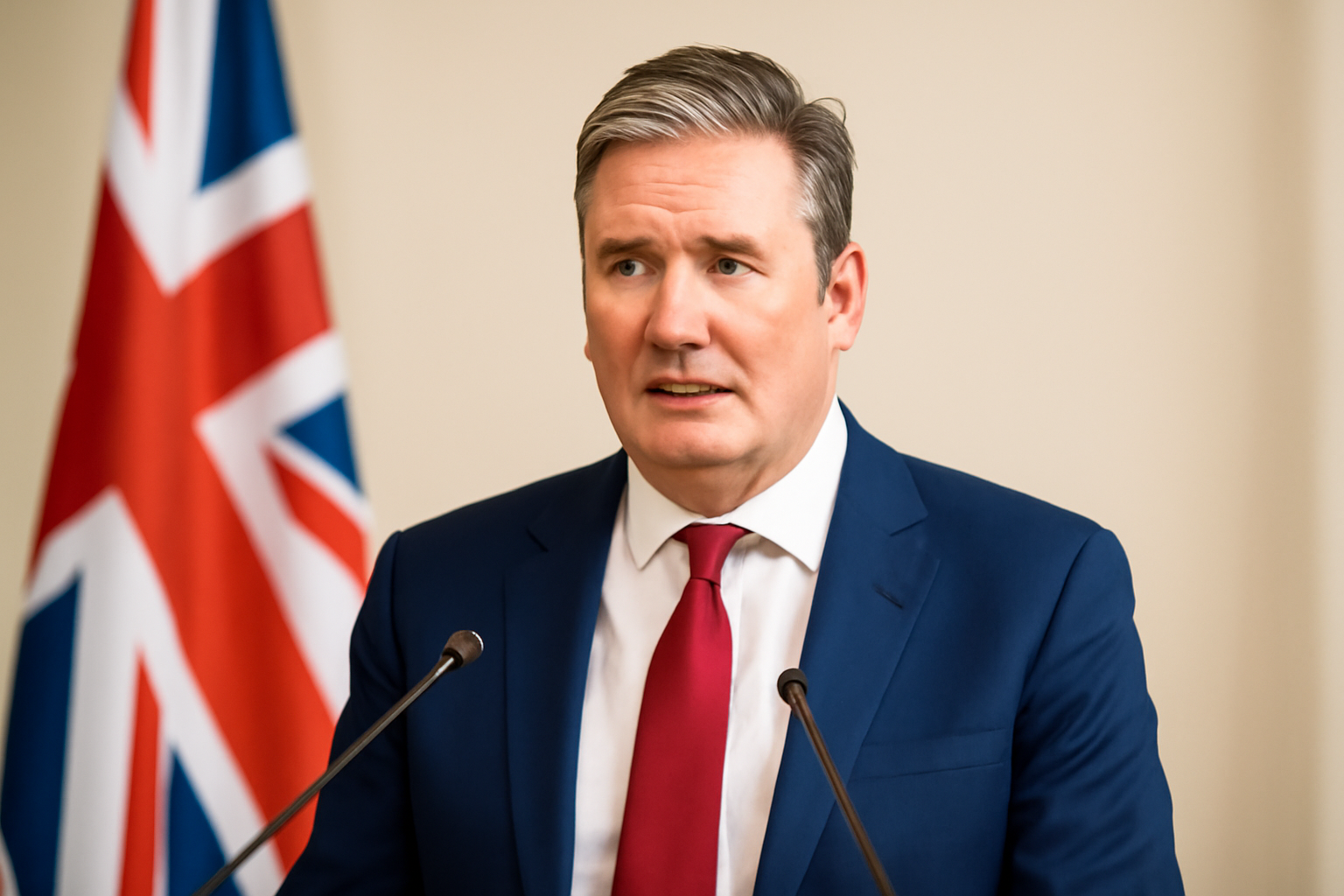
The Labour government is reportedly preparing to reintroduce a controversial university ‘free speech’ law, despite ongoing concerns about the potential for hate speech on campuses across the country.
The legislation in question is the Higher Education Freedom of Speech Act, initially passed under a Conservative government in 2023. This law granted the Office for Students (OfS) the authority to impose fines on universities, higher education providers, and student unions that fail to uphold free speech principles. It also established a complaints mechanism for students, faculty, and guest speakers who believe their free speech rights have been infringed upon.
The impetus for the Act followed several high-profile student protests against controversial campus speakers, such as gender-critical academic Kathleen Stock. Stock was invited to speak at the Oxford Union, which drew significant backlash, including condemnation from various Oxford colleges and over 100 faculty members. The event also prompted violent threats directed at the university's LGBTQ+ president and protests during Stock's speech, with one demonstrator gluing their hand to the floor in protest.
Although the Act was passed, it was put on hold following the Labour Party's landslide victory in July. Critics had raised serious concerns that the legislation might enable hate speech on campuses, potentially allowing figures like Holocaust deniers to speak at educational institutions.
According to a BBC report, an unnamed government source indicated that the legislation is being reviewed for revival, though details about potential modifications remain unclear.
In July 2024, Education Secretary Bridget Phillipson paused the legislation, citing concerns that it was "not fit for purpose" and could expose students to harmful and hateful speech on campuses. During a recent appearance in Downing Street, Phillipson reiterated her reservations: "I am aware of concerns that the Act would place a significant burden on educational institutions and the OfS. I will outline my long-term plans as soon as possible," she stated.
The response from the opposition has been supportive of the government's renewed interest in the bill. Tory shadow education secretary Laura Trott has backed the decision to reintroduce the bill. "However, for this bill to have teeth, it must include the statutory tort," she emphasized.
Speaking on BBC Radio 4’s Today programme, Vivienne Stern, chief executive of Universities UK, stressed the importance of free speech in academia. "Universities have been diligently preparing for the Act, working on ways to enhance their approaches," Stern remarked. However, she expressed concerns that the Act contains elements that could complicate universities’ legal duties related to free speech, harassment, hate speech, and radicalization prevention.
In an opinion piece for The Telegraph, Professor Shitij Kapur, president of King’s College London and chair of a Universities UK freedom of speech advisory group, discussed the vital role of free speech and academic freedom in universities. "While the effectiveness of these freedoms is an ongoing public debate, it is crucial for the public and politicians to trust that universities are forums for expressing, debating, and refining all ideas, including controversial ones, in ways that benefit students and society," Kapur wrote.
Kapur continued, "Some believe certain topics have become taboo at our universities, which is unacceptable. Universities should be spaces where any subject within legal bounds can be discussed. However, they are not platforms for unsubstantiated opinions. Academic freedom must be coupled with an obligation to support claims with evidence and reason and to engage in civil discourse."
The debate over this legislation highlights the ongoing tension between protecting free speech and preventing hate speech in academic settings. As the Labour government considers its next steps, the higher education community and the public alike await further developments.
What are your thoughts on this issue? Share your comments below, and remember to keep the discussion respectful.
Related Posts
Supreme Court to Address State Bans on Trans Women in Female Sports
The upcoming U.S. Supreme Court term promises to be a pivotal moment for transgender rights, as the nation's highest court has agreed to evaluate whether states have the authority to prohibit transgender women from participating in female sports competitions. This case, scheduled to be argued in the next term beginning October, is expected to have a significant impact on the future of sports inclu [...]
Megan Rapinoe and Sue Bird Announce Amicable Separation After Ten Years Together
In a heartfelt announcement that resonated deeply within the sports and LGBTQ+ communities, soccer star Megan Rapinoe and basketball legend Sue Bird have revealed their decision to part ways after nearly a decade together. The couple, who have been icons both on and off the field, shared the news with their fans through a joint statement on social media, expressing that the choice was made with mu [...]
Groundbreaking Ruling Ends Sodomy Ban for Police and Military in the Dominican Republic
The Constitutional Court of the Dominican Republic recently delivered a landmark decision on November 18th, ruling that the nation’s police and armed forces are not permitted to criminalize consensual same-sex relations among their personnel. This pivotal ruling is a significant stride towards equality and the protection of LGBTQ+ rights within these institutions. A Resounding Victory for Equal [...]