
Introduction
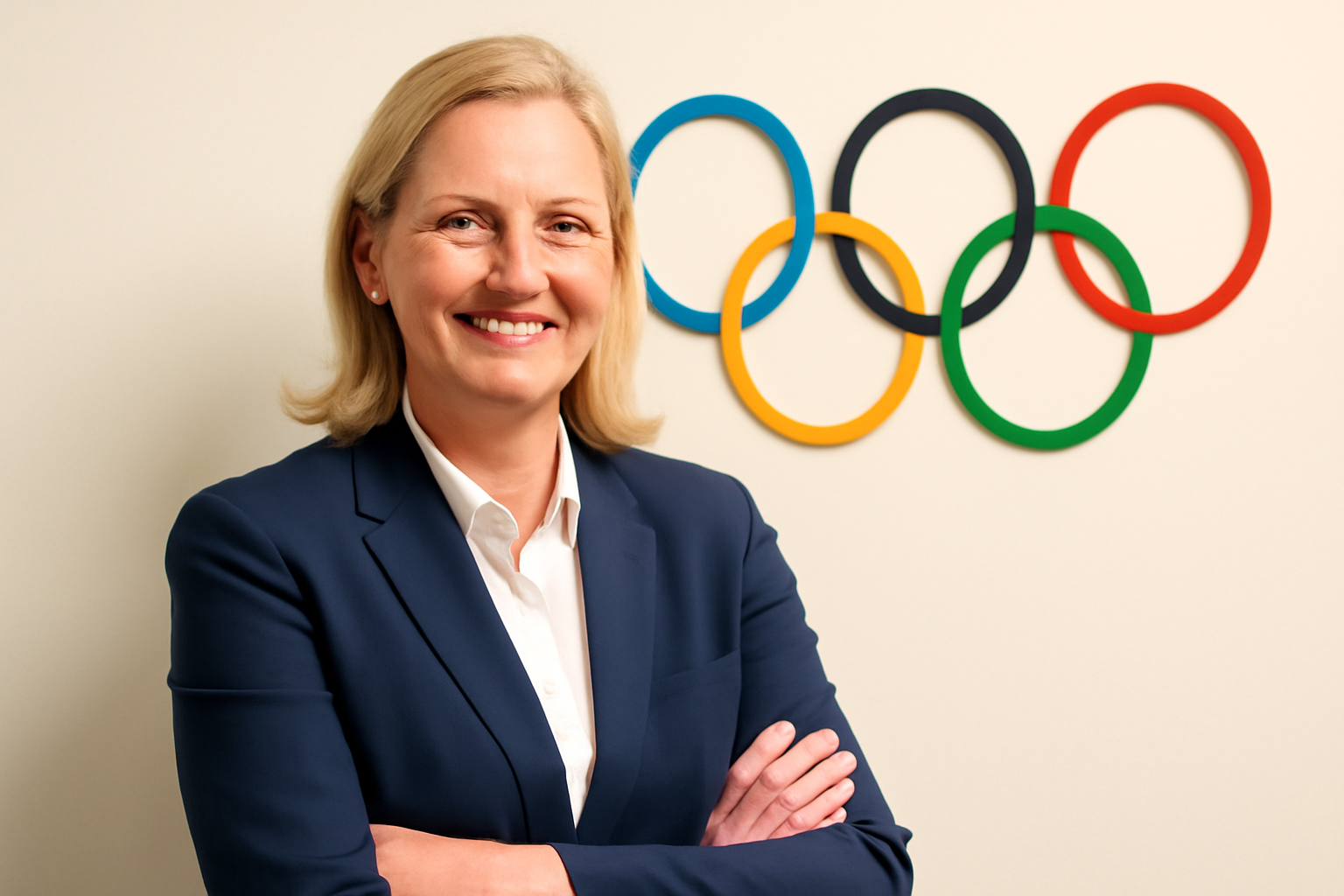
Kirsty Coventry, a former Olympic swimmer, has shattered a significant glass ceiling by becoming the first female president of the International Olympic Committee (IOC). Her election marks a historic moment for the IOC, as she takes on the leadership role in an international sporting body traditionally dominated by men.
Breaking Barriers
Having secured the position after a competitive election where she outpaced six male candidates, Coventry expressed her gratitude and disbelief, stating, “The young girl who first started swimming in Zimbabwe all those years ago could never have dreamt of this moment. Glass ceilings have been shattered today.” Her journey from a swimmer in Zimbabwe to the presidency of the IOC is indeed inspiring.
Born in 1983 in Zimbabwe, Coventry began swimming at a young age and represented her country in her first Olympics in 2000. She went on to win gold medals in the 200-meter backstroke during the 2004 and 2008 Olympic Games, alongside several other medals, establishing herself as a celebrated athlete.
Political Controversies
Despite her accomplishments, Coventry's career has not been without controversy. She was often referred to as Zimbabwe’s “golden girl” by the former dictator Robert Mugabe and accepted a substantial monetary reward for her Olympic victories during a period of economic hardship in Zimbabwe due to hyperinflation. This decision was criticized by many who believed it was insensitive given the circumstances faced by the country's citizens.
Her political career further stirred debates when she became the sports minister under President Emmerson Mnangagwa’s administration, a government criticized for its lack of democratic principles. Her tenure was marked by Zimbabwe being banned from hosting games by the Confederation of African Football due to poor stadium conditions. Additionally, her decision to send a large delegation to the Paris Olympics raised eyebrows considering the number of athletes involved.
Nonetheless, Coventry defended her involvement in Zimbabwean politics by expressing her belief in creating change from within the system. “I don’t think you can stand on the sidelines and scream for change. I believe you have to be seated at the table,” she said.
Position on Transgender Athletes
As she takes the helm of the IOC, Coventry faces numerous challenges, particularly around inclusion and fairness in sports. One of the most contentious issues is her stance on transgender athletes.
In response to questions about athlete participation under her leadership, Coventry emphasized the importance of communication and adhering to the IOC’s values of solidarity and inclusivity. However, her position on transgender athletes, particularly transgender women, has drawn criticism from advocacy groups.
Coventry has advocated for the protection of the female category in sports, suggesting the establishment of a task force to analyze the situation. She has previously supported a blanket ban on transgender athletes' participation in the Olympics, citing the need to safeguard opportunities for cisgender women athletes. In her words, “It is very clear that transgender women are more able in the female category, and can take away opportunities that should be equal for women.”
Despite her assertions, there is ongoing debate and a lack of conclusive evidence regarding the advantage of transgender women in sports. Coventry’s stance appears to prioritize maintaining traditional gender categories in sports, which may not align with more inclusive approaches advocated by various organizations and activists.
The complexity of this issue underscores the challenges Coventry will face as the IOC president. Balancing the evolving understanding of gender with fair competition in sports is a delicate task that will require thoughtful consideration and dialogue with diverse stakeholders.
Conclusion
As Kirsty Coventry steps into her role as the president of the International Olympic Committee, her leadership will be closely watched by the global sports community. Her history of overcoming challenges, both in the pool and in the political arena, positions her uniquely to navigate the complexities of modern sports governance. However, her views on transgender athletes highlight the ongoing debate around gender, fairness, and inclusion in sports, issues that will undoubtedly shape her legacy.
Related Posts
Supreme Court to Address State Bans on Trans Women in Female Sports
The upcoming U.S. Supreme Court term promises to be a pivotal moment for transgender rights, as the nation's highest court has agreed to evaluate whether states have the authority to prohibit transgender women from participating in female sports competitions. This case, scheduled to be argued in the next term beginning October, is expected to have a significant impact on the future of sports inclu [...]
Megan Rapinoe and Sue Bird Announce Amicable Separation After Ten Years Together
In a heartfelt announcement that resonated deeply within the sports and LGBTQ+ communities, soccer star Megan Rapinoe and basketball legend Sue Bird have revealed their decision to part ways after nearly a decade together. The couple, who have been icons both on and off the field, shared the news with their fans through a joint statement on social media, expressing that the choice was made with mu [...]
Groundbreaking Ruling Ends Sodomy Ban for Police and Military in the Dominican Republic
The Constitutional Court of the Dominican Republic recently delivered a landmark decision on November 18th, ruling that the nation’s police and armed forces are not permitted to criminalize consensual same-sex relations among their personnel. This pivotal ruling is a significant stride towards equality and the protection of LGBTQ+ rights within these institutions. A Resounding Victory for Equal [...]