
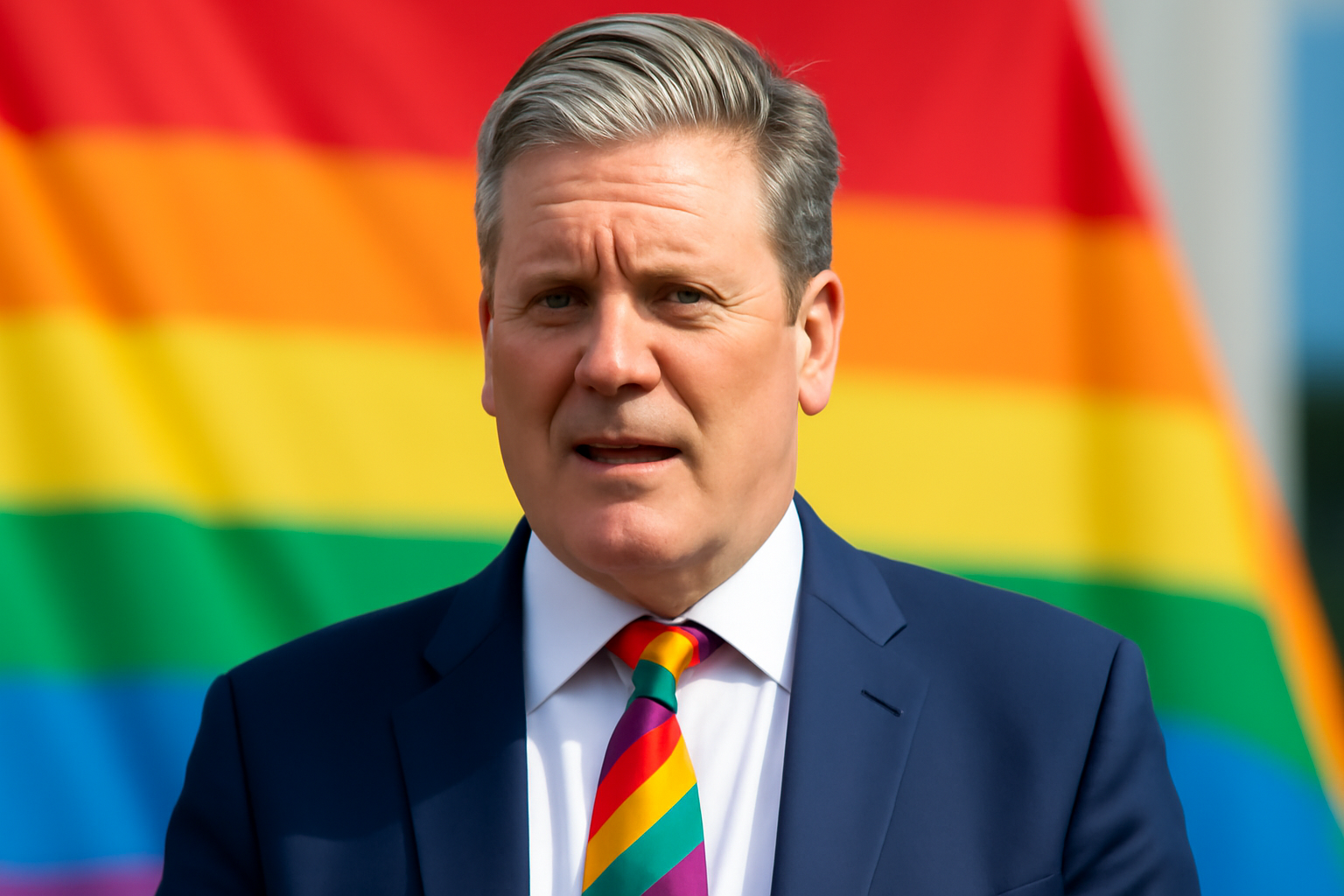
Keir Starmer Responds to Supreme Court Ruling on Transgender Rights
Updated April 22, 14:36. In recent developments regarding transgender rights in the UK, Prime Minister Keir Starmer has acknowledged the UK Supreme Court's decision on the definition of sex in the 2010 Equality Act. When asked by BBC News if he still considers transgender women as women, the Prime Minister's official spokesman replied, "No, the Supreme Court judgment has made it clear that when interpreting the Equality Act, a woman is a biological woman." This statement underscores the Supreme Court's ruling that the legal definition of a woman excludes transgender women.
Keir Starmer expressed his acceptance of the Supreme Court's judgment, which specified that the protected characteristic of "sex" within the Equality Act is defined by biological criteria. This decision was laid out in an 88-page judgment issued on April 16, where the court unanimously concluded that the terms "woman" and "sex" refer to biological women and biological sex. Lord Patrick Hodge, at the conclusion of this landmark case, emphasized this clarification.
Despite the ruling, trans people in the UK remain protected against discrimination under the law. The judges advised against interpreting the judgment as a victory for one societal group over another. However, the decision is anticipated to have a significant impact on the lives of transgender and non-binary individuals and on public sector policies concerning inclusion and single-sex spaces.
Following the ruling, changes have already begun to take place. The British Transport Police have implemented an interim policy allowing male officers to strip-search trans women suspects, and the Equality and Human Rights Commission has indicated that the NHS will need to adjust its policies on single-sex spaces to comply with the court's decision.
Public reactions to the ruling have been mixed, with demonstrations occurring in response to the decision. Nevertheless, Prime Minister Starmer stated he was "really pleased" with the judgment, as it provided "much-needed clarity" on the definition of sex. "I welcome the decision of the Supreme Court, which has given us much-needed clarity," he told the BBC. "I'm really pleased the court has clarified the position. We can move forward from here, and that's very helpful."
Starmer elaborated that "a woman is an adult female," and when asked by ITV West Country if he believed trans women were women, he responded, "I think the Supreme Court has answered that question. A woman is an adult female, the court has made that absolutely clear. It's important that we see the judgment for what it is: a welcome step forward. We need to move on and ensure all guidance is in the right place according to that judgment."
The Prime Minister's position on transgender issues has evolved over recent years. While in 2020, the Labour party had pledged to introduce self-identification for trans people, by 2023 the party's stance had shifted toward a version of Gender Recognition Act reform that retained the requirement for a medical diagnosis of gender dysphoria.
The political landscape regarding transgender rights continues to evolve, with equalities minister Bridget Phillipson recently advising transgender individuals to use facilities corresponding to their biological sex, following the Supreme Court's ruling. On the BBC's Today programme, Phillipson stated that single-sex provisions should be based on biological sex "across the board." She welcomed the "clarity" the judgment brought, having managed a women's refuge before her political career, and expressed relief that service providers could now operate single-sex spaces with confidence.
This marks a shift from her earlier stance in June, where she called for "common sense solutions" and practical approaches to the issue. The Supreme Court case was initially brought against the Scottish government by the gender-critical group For Women Scotland, supported by prominent figures such as author JK Rowling. The group challenged the notion of whether a person with a full Gender Recognition Certificate, recognizing their gender as female, was considered a "woman" under the Equality Act.
The Supreme Court's decision has stirred significant discussion and debate, with potential long-term implications for the interpretation and implementation of the Equality Act, as well as for the rights and recognition of transgender people within the UK.
Related Posts
Supreme Court to Address State Bans on Trans Women in Female Sports
The upcoming U.S. Supreme Court term promises to be a pivotal moment for transgender rights, as the nation's highest court has agreed to evaluate whether states have the authority to prohibit transgender women from participating in female sports competitions. This case, scheduled to be argued in the next term beginning October, is expected to have a significant impact on the future of sports inclu [...]
Megan Rapinoe and Sue Bird Announce Amicable Separation After Ten Years Together
In a heartfelt announcement that resonated deeply within the sports and LGBTQ+ communities, soccer star Megan Rapinoe and basketball legend Sue Bird have revealed their decision to part ways after nearly a decade together. The couple, who have been icons both on and off the field, shared the news with their fans through a joint statement on social media, expressing that the choice was made with mu [...]
Groundbreaking Ruling Ends Sodomy Ban for Police and Military in the Dominican Republic
The Constitutional Court of the Dominican Republic recently delivered a landmark decision on November 18th, ruling that the nation’s police and armed forces are not permitted to criminalize consensual same-sex relations among their personnel. This pivotal ruling is a significant stride towards equality and the protection of LGBTQ+ rights within these institutions. A Resounding Victory for Equal [...]