
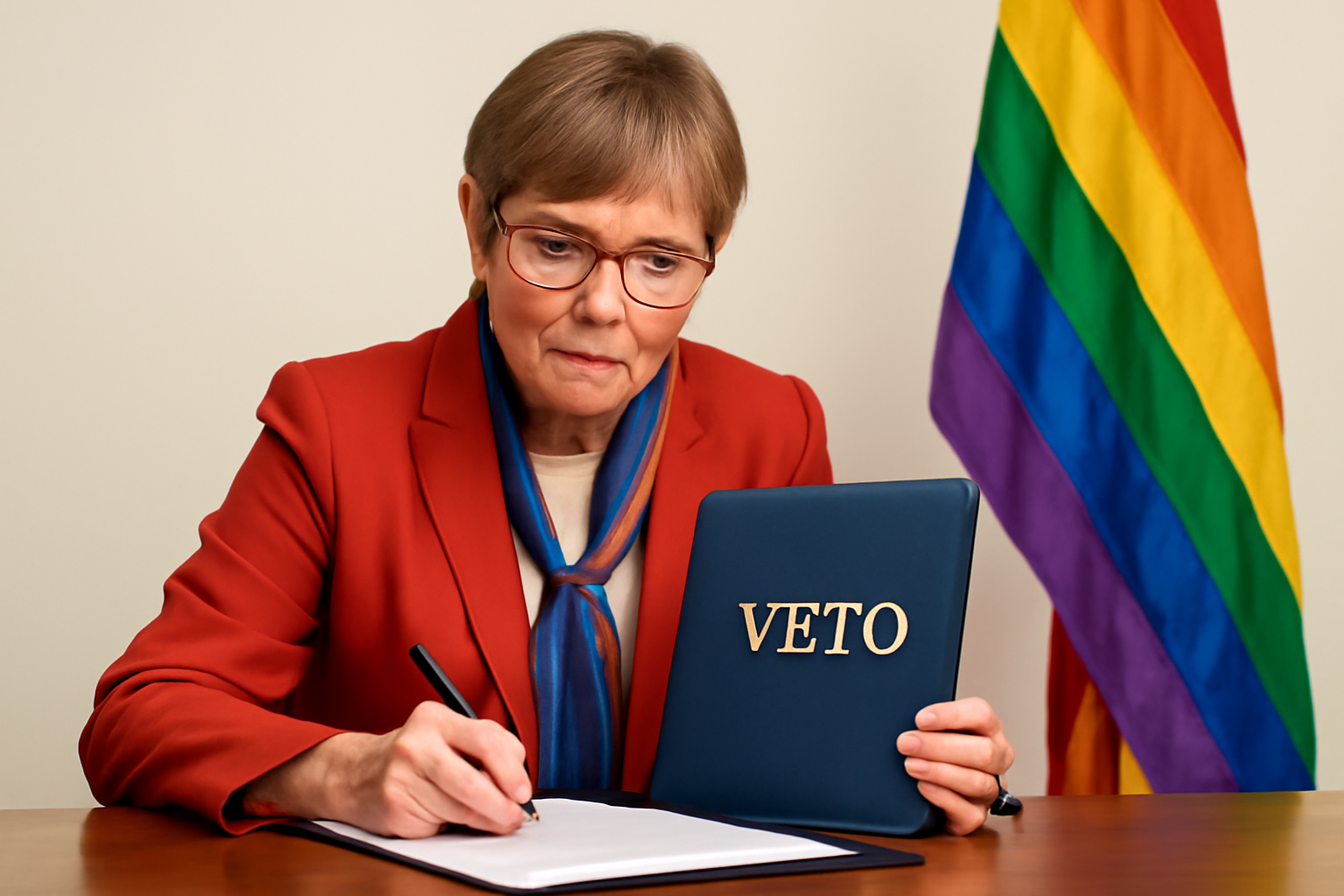
Kansas Governor Laura Kelly, a Democrat, has recently vetoed a controversial bill that sought to restrict gender-affirming care for transgender minors within the state. The legislation, known as Senate Bill 63, aimed to prevent healthcare providers from administering essential gender-affirming treatments such as puberty blockers and hormone replacement therapy. Additionally, it also sought to restrict social transitioning practices, such as the use of preferred pronouns and clothing choices, despite the widespread recognition of such care as safe and vital by leading medical associations.
The bill proposed severe consequences for medical professionals offering gender-affirming treatments. It threatened to deny state funding to healthcare providers and institutions involved in these practices, proposed revoking medical licenses under claims of "professional incompetency" and "unprofessional conduct," and permitted lawsuits against providers by patients or their guardians up to a decade after the patient reached adulthood.
Legislative and Community Responses
Governor Kelly, in her announcement, emphasized the importance of maintaining parental rights and criticized the bill's intrusion into private medical decisions. "It is not the job of politicians to stand between a parent and a child who needs medical care of any kind," she stated. Kelly also highlighted the potential negative impact on the state's economy and workforce, arguing that such legislation could drive away families, businesses, and healthcare professionals.
The response from Kansas's Republican legislative leaders was swift and decisive. Kansas Senate President Ty Masterson expressed the Senate's resolve to override the governor's veto, claiming a strong commitment to "protecting Kansas children." With significant majorities in both the state Senate and House, Republicans believe they possess the necessary support to overturn the veto. Last year, however, similar efforts were thwarted when two House Republicans changed their positions, underscoring the ongoing debate and division within the legislature.
In contrast, healthcare professionals and advocates have rallied to support the veto. Nearly 200 healthcare professionals signed an open letter urging the legislature to sustain the governor's decision. The letter emphasized that transgender youth engage in thoughtful decision-making processes with the assistance of their families and healthcare providers and warned that restricting access to necessary healthcare could result in significant psychological harm.
Implications for Transgender Youth
The ongoing legislative battle in Kansas highlights broader national debates over transgender rights and healthcare. Proponents of bills like Senate Bill 63 argue they are necessary to protect minors, yet critics assert they represent an overreach that disregards the expertise of medical professionals and undermines parental rights.
Governor Kelly's stance reflects a commitment to safeguarding the rights of families and individuals to make informed medical choices without governmental interference. Her actions resonate with many who view the provision of gender-affirming care as a fundamental aspect of supporting the well-being of transgender youth. The veto underscores the complex intersection of healthcare, politics, and personal rights, with significant implications for the state's social and economic fabric.
As the situation develops, the focus remains on whether the Kansas legislature can muster the votes required to override the governor's decision. This outcome will not only influence the immediate availability of gender-affirming care in Kansas but will also set a precedent for similar legislative efforts across the country.
For those invested in the rights and welfare of transgender individuals, the events in Kansas serve as both a challenge and a rallying point. Ongoing advocacy, public awareness, and dialogue are essential as communities strive to navigate the complexities of gender identity, healthcare, and legislative action.
Stay informed and engaged with these critical issues by connecting with local and national advocacy groups and subscribing to updates that highlight the ongoing challenges and advancements in LGBTQ+ rights and healthcare.
Subscribe to our newsletter to receive timely updates on issues affecting LGBTQ+ communities locally and globally.
Related Posts
Supreme Court to Address State Bans on Trans Women in Female Sports
The upcoming U.S. Supreme Court term promises to be a pivotal moment for transgender rights, as the nation's highest court has agreed to evaluate whether states have the authority to prohibit transgender women from participating in female sports competitions. This case, scheduled to be argued in the next term beginning October, is expected to have a significant impact on the future of sports inclu [...]
Megan Rapinoe and Sue Bird Announce Amicable Separation After Ten Years Together
In a heartfelt announcement that resonated deeply within the sports and LGBTQ+ communities, soccer star Megan Rapinoe and basketball legend Sue Bird have revealed their decision to part ways after nearly a decade together. The couple, who have been icons both on and off the field, shared the news with their fans through a joint statement on social media, expressing that the choice was made with mu [...]
Groundbreaking Ruling Ends Sodomy Ban for Police and Military in the Dominican Republic
The Constitutional Court of the Dominican Republic recently delivered a landmark decision on November 18th, ruling that the nation’s police and armed forces are not permitted to criminalize consensual same-sex relations among their personnel. This pivotal ruling is a significant stride towards equality and the protection of LGBTQ+ rights within these institutions. A Resounding Victory for Equal [...]