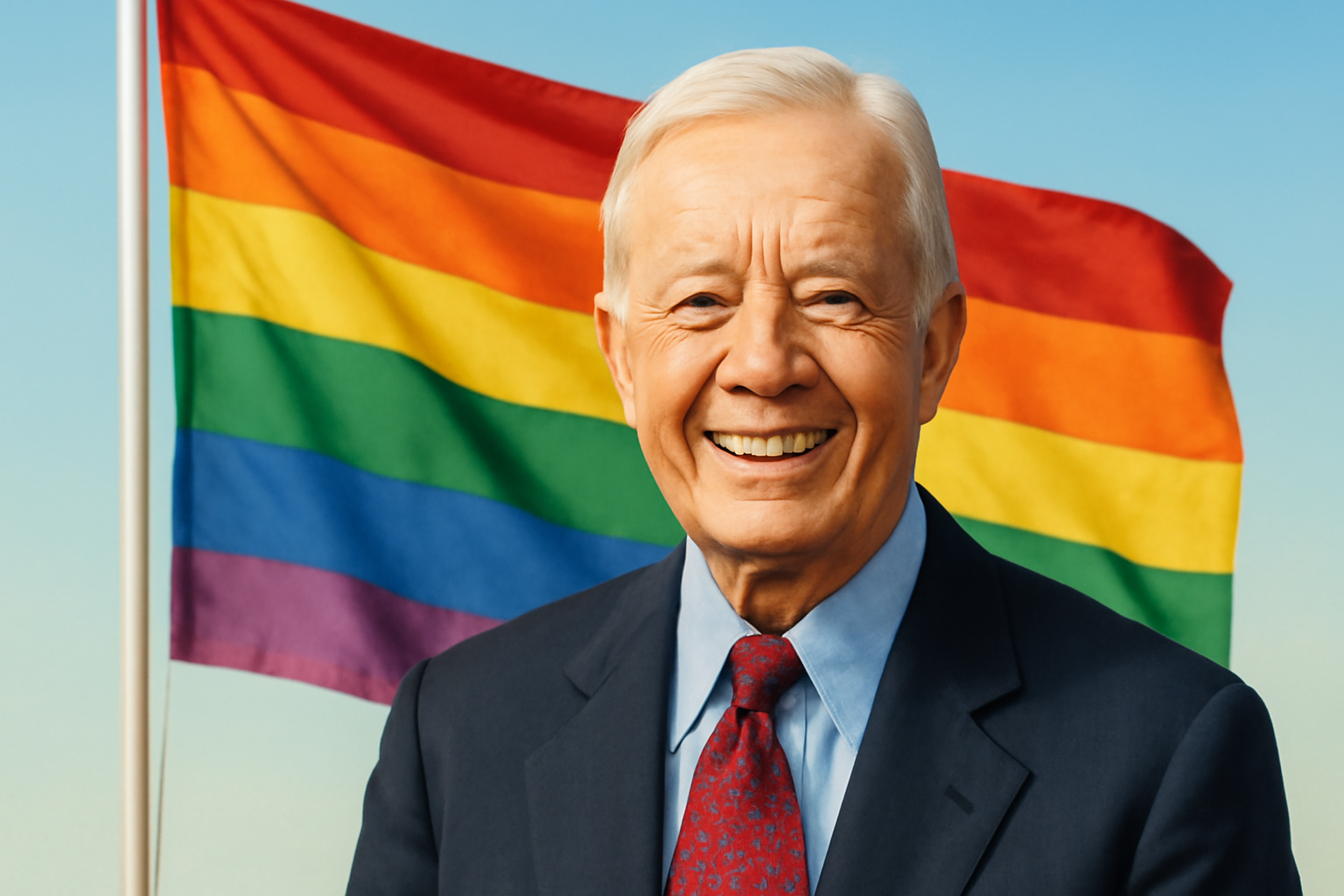
Jimmy Carter left a remarkable legacy through his work in civil rights, energy security, conservation, and transportation deregulation. While he made many strides during his presidency, his record on LGBTQ rights wasn't as progressive, which reflects how society was in those late ‘70s and early ‘80s. However, Carter's contributions after his presidency have been widely recognized and appreciated.
## The political climate in a turbulent era
The 1970s were a challenging time when it came down firmly on LGBTQ rights. In 1972, during a key moment at that year's Democratic National Convention, a proposal meant explicitly prohibiting discrimination based on sexual orientation was shot down by a vote margin that spoke volumes: 54-34. It was during this convention that Jim Foster and Madeline Davis, both making history as openly gay delegates, took center stage. Walter Cronkite memorably dubbed their morning speeches on July 12 as "the Gay Lib plank."
## Jimmy Carter's campaign trail in 1976
When Carter ran his campaign in 1976, he openly backed what was known as The Equality Act, which was aimed at tweaking—actually amending—the 1964 Civil Rights Act so that it additionally covered sexual orientation. Carter also appointed Midge Costanza, who had not yet come out as a lesbian, as head honcho at his Office of Public Liaison. This marked a bold move toward LGBTQ representation, considering her past roles as a Rochester City Council member and Carter's campaign strategist in New York. Notably, Costanza was also making history as she became one and only woman holding a senior position within that White House.
## A groundbreaking white house meeting
On March 26, 1977, something unprecedented happened. Costanza called together an eye-opening meeting at the White House with some leading figures in LGBTQ activism, including Frank Kameny, Rev. Troy Perry, and Bruce Voeller, among others. The National Gay Task Force ensured this meeting made headlines, much like a touchstone, which attracted some serious media buzz. While many considered this a move forward, Anita Bryant disagreed. She was leading her own anti-LGBTQ rights crusade and wasted no time condemning this meeting, declaring it an endorsement of what she called an "abnormal lifestyle" and swore she'd lead a counter-campaign.
## Challenges and setbacks in a trying time
By 1978, Costanza's influence had taken a hit. She found her office demoted—literally—to a basement, with a chunk of her staff gone, ultimately resigning in August. In a parallel timeline, the same year saw Harvey Milk ascending in politics as a San Francisco Supervisor, one of America's first openly gay elected officials. Tragically, Milk was assassinated in 1978. At that time, a heartbreaking 70% of Americans were against safeguards against discrimination based on sexual orientation. As Carter sought reelection in 1979, he faced this stark opposition head-on.
## Progress and visibility in the 1980s
Fast forward to the 1980 Democratic National Convention, and there's a noticeable shift in LGBTQ visibility. A significant number—77 openly gay and lesbian delegates—stood their ground, a stark increase from 1976. Melvin Boozer, an African-American leader, and Yale-educated figure within the DC Gay Activists Alliance, caught eyes when nominated as a vice-presidential candidate, though he later turned it down. Boozer took this opportunity, however, to push hard for a gay rights plank in their party platform.
## Envisioning a brighter future
Fast-forward another dozen years, and by 1992, with Bill Clinton stepping onto the presidential stage, things have evolved. With a backdrop loud and proud with rainbow flags, Bob Hattoy and Roberta Achtenberg broke through as the first openly gay voices speaking to the Democratic National Convention during prime time. Calls rang out, urging "Lesbian and Gay Rights Now," as their voices added layers of acceptance and representation to the increasingly vibrant LGBTQ community.
## Carter's enduring impact
Looking back, Jimmy Carter might not have fully embraced every aspect of LGBTQ rights during his tenure. But, it's not fair to label him as homophobic. Instead, he's often remembered as a leader marked by integrity and future-thinking. Despite not fulfilling the Equality Act promise, understanding his legacy requires taking a good look at the societal norms and political landscapes of his time. Malcolm Lazin, the Executive Director of LGBT History Month, contemplates these significant moments of our past, acknowledging their profound influence on the ongoing struggle for LGBTQ rights. Carter, with all his contributions, certainly carved an indelible, positive mark on the wider world.
