
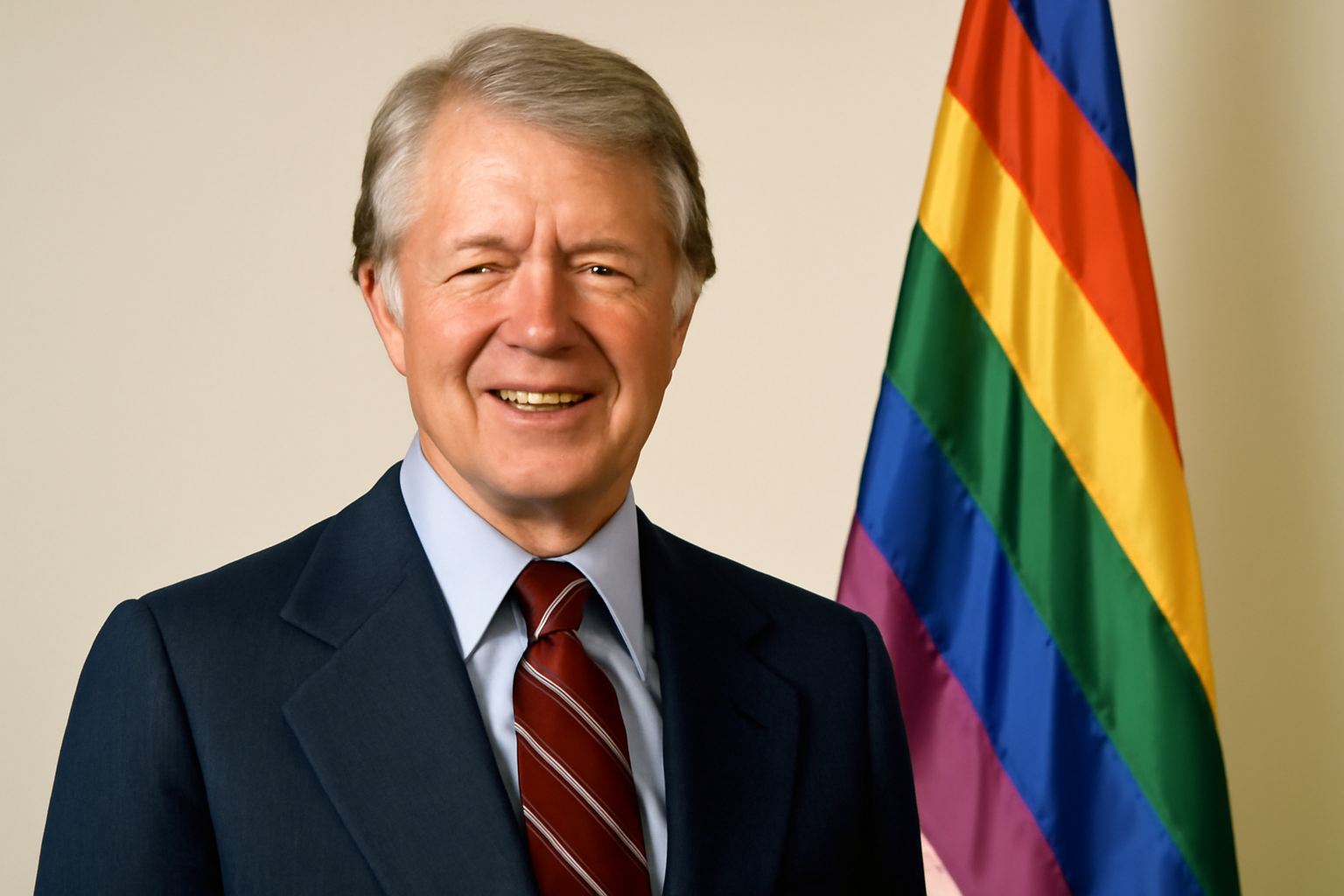
Jimmy Carter, the 39th President of the United States, is often celebrated for his numerous achievements such as advancing civil rights for African-Americans, securing a Nobel Peace Prize, and making significant strides in energy security and conservation. However, his contributions to LGBTQ rights during his presidency from 1977 to 1981 present a more complex narrative that reflects both the societal challenges of the era and his efforts to navigate them.
The Early Political Climate
During the 1972 Democratic National Convention, a proposal to prohibit discrimination based on sexual orientation was rejected by a significant margin. Despite this setback, the convention marked a milestone as Jim Foster and Madeline Davis became the first openly gay delegates to address a national political convention. Their speeches were scheduled at a challenging hour, yet they represented a pivotal moment in LGBTQ political history.
In the 1976 presidential campaign, Carter expressed support for the Equality Act, which aimed to amend the Civil Rights Act of 1964 to include sexual orientation as a protected category. This stance was considered courageous for the time and signaled a progressive approach to LGBTQ rights, despite the prevailing social attitudes.
Notable Appointments and Meetings
Carter appointed Midge Costanza, a notable figure in LGBTQ advocacy, as the head of his Office of Public Liaison. Although Costanza was a closeted lesbian, her position within the White House was significant. She was the only woman in a senior role on Carter's staff, highlighting Carter's commitment to diversity in leadership.
On March 26, 1977, Costanza facilitated the first meeting of gay representatives at the White House. This meeting included pioneers such as Frank Kameny and Rev. Troy Perry, among others. The event garnered significant media attention and sparked both support and backlash.
Despite the groundbreaking nature of this meeting, Costanza faced political challenges and her influence waned by 1978, leading to her resignation. Her departure underscored the difficulties of advancing LGBTQ rights within a political framework that was often resistant to change.
The Broader Social Context
In the late 1970s, the political landscape for LGBTQ rights was fraught with tension. Harvey Milk's election as a San Francisco Supervisor marked a significant achievement for openly gay individuals in public office. However, his assassination in 1978 underscored the pervasive hostility faced by the LGBTQ community.
Public opinion at the time was largely opposed to protections against discrimination based on sexual orientation. This reality posed a significant hurdle for Carter as he navigated his political platform and campaign for reelection in 1979.
Legacy and Reflection
By the 1980 Democratic National Convention, progress was evident in the increased representation of openly gay and lesbian delegates. Although Carter did not fully meet his campaign promises related to the Equality Act, his presidency laid groundwork that future leaders could build upon.
In 1992, the Democratic National Convention saw even more substantial inclusion, with openly gay delegates addressing the convention in prime time. This progression can be traced back to the early efforts and incremental changes during Carter's administration.
While Jimmy Carter's record on LGBTQ rights is mixed, it is essential to view his legacy within the context of the societal norms and political pressures of his time. Carter, recognized as a fundamentally decent and forward-thinking leader, contributed to broader civil rights dialogues that have continued to evolve.
Overall, Carter's presidency represents a period of tentative steps toward LGBTQ equality, reflecting both the challenges and possibilities of the era. His efforts, alongside the broader movements of the time, helped pave the way for more comprehensive rights and recognition for the LGBTQ community in subsequent decades.
Tags: Jimmy Carter, LGBTQ Rights, Political History, Civil Rights, 1970s America
Related Posts
Supreme Court to Address State Bans on Trans Women in Female Sports
The upcoming U.S. Supreme Court term promises to be a pivotal moment for transgender rights, as the nation's highest court has agreed to evaluate whether states have the authority to prohibit transgender women from participating in female sports competitions. This case, scheduled to be argued in the next term beginning October, is expected to have a significant impact on the future of sports inclu [...]
Megan Rapinoe and Sue Bird Announce Amicable Separation After Ten Years Together
In a heartfelt announcement that resonated deeply within the sports and LGBTQ+ communities, soccer star Megan Rapinoe and basketball legend Sue Bird have revealed their decision to part ways after nearly a decade together. The couple, who have been icons both on and off the field, shared the news with their fans through a joint statement on social media, expressing that the choice was made with mu [...]
Groundbreaking Ruling Ends Sodomy Ban for Police and Military in the Dominican Republic
The Constitutional Court of the Dominican Republic recently delivered a landmark decision on November 18th, ruling that the nation’s police and armed forces are not permitted to criminalize consensual same-sex relations among their personnel. This pivotal ruling is a significant stride towards equality and the protection of LGBTQ+ rights within these institutions. A Resounding Victory for Equal [...]