
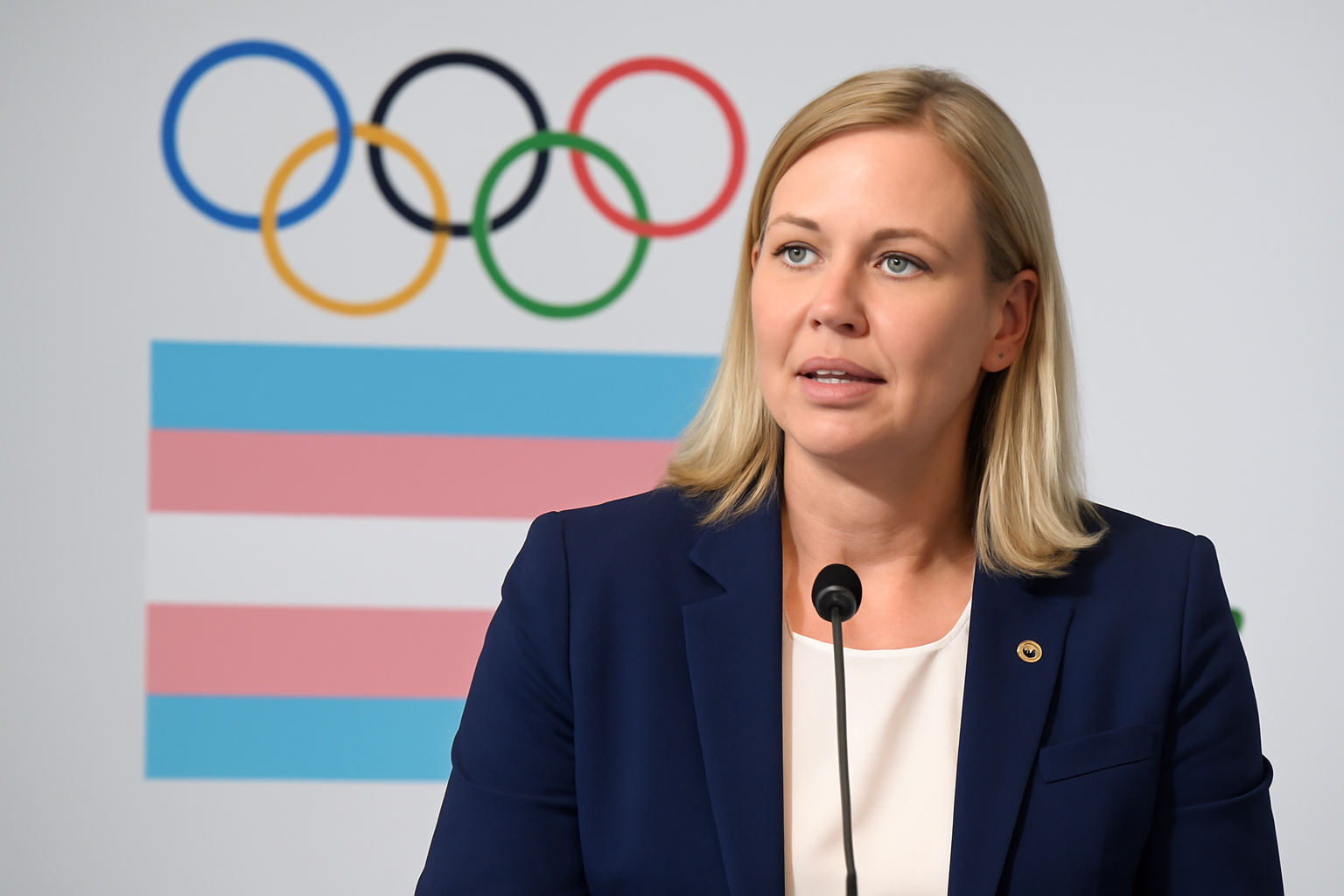
Kirsty Coventry, who just took over as head honcho at The International Olympic Committee (IOC), has rolled out an initiative aimed at getting global leaders together. They'll review policies about transgender athletes in future Olympic Games, with a big spotlight on Los Angeles 2028. This move comes amid mounting political pressures and actions that have turned up volume on discussions about transgender inclusion in sports.
IOC focusing on sports inclusivity
At a recent press briefing, Coventry shared, "We're setting up a task force that'll dive deep on transgender issues and safeguarding female categories in sports. Once we've got a decision with our international federation partners, that'll be it—we'll stand firm." This signals that IOC isn't just paying lip service; they're genuinely committed. They're looking at concerns while also making sure transgender athletes' rights and dignity are respected.
Current IOC policy on transgender athletes
So, what does IOC policy say right now? Transgender and nonbinary athletes can compete if they meet certain criteria set by each sport's international federation. This usually means hormone levels are checked, and athletes need a consistent gender identity maintained over a specific period before they hit competition ground.
During Paris 2024, three openly transgender or nonbinary athletes competed, illustrating how sports policies keep evolving toward inclusivity. Still, not everyone agrees, and some political forces are pushing back hard against these inclusive moves.
Political pressures and challenges worldwide
Political moves are ramping up pressure on global sports bodies. An executive order from a major political player pushed forward a ban against transgender women in women-only sports categories. This has stirred up quite a hornet's nest, clashing with many international sports groups that support inclusion.
It doesn't just aim at current policies; it seeks allies worldwide, potentially affecting athletes everywhere. Plus, it's riddled with debunked claims, including baseless jabs at a female boxer in Paris, whose eligibility was confirmed by IOC despite accusations over her gender.
How this affects transgender athletes
This executive action spells wider hurdles ahead, especially aiming at transgender athletes trying their luck in U.S. events. It could lead up visa blocks and permanent bans based on their gender identity, which in turn messes with their global sports participation.
Transgender athletes now face not just tough competition but also legal and political hoops, making their sports careers even more challenging.
Sports bodies respond
With all these pressures cooking, sports orgs like NCAA have rolled out revised rules. NCAA's new stance now bans transgender women from women-only sports categories, a significant shift away from its earlier inclusive policies.
This change seems like a move made in fear—perhaps anticipating legal battles against colleges that back transgender athletes. While NCAA leads many U.S. sports programs, its decision impacts only a small group, highlighting how these policies don't exactly share equal weight.
However, several sports federations and advocacy groups are holding their ground, vowing continued support. They stress how vital it remains—to champion inclusivity, fairness, and recognize gender diversity in sports.
What lies ahead in Olympic inclusion?
The IOC's upcoming choices, along with international dialogues and task force findings, will steer transgender athletes' Olympic prospects. As Coventry pointed out, “We'll face numerous challenges as an Olympic movement, and we'll confront them head-on, together." This will call on everyone—inclusive talks and collaboration with stakeholders globally.
For folks keen on staying informed about LGBTQ+ issues influencing sports, subscribing and keeping tabs on reliable news sources can be incredibly enlightening.
In conclusion, how these discussions unfold will echo far beyond just future Olympic Games, setting a global benchmark on inclusivity and equality in sports.
Tags: Transgender athletes, IOC policy, Olympic Games 2028, sports inclusion, LGBTQ+ rights in sports
Related Posts
Supreme Court to Address State Bans on Trans Women in Female Sports
The upcoming U.S. Supreme Court term promises to be a pivotal moment for transgender rights, as the nation's highest court has agreed to evaluate whether states have the authority to prohibit transgender women from participating in female sports competitions. This case, scheduled to be argued in the next term beginning October, is expected to have a significant impact on the future of sports inclu [...]
Megan Rapinoe and Sue Bird Announce Amicable Separation After Ten Years Together
In a heartfelt announcement that resonated deeply within the sports and LGBTQ+ communities, soccer star Megan Rapinoe and basketball legend Sue Bird have revealed their decision to part ways after nearly a decade together. The couple, who have been icons both on and off the field, shared the news with their fans through a joint statement on social media, expressing that the choice was made with mu [...]
Groundbreaking Ruling Ends Sodomy Ban for Police and Military in the Dominican Republic
The Constitutional Court of the Dominican Republic recently delivered a landmark decision on November 18th, ruling that the nation’s police and armed forces are not permitted to criminalize consensual same-sex relations among their personnel. This pivotal ruling is a significant stride towards equality and the protection of LGBTQ+ rights within these institutions. A Resounding Victory for Equal [...]