
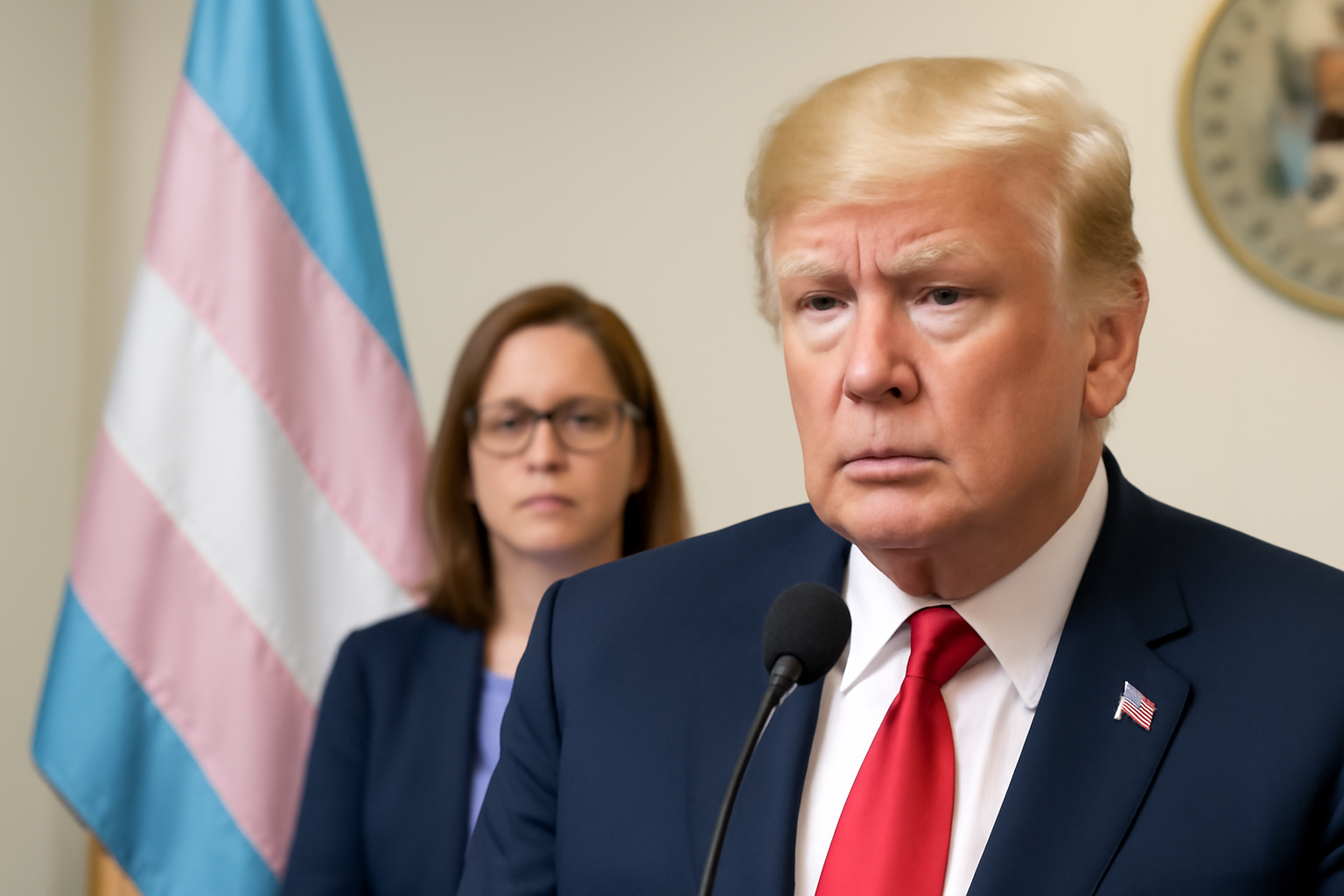
President Donald Trump’s series of executive orders targeting transgender individuals has created significant challenges for trans people, their families, and the organizations that support them. Federal agencies have rapidly removed references to "gender ideology" from official resources, erasing crucial information related to HIV prevention, health disparities, and anti-discrimination protections concerning sexual orientation and gender identity. Additionally, federal employees have been instructed to exclude gender pronouns from their email signatures, and government agencies have prohibited Pride celebrations.
The Scope of Executive Orders
Trump initiated his anti-trans agenda immediately after his inauguration, and the pace and breadth of these orders have only increased. The comprehensive nature of the orders is "both overwhelming and frightening," according to legal experts, who note that while many of these directives face legal obstacles, they still cultivate an environment of intimidation among trans individuals and the institutions that support them. The administration hopes that fear will lead to compliance without the need to enforce these policies legally.
Currently, Trump’s executive orders mandate that educational institutions ban trans women from female sports teams, redefine "sex," threaten hospitals with the loss of funding if they provide gender-affirming care to minors, bar trans individuals from serving in the military, and instruct the Department of Justice to investigate educators who use students' chosen names and pronouns. Several healthcare providers have preemptively canceled gender-affirming medical treatments to avoid federal repercussions, despite state-level legal opposition to these measures.
Resistance and Legal Challenges
Despite the administration's actions, trans people and their allies are actively opposing these measures. Some legal battles are already underway, with trans prisoners contesting their anticipated transfers and the cessation of their gender-affirming care. Parents of trans youth have also sued, arguing that the executive orders overstep congressional authority and infringe upon parental rights and First Amendment protections. Attorneys general from multiple states have pledged to disregard Trump's orders concerning gender-affirming care, committing to legal action if the federal government attempts enforcement.
The Trump administration's portrayal of gender as exclusively binary and determined at birth is widely criticized by civil rights organizations. Despite these efforts, existing laws, such as the Supreme Court’s decision in Bostock v. Clayton County, continue to uphold anti-discrimination protections for trans individuals in the workplace.
Institutional Responses
Institutions, particularly those reliant on federal funding, face difficult decisions. Some, like Harvard University, have already removed their trans-inclusive policies in response to the executive orders. The National Collegiate Athletic Association (NCAA) has also banned trans women from participating in women's sports competitions, citing federal directives as justification.
Hospitals, including prominent ones like Children’s Hospital Los Angeles and NYU Langone Health, have stopped offering gender-affirming treatments to minors due to threats of funding cuts, despite the legal and ethical implications of such actions. The administration has mischaracterized these medical treatments, inciting fear of legal and financial repercussions among healthcare providers.
Impact on Federal Policies
The Trump administration’s directives have also affected federal policies related to identification documents and anti-discrimination protections. The State Department has halted the processing of requests to change gender markers on passports, leaving many trans and nonbinary individuals in limbo with their identification documents.
Furthermore, Trump's orders aimed at removing gender-affirming care from federal prisons challenge established legal standards that classify the denial of such care as inhumane. The Biden administration had previously expanded protections for trans individuals, aligning with the Bostock ruling and other anti-discrimination laws, but these advances are now under threat.
In conclusion, the response to Trump’s anti-trans executive orders reveals deep divisions within institutions and underscores the ongoing struggle for trans rights. Legal challenges continue to mount, and many advocates remain hopeful that existing legal frameworks will ultimately prevail in protecting trans individuals from discriminatory practices.
Related Posts
Supreme Court to Address State Bans on Trans Women in Female Sports
The upcoming U.S. Supreme Court term promises to be a pivotal moment for transgender rights, as the nation's highest court has agreed to evaluate whether states have the authority to prohibit transgender women from participating in female sports competitions. This case, scheduled to be argued in the next term beginning October, is expected to have a significant impact on the future of sports inclu [...]
Megan Rapinoe and Sue Bird Announce Amicable Separation After Ten Years Together
In a heartfelt announcement that resonated deeply within the sports and LGBTQ+ communities, soccer star Megan Rapinoe and basketball legend Sue Bird have revealed their decision to part ways after nearly a decade together. The couple, who have been icons both on and off the field, shared the news with their fans through a joint statement on social media, expressing that the choice was made with mu [...]
Groundbreaking Ruling Ends Sodomy Ban for Police and Military in the Dominican Republic
The Constitutional Court of the Dominican Republic recently delivered a landmark decision on November 18th, ruling that the nation’s police and armed forces are not permitted to criminalize consensual same-sex relations among their personnel. This pivotal ruling is a significant stride towards equality and the protection of LGBTQ+ rights within these institutions. A Resounding Victory for Equal [...]