
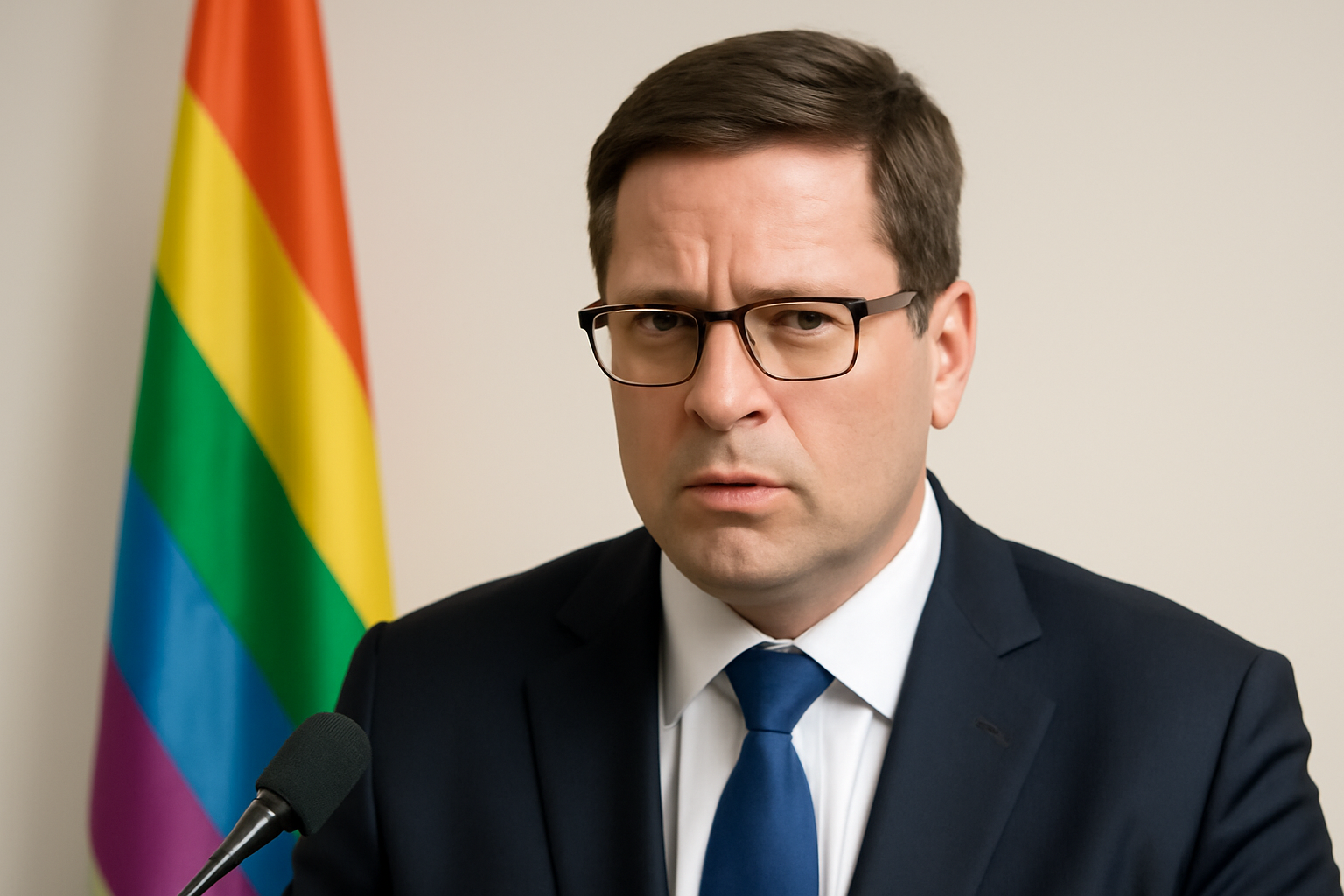
In a recent statement, the chief of staff to the Hungarian prime minister proposed that the annual Budapest Pride event take place indoors, citing "child protection" as the main concern. This suggestion has sparked controversy and debate among LGBTQ+ communities and allies both in Hungary and internationally.
Government's Rationale for Indoor Pride
Gergely Gulyás, a key official in Prime Minister Viktor Orbán's administration, made these comments during an interview with a Hungarian news outlet. He emphasized that the primary goal for this year's Pride should be to "enforce the perspective of child protection." According to Gulyás, holding the event in a closed space would eliminate the perceived risk to children, a stance reflecting the government's ongoing narrative.
The prime minister himself, Viktor Orbán, further fueled the discussion by advising Pride organizers not to proceed with the event, describing it as a "waste of money and time." Orbán's stance is consistent with his administration’s history of policies and rhetoric aimed at the LGBTQ+ community.
A History of LGBTQ+ Rights Under Orbán
Viktor Orbán, who has been in power in Hungary since 2010, and previously from 1998 to 2002, has a long-standing record of opposing LGBTQ+ rights. His government has implemented several measures perceived as regressive by human rights organizations.
One significant action was amending the Hungarian constitution to redefine family, effectively making it impossible for same-sex couples to adopt children. Additionally, legislation has been passed that enables citizens to report same-sex parents to authorities, further stigmatizing LGBTQ+ families.
Despite registered partnerships for same-sex couples being legalized in Hungary since 2009, Orbán's administration has imposed constitutional bans on same-sex marriage. Furthermore, the government has enacted an anti-LGBTQ+ propaganda law, which restricts the "promotion" of LGBTQ+ lifestyles to minors, drawing parallels to similar laws in other countries.
Transgender rights have also been curtailed, with laws enacted to stop the legal recognition of transgender individuals, stripping away their ability to amend gender markers on official documents. These measures have been widely criticized across Europe and beyond, yet Orbán's administration maintains a significant support base domestically.
International Reaction and Support
The Hungarian government's policies have not only drawn criticism from human rights organizations but have also received attention from international political figures. Former U.S. President Donald Trump has been among those who have praised Orbán's leadership, particularly regarding his stance on LGBTQ+ issues.
Despite the challenges, Budapest Pride organizers have continued to plan the event, which is scheduled for June 22. The Pride march is seen as a critical platform for visibility and advocacy for LGBTQ+ rights in Hungary, a country where public demonstrations of support are particularly important.
Community Response and Future Outlook
The suggestion to move Budapest Pride indoors has been met with resistance from LGBTQ+ activists and allies, who argue that such measures are an attempt to silence and marginalize their community further. Public spaces, they assert, are essential for fostering visibility and acceptance.
As the date for Budapest Pride approaches, organizers and participants are preparing to face potential challenges while remaining committed to showcasing resilience and solidarity. They call on supporters both within Hungary and worldwide to amplify their voices and join in the celebration, regardless of government opposition.
The evolving political climate in Hungary presents a complex landscape for LGBTQ+ rights. While government actions have constrained many areas of life for LGBTQ+ individuals, the perseverance of Pride events and similar initiatives highlight the enduring spirit of the community.
As discussions about child protection and public decency continue, it's crucial for the international community to remain vigilant and supportive of LGBTQ+ rights in Hungary and elsewhere. The push for equality and acceptance is a global struggle, and every Pride event, including Budapest's, plays a vital role in that ongoing fight.
Share your thoughts and let us know your perspective in the comments below, ensuring the conversation remains respectful and open to diverse viewpoints.
Related Posts
Supreme Court to Address State Bans on Trans Women in Female Sports
The upcoming U.S. Supreme Court term promises to be a pivotal moment for transgender rights, as the nation's highest court has agreed to evaluate whether states have the authority to prohibit transgender women from participating in female sports competitions. This case, scheduled to be argued in the next term beginning October, is expected to have a significant impact on the future of sports inclu [...]
Megan Rapinoe and Sue Bird Announce Amicable Separation After Ten Years Together
In a heartfelt announcement that resonated deeply within the sports and LGBTQ+ communities, soccer star Megan Rapinoe and basketball legend Sue Bird have revealed their decision to part ways after nearly a decade together. The couple, who have been icons both on and off the field, shared the news with their fans through a joint statement on social media, expressing that the choice was made with mu [...]
Groundbreaking Ruling Ends Sodomy Ban for Police and Military in the Dominican Republic
The Constitutional Court of the Dominican Republic recently delivered a landmark decision on November 18th, ruling that the nation’s police and armed forces are not permitted to criminalize consensual same-sex relations among their personnel. This pivotal ruling is a significant stride towards equality and the protection of LGBTQ+ rights within these institutions. A Resounding Victory for Equal [...]