
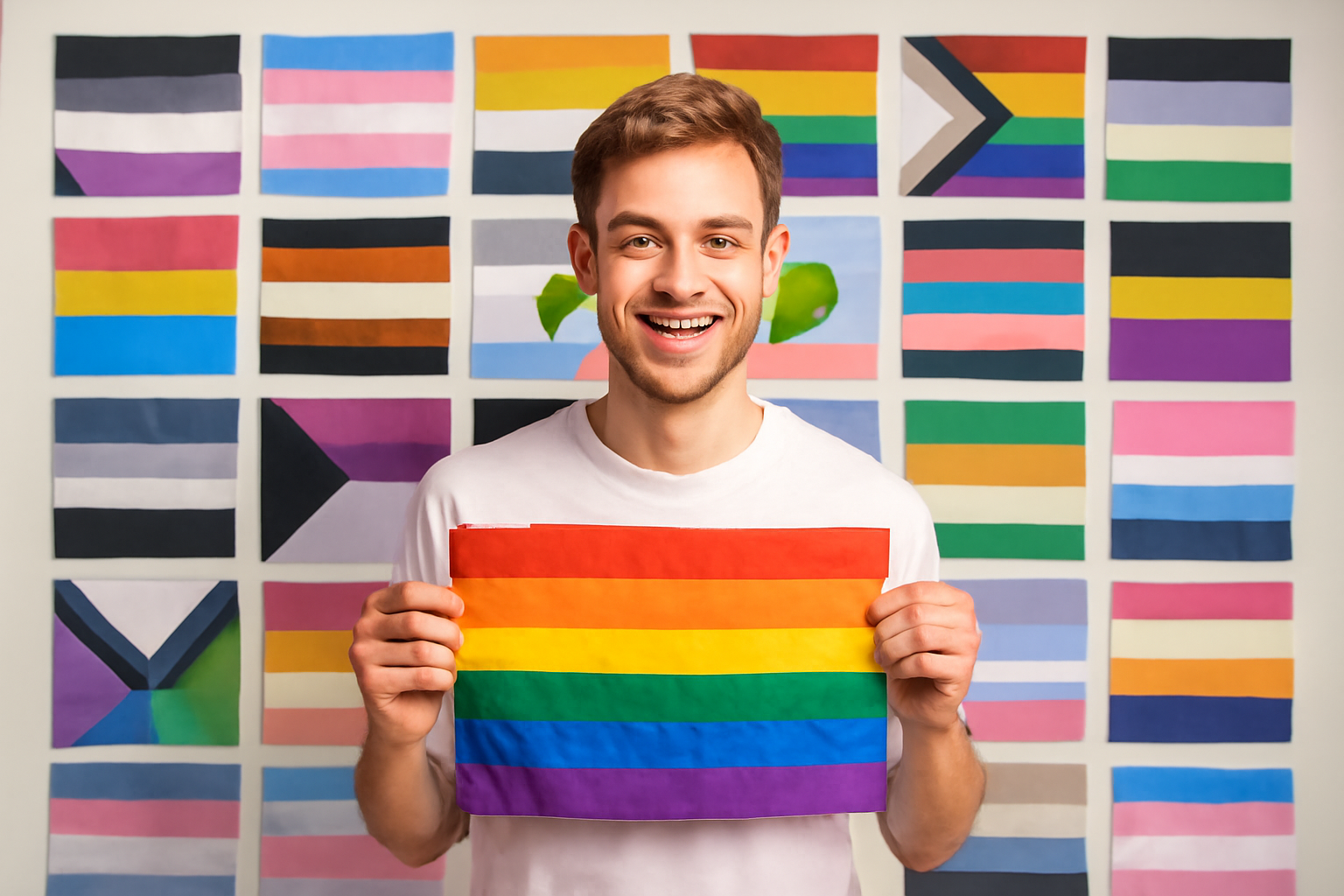
The vibrant and diverse spectrum of pride flags represents the rich tapestry of identities within the LGBTQ+ community. Each flag tells a unique story and holds special significance for those who identify with it. Understanding and recognizing these flags is a meaningful way to show support and solidarity. So, how well do you know these pride flags? Let's explore 23 of them and put your knowledge to the test!
The Rainbow Flag: A Symbol of Unity and Diversity
Perhaps the most recognized symbol of the LGBTQ+ community, the rainbow flag was designed by Gilbert Baker in 1978. Originally featuring eight colors, each stripe represents a different aspect of life: pink for sex, red for life, orange for healing, yellow for sunlight, green for nature, turquoise for art, indigo for harmony, and violet for spirit. Today, the six-striped version is widely used, symbolizing diversity and inclusion.
Transgender Pride Flag
Created by Monica Helms in 1999, the transgender pride flag features light blue, pink, and white stripes. The blue represents boys, pink symbolizes girls, and the white stripe stands for those who are transitioning or consider themselves to have a neutral or undefined gender.
Bisexual Pride Flag
The bisexual pride flag was designed by Michael Page in 1998. It consists of a pink stripe for attraction to the same sex, a blue stripe for attraction to the opposite sex, and a purple stripe in the middle representing attraction to both.
Pansexual Pride Flag
The pansexual pride flag uses pink, yellow, and blue to convey inclusivity toward people of all genders and attractions beyond the gender binary. Pink symbolizes attraction to women, blue to men, and yellow to non-binary and gender non-conforming individuals.
Asexual Pride Flag
Introduced in 2010, the asexual pride flag includes black, gray, white, and purple stripes. Black represents asexuality, gray symbolizes gray-asexuality and demisexuality, white stands for non-asexual partners and allies, and purple represents community.
Genderqueer Pride Flag
Designed by Marilyn Roxie in 2011, the genderqueer pride flag consists of lavender, white, and green stripes. Lavender is a mix of blue and pink, representing androgynes and genderqueers, white symbolizes agender identity, and green stands for non-binary genders.
Intersex Pride Flag
Created by Morgan Carpenter in 2013, this flag features a simple design of a purple circle on a yellow background, symbolizing wholeness and completeness for intersex individuals, and breaking away from traditional binary imagery.
Non-Binary Pride Flag
Designed by Kye Rowan in 2014, the non-binary pride flag contains yellow, white, purple, and black stripes. Yellow stands for people whose gender exists outside the binary, white represents people with many or all genders, purple for those who feel their gender is a mix of male and female, and black for agender individuals.
Progress Pride Flag
An evolution of the original rainbow flag, the progress pride flag adds a chevron with black, brown, light blue, pink, and white stripes. Designed by Daniel Quasar, this version includes these additional colors to explicitly represent marginalized communities of color, trans individuals, and those affected by AIDS.
The list of pride flags extends far beyond these examples, reflecting the incredible diversity within the LGBTQ+ community. Each flag is more than just a colorful design; it is a statement of identity, history, and pride. By learning about these flags, you become an ally who respects and celebrates the identities and experiences of others. How many of these flags did you know? Whether you knew all 23 or just a few, remember that supporting the LGBTQ+ community starts with understanding and empathy.
As society continues to evolve, new identities and flags may emerge, each adding richness to the community's narrative. Stay curious, keep learning, and continue to support the beautiful diversity that makes the LGBTQ+ community so vibrant and resilient.
Related Posts
Supreme Court to Address State Bans on Trans Women in Female Sports
The upcoming U.S. Supreme Court term promises to be a pivotal moment for transgender rights, as the nation's highest court has agreed to evaluate whether states have the authority to prohibit transgender women from participating in female sports competitions. This case, scheduled to be argued in the next term beginning October, is expected to have a significant impact on the future of sports inclu [...]
Megan Rapinoe and Sue Bird Announce Amicable Separation After Ten Years Together
In a heartfelt announcement that resonated deeply within the sports and LGBTQ+ communities, soccer star Megan Rapinoe and basketball legend Sue Bird have revealed their decision to part ways after nearly a decade together. The couple, who have been icons both on and off the field, shared the news with their fans through a joint statement on social media, expressing that the choice was made with mu [...]
Groundbreaking Ruling Ends Sodomy Ban for Police and Military in the Dominican Republic
The Constitutional Court of the Dominican Republic recently delivered a landmark decision on November 18th, ruling that the nation’s police and armed forces are not permitted to criminalize consensual same-sex relations among their personnel. This pivotal ruling is a significant stride towards equality and the protection of LGBTQ+ rights within these institutions. A Resounding Victory for Equal [...]