
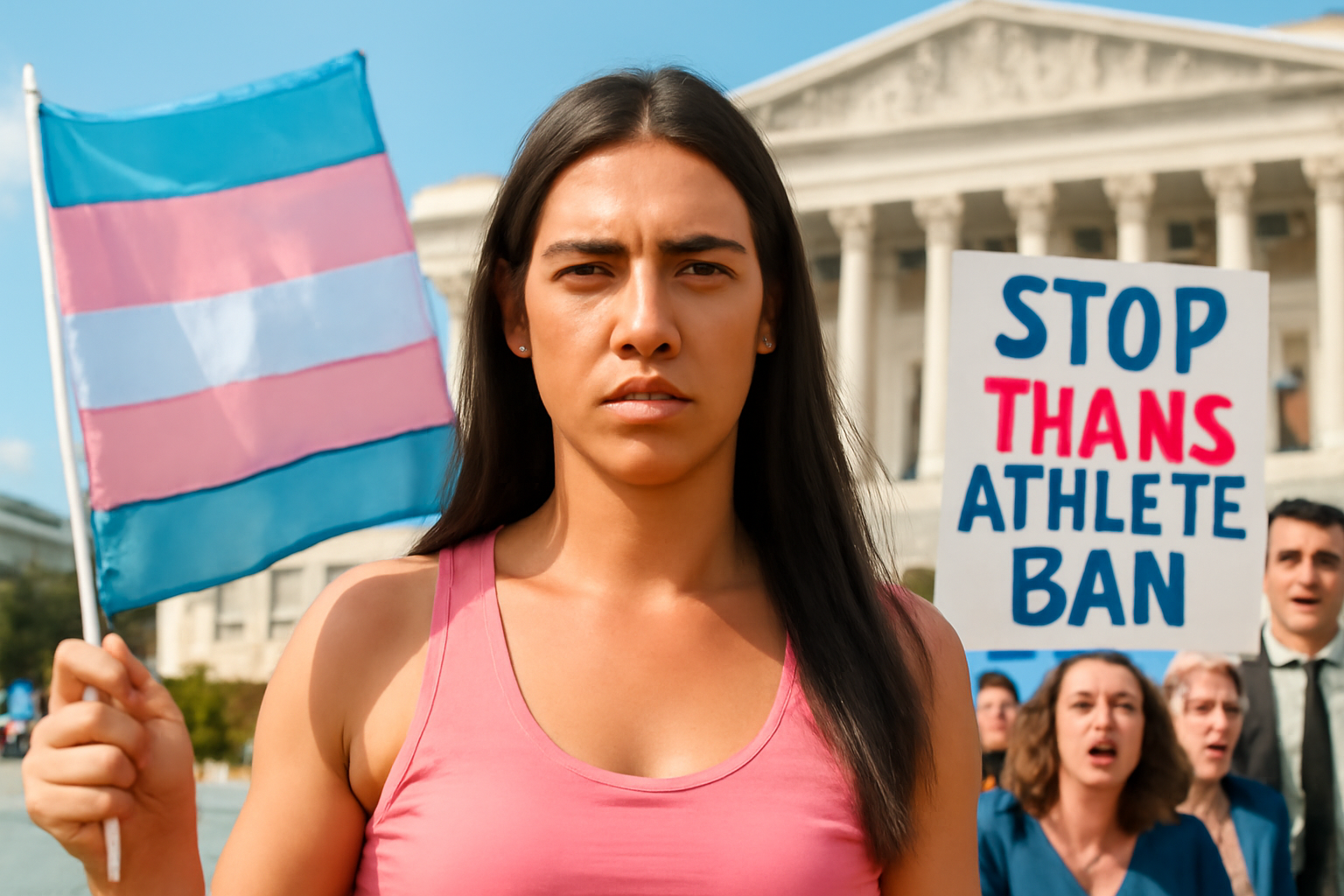
The U.S. House of Representatives has passed a highly controversial bill, H.R. 28, that aims to ban transgender female student-athletes from participating in sports designated for women or girls. The vote, largely divided along party lines, concluded with 218 in favor and 206 against.
The bill proposes changes to Title IX legislation, specifically targeting what it defines as, "a person whose sex is male to participate in an athletic program or activity that is designated for women or girls." This move aligns with statements made by prominent political figures, including former President Donald Trump, who declared a binary gender policy at a conference last December.
Political and Social Reactions
During the floor debate, House Republicans maintained a firm stance, rejecting the idea of gender beyond male and female. Representative Greg Steube (R-Fla.), the bill’s primary sponsor, remarked on the cultural implications, stating, "In our culture and civilization we continue to be subjected to the perverse lie that there are more than two genders." His rhetoric reflects the broader GOP narrative used during the 2024 election cycle, which involved significant spending on anti-trans media campaigns.
Opponents of the bill, primarily Democrats, criticized the language and intent of the proposal. They argued that it lacks a clear enforcement mechanism and could lead to invasive procedures to verify athletes' eligibility. Representative Mark Takano (D-Calif.) was particularly vocal, labeling the bill as the "Republican Child Predator Empowerment Act," suggesting it could facilitate harmful practices.
Potential Implications and Concerns
One of the primary concerns raised by Democrats is the potential for the bill to lead to physical inspections of student-athletes. This fear is not unfounded, given past incidents such as the investigation of a cisgender high school girl in Utah, who was accused of being transgender by a rival school’s parent after winning a track event.
Representative Maxwell Frost (D-Fla.) highlighted the risks, asking, "Is it protecting girls to empower adult men to ask your daughter to inspect what's in her pants?" His remarks underscore the potential dangers and ethical issues associated with the bill’s implementation.
Broader Political Dynamics
Following the vote, two Democratic representatives, Henry Cuellar and Vicente Gonzalez from Texas, crossed party lines to support the measure, while Don Davis from North Carolina voted present. This slight deviation within the Democratic ranks did not alter the overall opposition from the party.
Transgender athletes and advocates have also voiced their concerns. Sadie Schreiner, a trans college athlete, expressed her disappointment through social media, inviting senators to discuss the realities of being a transgender athlete in collegiate sports. She stated, "It’s insulting to claim this H.R. 28 protects anyone, it’s nothing more than a direct attack on the trans community."
The bill is now set to be debated in the Senate, where it faces an uncertain future. A similar proposal by Senator Tommy Tuberville (R-Ala.) has been introduced and will soon be discussed. As the debate continues, the implications for transgender rights and the broader LGBTQ+ community remain significant.
The passing of this bill has sparked a nationwide discussion on the intersection of sports, gender identity, and civil rights. As it moves to the Senate, all eyes are on the potential outcomes and the impact it may have on athletes across the country.
Related Posts
Supreme Court to Address State Bans on Trans Women in Female Sports
The upcoming U.S. Supreme Court term promises to be a pivotal moment for transgender rights, as the nation's highest court has agreed to evaluate whether states have the authority to prohibit transgender women from participating in female sports competitions. This case, scheduled to be argued in the next term beginning October, is expected to have a significant impact on the future of sports inclu [...]
Megan Rapinoe and Sue Bird Announce Amicable Separation After Ten Years Together
In a heartfelt announcement that resonated deeply within the sports and LGBTQ+ communities, soccer star Megan Rapinoe and basketball legend Sue Bird have revealed their decision to part ways after nearly a decade together. The couple, who have been icons both on and off the field, shared the news with their fans through a joint statement on social media, expressing that the choice was made with mu [...]
Groundbreaking Ruling Ends Sodomy Ban for Police and Military in the Dominican Republic
The Constitutional Court of the Dominican Republic recently delivered a landmark decision on November 18th, ruling that the nation’s police and armed forces are not permitted to criminalize consensual same-sex relations among their personnel. This pivotal ruling is a significant stride towards equality and the protection of LGBTQ+ rights within these institutions. A Resounding Victory for Equal [...]