
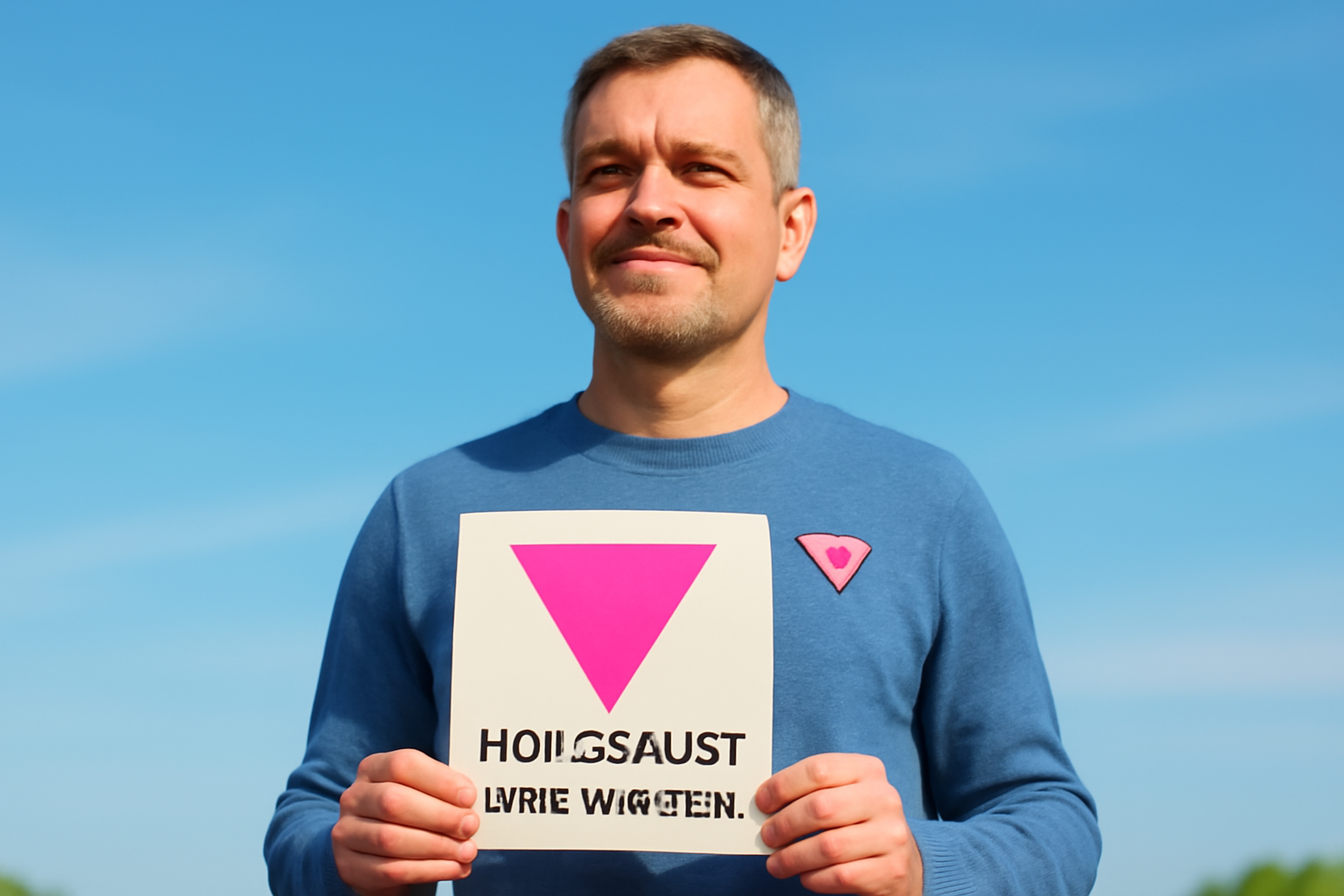
As we pause on Holocaust Memorial Day in 2025, we're reminded it's been 80 years since Auschwitz was liberated. This reflection leads us from a dark history toward a symbol that has shifted in meaning: The pink triangle, once a mark forced on those persecuted, now stands proudly as a symbol in LGBTQ+ communities worldwide.
Reflecting on Auschwitz's Liberation
January 27, 1945, marked a pivotal moment when Soviet troops arrived at Auschwitz, freeing countless souls from one history's darkest chapters. Holocaust Memorial Day stands as a somber reminder, honoring millions who perished in Nazi camps, among them Jews, LGBTQ+ individuals, Romani peoples, and political dissenters.
Unpacking Nazi Oppression and Terror
When Hitler rose in 1933, his regime unleashed a brutal campaign against minorities. They built concentration camps as prisons and instruments in their deadly agenda, which targeted Jews, gay men, and many others in a systematic attempt at annihilation.
From 1941 until 1945, six million Jewish lives were tragically lost. Many others—upwards 17 million, including thousands from gay and bisexual communities—also met horrific fates. LGBTQ+ folks endured particular cruelties; it's estimated that more than 50,000 gay men were arrested, with 5,000-15,000 sent off suffering further in those horrific camps.
Experiences and Symbolism: The Pink Triangle's Dark Past
Within camp walls, LGBTQ+ prisoners faced unbelievable suffering—forced labor, starvation, violence. Gay men were marked by pink triangles, a strategy that only deepened their torment.
Survivors like Pierre Seel have courageously shared terrifying ordeals: torture, brutal experiments, and isolation that amplified their vulnerability. Despite scant support, their stories speak volumes about their incredible bravery.
Turning Pain Into Pride: Reclaiming The Pink Triangle
The suffering didn't end with war. Decades later, legal and societal battles persisted before formal acknowledgment came. In 2002, an apology from Germany led by annulling convictions against LGBTQ+ individuals persecuted in Nazi years.
In a twist fueled by resilience, 1970s gay rights activists flipped this narrative. They turned that pink triangle from a mark intended as stigma, reclaiming it as a proud badge. By 1980s, it gained global traction through AIDS activism, championed by groups like Silence=Death and ACT UP, linking struggles separated by time but united by spirit.
Legacy and The Power Of Memory
Today, this pink triangle stands not only as an emblem but as an eternal call never forget. It appears in memorials worldwide, keeping alive stories Holocaust's LGBTQ+ victims and inspiring new generations advocate equality.
The triangle's journey—shame turned strength—highlights LGBTQ+ resilience against discrimination's enduring grip. It reminds us why staying vigilant in this fight matters.
As Holocaust Memorial Day comes around, we honor memories etched by suffering and commit toward shaping a future where love beats back bigotry and intolerance.
Related Posts
California Governor Pressed to Enact Key Transgender Rights Legislation
California Governor Pressed to Enact Key Transgender Rights Legislation In a significant move, advocacy groups across California are urging Governor Gavin Newsom to ratify a series of bills designed to enhance and protect the rights of transgender individuals within the state.*break* In recent weeks, a coalition of transgender rights organizations has mobilized the public to contact Governor New [...]
Exploring 'Feminine': A Preview at The Pride Center of New Jersey
An Exciting Artistic Expression of Identity The Pride Center of New Jersey is thrilled to host a captivating preview of the exhibit "Feminine," a unique artistic exploration of gender and identity. This event promises to be an enriching experience for anyone interested in the vibrant tapestry of the LGBTQ+ community. The preview will take place at the Pride Center, located in the welcoming town of [...]
Controversy at the Kennedy Center: Drag Shows Thrive Despite Political Promises
In a surprising turn of events, the Kennedy Center, an iconic cultural venue, finds itself at the center of a political and cultural controversy. This comes after former President Donald Trump made headlines by dismissing the Kennedy Center's board, appointing himself as chair, and installing Ric Grenell, a devoted supporter, as the interim head. This move was part of an effort to eliminate what T [...]