
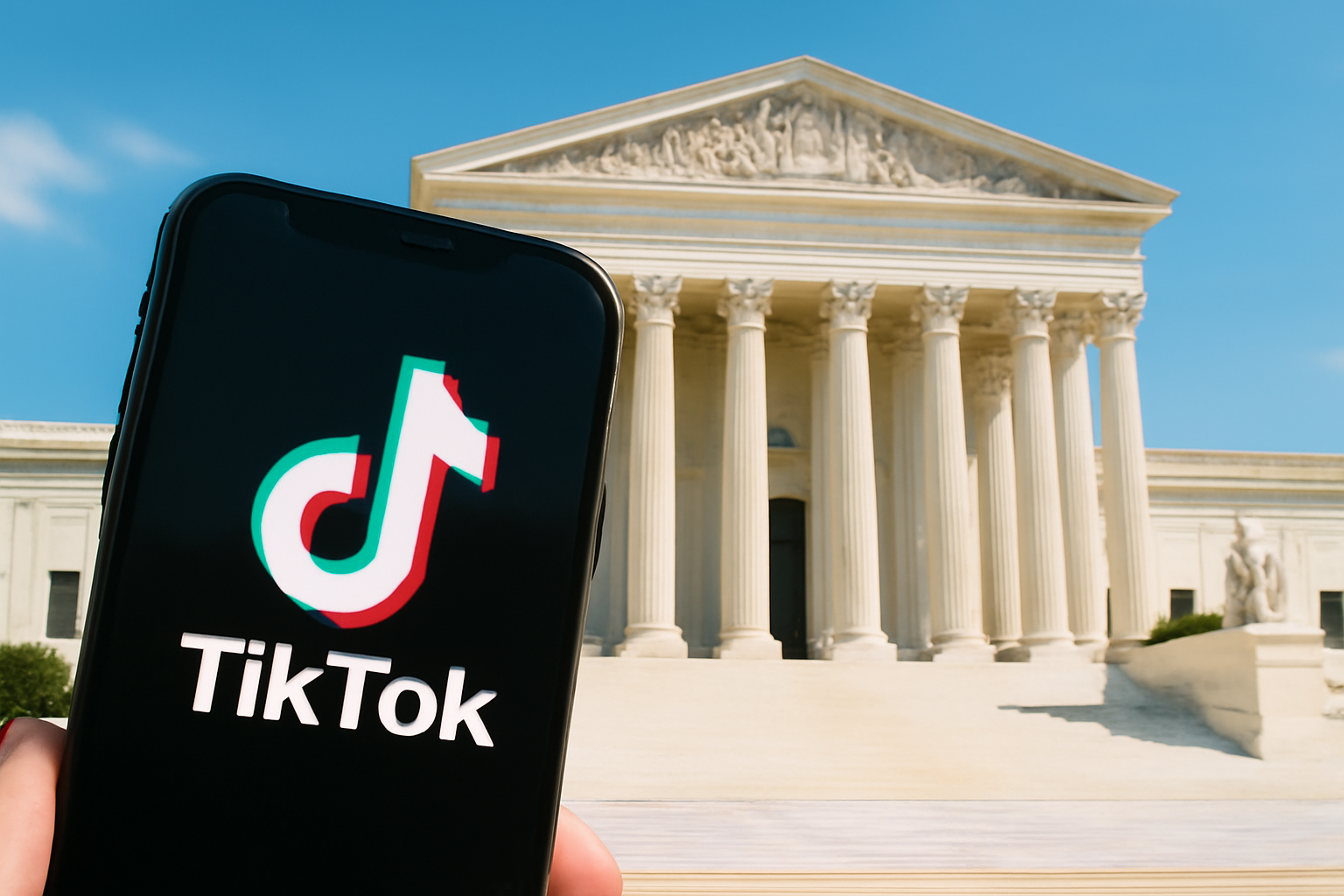
The Supreme Court recently ruled in favor of allowing a significant ban on the widely used social media platform, TikTok, to come into effect. This decision follows legislative action initiated last year when President Joe Biden signed a law mandating the ban of the platform unless its parent company, ByteDance, divests its ownership. The Court's decision comes amidst a backdrop of intense debate weighing national security issues against the free speech rights of the platform and its users, including strong advocacy efforts by various groups and individuals.
The case brought before the Court showcased a critical tension between Congress’ concerns about national security and the expressive rights afforded by the First Amendment. In its ruling, the Supreme Court delivered an unsigned majority opinion, accompanied by two concurring opinions, highlighting its stance on the matter without any dissenting voices.
Implications for TikTok Users and Free Speech Advocates
The Court majority concluded that the ban does not infringe upon First Amendment rights, emphasizing that potential free speech implications are overshadowed by the pressing national security threats alleged by Congress. The ruling acknowledged TikTok’s unique role as a platform for expression and community engagement for over 170 million Americans. However, it upheld the perspective that Congress has the authority to address national security risks associated with TikTok’s data practices and its connection to a foreign government.
This decision was reached expeditiously, with only nine days between oral arguments and the enactment deadline, allowing limited exploration of broader constitutional questions. The Court’s decision is considered narrow, deliberately avoiding deeper First Amendment inquiries, and leaving room for future interpretations.
Legislative Context and Reactions
Earlier in 2024, Congress passed a law requiring ByteDance to sell TikTok or cease its operations in the U.S. This legislative move drew legal challenges not only from TikTok itself but also from content creators and users concerned about the impact on their creative outlets. The federal government has consistently voiced concerns that ByteDance’s ties to China pose risks of espionage and possible manipulation of TikTok’s algorithm for foreign policy objectives.
Justice Sonia Sotomayor, in a concurring opinion, acknowledged the expressive nature of social media algorithms, likening TikTok’s activity to protected speech through its content curation. Despite these considerations, the Court held firm on the view that national security concerns justified the legislative action.
Political Maneuvering and Future Prospects
Former President Donald Trump, alongside TikTok and some of its users, sought to delay the ban through various means, including attempts to broker a deal that would alleviate security concerns while preserving the platform. Although Trump suggested executive actions to block the law, legal experts note the improbability of such unilateral measures overturning statutory decisions.
During his previous term, Trump initiated efforts to ban TikTok, but later shifted his stance, aligning support for the platform with his political ambitions. The sell-or-ban law, initially supported across party lines, now faces wavering bipartisan backing. Democrats and Republicans alike are reconsidering their positions, with notable leaders like Senate Minority Leader Chuck Schumer expressing openness to finding a diplomatic solution. The Biden administration has also hinted at deferring implementation to the succeeding presidency.
The future of TikTok in the United States now hinges on political negotiations rather than judicial mandates. With legislative support dwindling, the platform’s fate lies in the hands of policymakers and potential diplomatic resolutions. Regardless of the outcome, TikTok’s role in the social media landscape and its impact on millions of users remain pivotal topics of discussion.
Stay informed about developments affecting diverse communities by subscribing to our newsletter. Connect with us to receive updates and insights tailored to your interests.
Related Posts
Supreme Court to Address State Bans on Trans Women in Female Sports
The upcoming U.S. Supreme Court term promises to be a pivotal moment for transgender rights, as the nation's highest court has agreed to evaluate whether states have the authority to prohibit transgender women from participating in female sports competitions. This case, scheduled to be argued in the next term beginning October, is expected to have a significant impact on the future of sports inclu [...]
Megan Rapinoe and Sue Bird Announce Amicable Separation After Ten Years Together
In a heartfelt announcement that resonated deeply within the sports and LGBTQ+ communities, soccer star Megan Rapinoe and basketball legend Sue Bird have revealed their decision to part ways after nearly a decade together. The couple, who have been icons both on and off the field, shared the news with their fans through a joint statement on social media, expressing that the choice was made with mu [...]
Groundbreaking Ruling Ends Sodomy Ban for Police and Military in the Dominican Republic
The Constitutional Court of the Dominican Republic recently delivered a landmark decision on November 18th, ruling that the nation’s police and armed forces are not permitted to criminalize consensual same-sex relations among their personnel. This pivotal ruling is a significant stride towards equality and the protection of LGBTQ+ rights within these institutions. A Resounding Victory for Equal [...]