
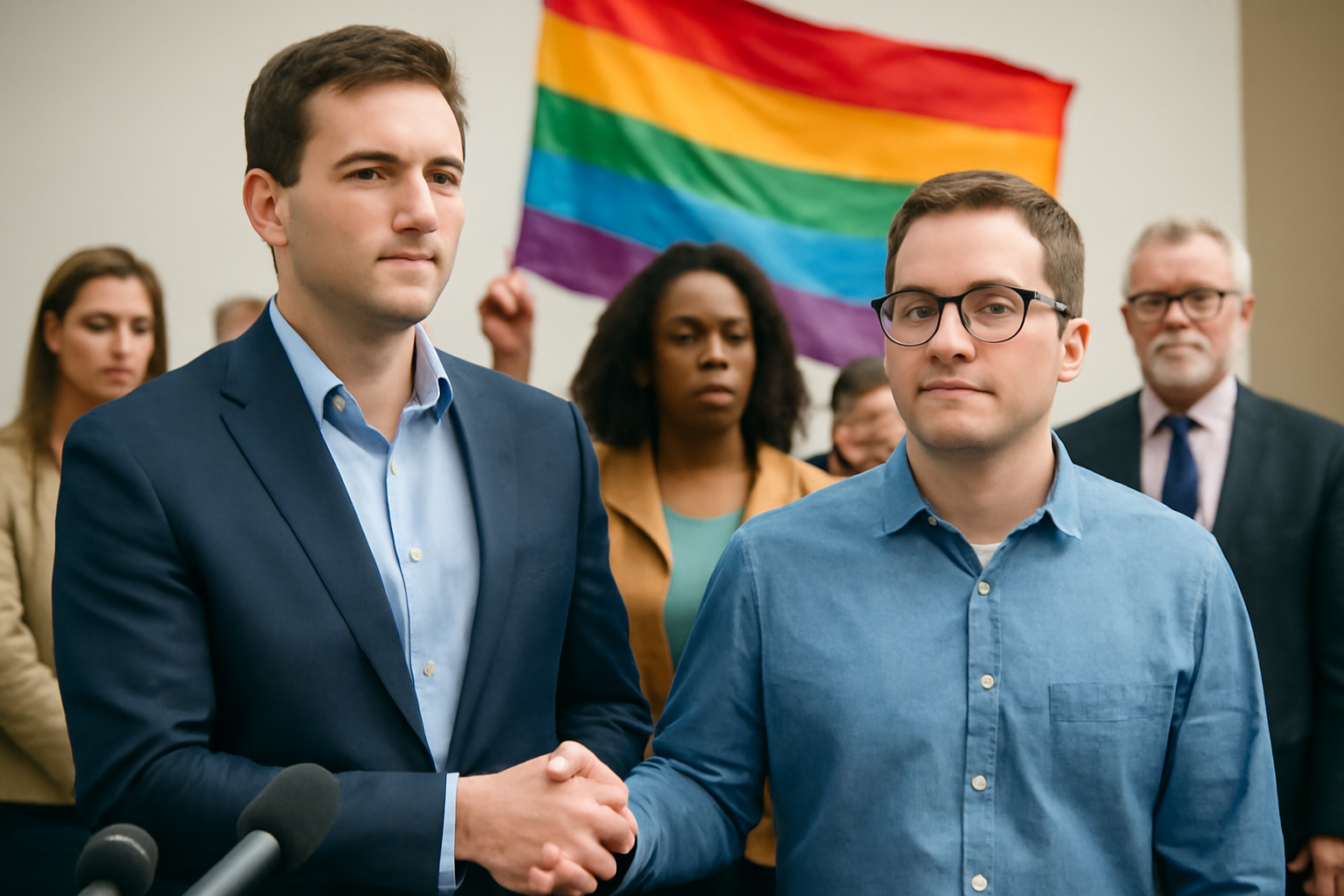
In a striking development, the LGBTQ+ community scored a significant win in South Dakota as efforts to challenge marriage equality faced a setback. Despite a wave of attempts from Republican-led states urging the Supreme Court to revisit marriage equality, a proposed anti-marriage equality resolution in South Dakota was effectively stalled.
The House Judiciary Committee of the state voted 9-4 to move the resolution to the 41st Legislative Day, a procedural step that virtually ensures the measure's demise. This decision marked a rare moment of solidarity for LGBTQ+ rights within conservative circles.
Resolution Details and Implications
House Concurrent Resolution 6012 sought to reinforce the notion that marriage is a union between one man and one woman, a definition held for thousands of years according to its proponents. The resolution challenged the U.S. Supreme Court's 2015 decision in Obergefell v. Hodges, which recognized same-sex marriage nationwide, arguing that it misinterpreted constitutional principles and cultural precedents.
Despite the resolution's intent, it faced opposition from unexpected quarters. Republican Representative Matt Roby voiced concerns that the measure merely propagated hate. He argued that, rather than fostering a genuine policy discussion, it signaled to LGBTQ+ individuals in South Dakota that they were seen as second-class citizens.
"If the court decides to overturn it, so be it," Roby remarked, "but this resolution does nothing more than send a damaging message to the LGBTQ+ community."
Other Republicans echoed similar sentiments, noting that while they may have personal reservations about marriage equality, the resolution was not the right course of action.
A Broader Trend
South Dakota's resolution is part of a broader movement among Republican-led states to challenge marriage equality. Similar resolutions have been introduced in Idaho, Michigan, Montana, and North Dakota, with some advancing through state legislatures. In Idaho and North Dakota, these measures have passed at least one legislative chamber.
Meanwhile, other states like Missouri, Oklahoma, Tennessee, and Texas have proposed bills to promote "covenant marriage," a concept allowing only heterosexual couples to marry under certain legal frameworks. Proponents of these measures hope to prompt a legal challenge that could potentially overturn Obergefell.
The shifting dynamics of the Supreme Court add another layer of complexity. Since the 2015 ruling, the Court's composition has changed significantly, with several justices who supported Obergefell no longer on the bench. The current Court's stance on marriage equality remains uncertain, and there is concern about whether there are enough votes to uphold it if challenged again.
Significance for the LGBTQ+ Community
The developments in South Dakota underscore the ongoing struggle for LGBTQ+ rights in the United States, where legal gains must be vigilantly protected. The decision by the state's committee illustrates that there are still voices within conservative ranks willing to oppose measures perceived as unjust or discriminatory.
For the LGBTQ+ community and its allies, these legislative battles are not just about legal definitions but the broader acceptance of diverse identities and relationships. The resistance to anti-marriage equality resolutions signals hope and highlights the importance of continued advocacy and dialogue.
As states continue to grapple with these issues, the LGBTQ+ community and supporters remain vigilant, ready to defend hard-won rights. The outcome in South Dakota serves as a reminder that progress is possible, even in unexpected places.
Stay informed on these critical issues by subscribing to our newsletter, which provides insights and updates on how politics and policy impact the LGBTQ+ community.
Related Posts
Supreme Court to Address State Bans on Trans Women in Female Sports
The upcoming U.S. Supreme Court term promises to be a pivotal moment for transgender rights, as the nation's highest court has agreed to evaluate whether states have the authority to prohibit transgender women from participating in female sports competitions. This case, scheduled to be argued in the next term beginning October, is expected to have a significant impact on the future of sports inclu [...]
Megan Rapinoe and Sue Bird Announce Amicable Separation After Ten Years Together
In a heartfelt announcement that resonated deeply within the sports and LGBTQ+ communities, soccer star Megan Rapinoe and basketball legend Sue Bird have revealed their decision to part ways after nearly a decade together. The couple, who have been icons both on and off the field, shared the news with their fans through a joint statement on social media, expressing that the choice was made with mu [...]
Groundbreaking Ruling Ends Sodomy Ban for Police and Military in the Dominican Republic
The Constitutional Court of the Dominican Republic recently delivered a landmark decision on November 18th, ruling that the nation’s police and armed forces are not permitted to criminalize consensual same-sex relations among their personnel. This pivotal ruling is a significant stride towards equality and the protection of LGBTQ+ rights within these institutions. A Resounding Victory for Equal [...]