
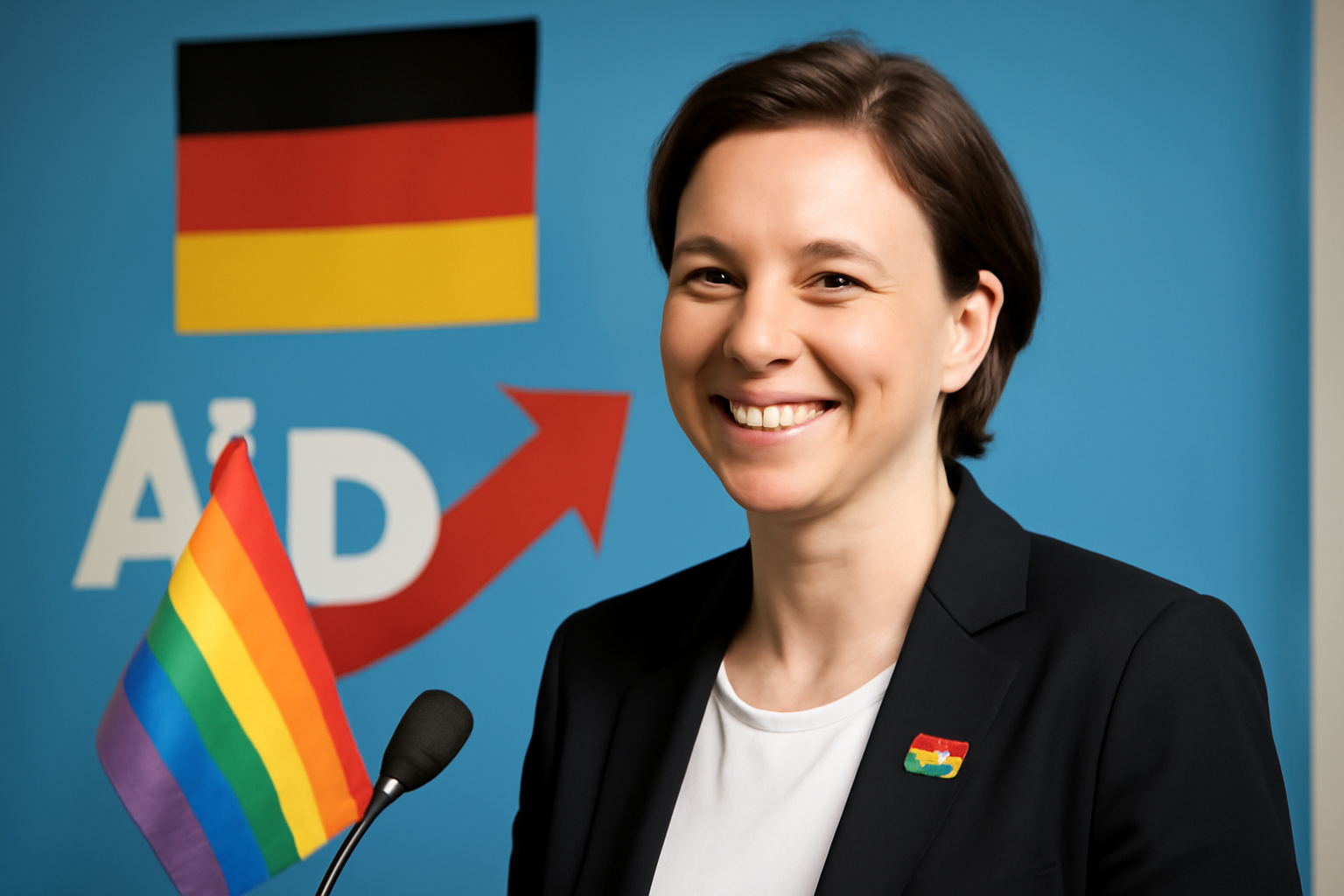
In a surprising political development, a far-right party in Germany has made headlines by electing a lesbian candidate to a significant position, all the while maintaining a controversial stance that questions the legitimacy of her family structure. This move has sparked widespread discussion and debate across the country and within the global LGBTQ+ community.
A Complex Political Landscape
Germany's political scene has long been a dynamic and sometimes contentious arena. The presence of far-right parties has been a consistent element, with these groups often characterized by their staunchly conservative and traditionalist views. The party in question has been known for its opposition to progressive social policies, including those supporting LGBTQ+ rights.
Despite this backdrop, the election of a lesbian candidate to a prominent role within the party marks a significant and unexpected turn of events. It suggests an internal tension between the party's established policies and the evolving political and social landscape.
The Candidate's Journey
The candidate, whose identity is the subject of much interest, has been an active participant in political discourse for several years. Her ascent to this role is seen by some as a testament to her abilities and resilience in navigating a challenging political environment. Her personal life, including her sexual orientation and family structure, has often been highlighted in media coverage, making her a prominent figure not only in political circles but also in discussions about LGBTQ+ rights in Germany.
Her election has raised questions about the extent to which her presence might influence the party's policies and rhetoric regarding LGBTQ+ issues. Many are watching closely to see whether her influence will lead to a softening of the party's hardline stance or if she will face resistance within the ranks.
Controversial Stance on Family Legitimacy
One of the most contentious aspects of this development is the party's paradoxical position on family legitimacy. While electing a member of the LGBTQ+ community, the party continues to uphold a narrative that challenges the legitimacy of non-traditional family structures, including same-sex families.
This contradiction has not gone unnoticed. Critics argue that the party's actions are hypocritical, as they simultaneously embrace and reject aspects of the candidate's identity. Supporters of the candidate, however, see her election as a step forward, suggesting that her presence within the party could lead to meaningful dialogue and eventual policy changes.
Reactions from the LGBTQ+ Community
Within the LGBTQ+ community, the reactions have been mixed. Some view the candidate's election as a positive sign of change, an indication that even the most conservative of institutions can evolve and become more inclusive over time. Others remain skeptical, concerned that her election is merely a token gesture that does not reflect a genuine commitment to LGBTQ+ rights.
Activists have called for vigilance, urging both the candidate and her party to take concrete steps towards supporting and validating diverse family structures. They emphasize the importance of moving beyond symbolic gestures to enact real change that benefits the LGBTQ+ community.
The Path Forward
As the candidate assumes her new role, the road ahead is fraught with challenges and opportunities. Observers are keenly interested in how she will navigate her responsibilities and whether she will be able to bridge the gap between her personal beliefs and the party's established ideologies.
Ultimately, this development serves as a reminder of the complex and often contradictory nature of politics. As the conversation around LGBTQ+ rights continues to evolve, the actions and decisions of both individuals and political parties will remain under scrutiny.
This story, with its multifaceted dimensions, highlights the ongoing struggle for equality and acceptance in societies worldwide. It is a testament to the resilience and courage of those who fight for recognition and change, even within the most unlikely of arenas.
The world watches as this chapter in Germany's political landscape unfolds, hopeful that it will contribute positively to the broader movement for LGBTQ+ equality.
Related Posts
California Governor Pressed to Enact Key Transgender Rights Legislation
California Governor Pressed to Enact Key Transgender Rights Legislation In a significant move, advocacy groups across California are urging Governor Gavin Newsom to ratify a series of bills designed to enhance and protect the rights of transgender individuals within the state.*break* In recent weeks, a coalition of transgender rights organizations has mobilized the public to contact Governor New [...]
Exploring 'Feminine': A Preview at The Pride Center of New Jersey
An Exciting Artistic Expression of Identity The Pride Center of New Jersey is thrilled to host a captivating preview of the exhibit "Feminine," a unique artistic exploration of gender and identity. This event promises to be an enriching experience for anyone interested in the vibrant tapestry of the LGBTQ+ community. The preview will take place at the Pride Center, located in the welcoming town of [...]
Controversy at the Kennedy Center: Drag Shows Thrive Despite Political Promises
In a surprising turn of events, the Kennedy Center, an iconic cultural venue, finds itself at the center of a political and cultural controversy. This comes after former President Donald Trump made headlines by dismissing the Kennedy Center's board, appointing himself as chair, and installing Ric Grenell, a devoted supporter, as the interim head. This move was part of an effort to eliminate what T [...]