
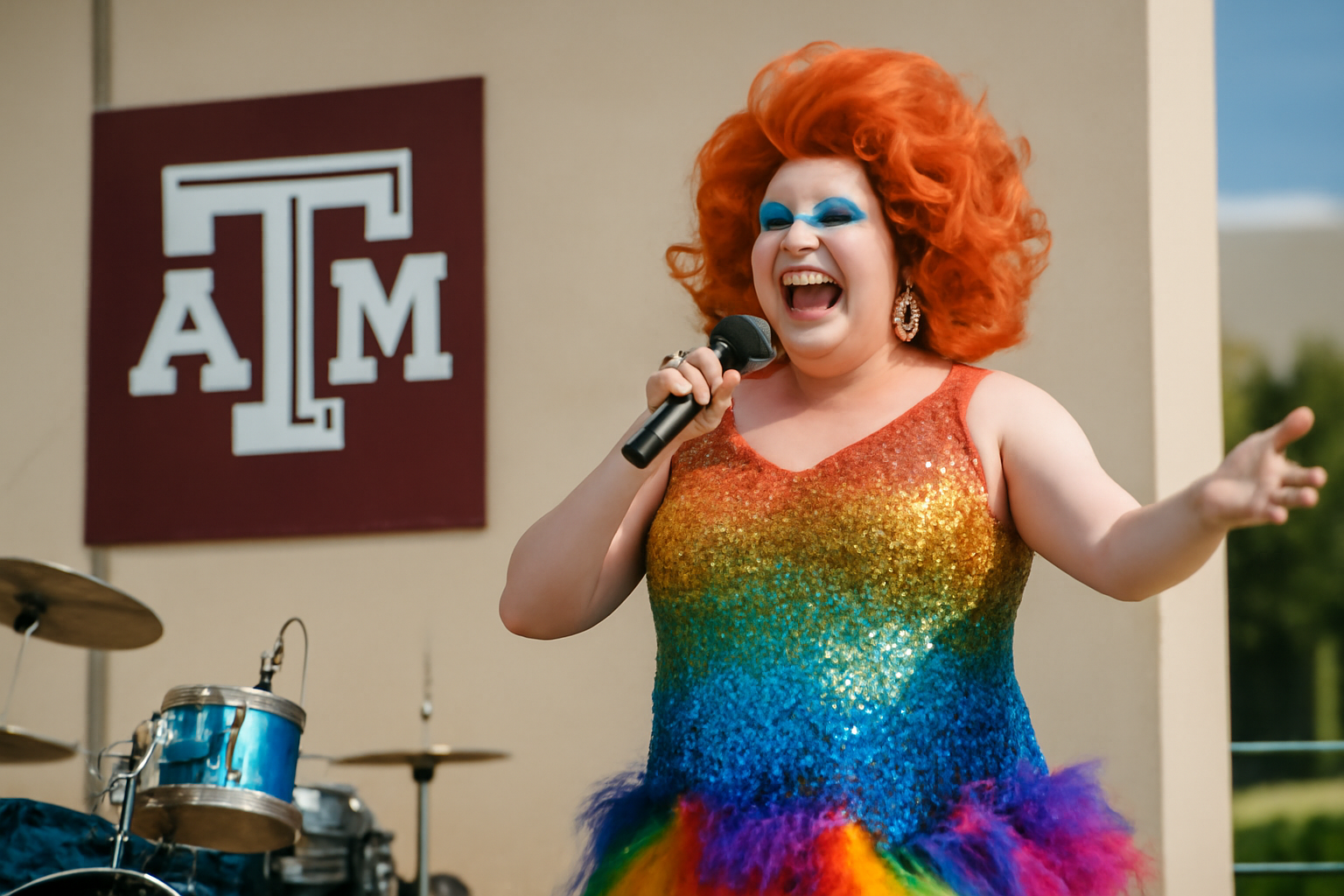
In a significant victory for free speech and LGBTQ+ rights, a federal judge ruled in favor of students at Texas A&M University, ensuring that their popular "Draggieland" performance could proceed as planned. The decision came after university officials attempted to cancel the event, citing concerns over its alignment with the university's values.
The ruling, delivered by Judge Lee H. Rosenthal of the U.S. District Court for the Southern District of Texas, found that the students were likely to succeed in showing that the university's ban on the drag show violated their First Amendment rights. "In recent years, the commitment to free speech on campuses has been both challenging and challenged," Judge Rosenthal wrote. "There have been efforts from all sides of the political spectrum to disrupt or prevent students, faculty, and others from expressing opinions and speech that are deemed, or actually are, offensive or wrong. But the law requires the recognition and application of speech rights and guardrails that preserve and protect all our treasured First Amendment rights."
Background and Context
Earlier this year, Texas A&M University’s Board of Regents passed a resolution banning drag performances on all 11 of its campuses. The resolution described drag shows as "inconsistent with the system’s mission and core values, including the value of respect for others," and claimed that such performances "likely create or contribute to a hostile environment for women." The board's stance was in line with broader political movements that have sought to restrict drag performances, citing concerns over gender ideology.
Despite these claims, the court recognized drag as a form of theatrical expression protected under the First Amendment. The ruling emphasized that the university's justifications for prohibiting the student-organized "Draggieland" performance were insufficient.
The Legal Battle
The Texas A&M Queer Empowerment Council, a student organization, played a pivotal role in challenging the university's decision. With legal representation from the Foundation for Individual Rights and Expression (FIRE), the students argued that the university, as a public institution, could not lawfully restrict their right to free speech.
"Texas A&M, like any public university, has the utmost duty to respect the First Amendment rights of students," said JT Morris, Supervising Senior Attorney with FIRE. "As public officials, they can’t banish speech from campus just because it offends them, any more than they could shut down a political rally or a Christmas pageant."
Implications and Reactions
The court's decision was met with joy and relief by the Queer Empowerment Council and its supporters. "We’re overjoyed with today’s decision," the council said in a statement. "This is another display of the resilience of queer joy, as that is an unstoppable force despite those that wish to see it destroyed. While this fight isn’t over, we are going to appreciate the joy we get to bring by putting on the best show that we can do."
This ruling serves as a reminder of the ongoing challenges faced by LGBTQ+ communities in asserting their rights within educational institutions. It highlights the importance of legal advocacy in defending against policies that seek to curtail free expression under the guise of protecting community values.
Broader Implications
The case draws attention to similar disputes across the United States, where institutions have attempted to limit LGBTQ+ expressions of identity and culture. In 2023, a comparable situation unfolded at the West Texas campus of Texas A&M University, where a drag show organized to benefit the Trevor Project was canceled by the university president. The president's decision, which characterized drag as "derisive, divisive and demoralizing," was challenged in court but ultimately not taken up by the U.S. Supreme Court.
These legal battles underscore the tension between free speech rights and institutional policies, and they continue to shape the landscape of LGBTQ+ rights in educational settings.
The decision by Judge Rosenthal to uphold the students' right to hold their drag show serves as a significant precedent for similar cases in the future, reinforcing the protection of free expression against institutional censorship.
Related Posts
Supreme Court to Address State Bans on Trans Women in Female Sports
The upcoming U.S. Supreme Court term promises to be a pivotal moment for transgender rights, as the nation's highest court has agreed to evaluate whether states have the authority to prohibit transgender women from participating in female sports competitions. This case, scheduled to be argued in the next term beginning October, is expected to have a significant impact on the future of sports inclu [...]
Megan Rapinoe and Sue Bird Announce Amicable Separation After Ten Years Together
In a heartfelt announcement that resonated deeply within the sports and LGBTQ+ communities, soccer star Megan Rapinoe and basketball legend Sue Bird have revealed their decision to part ways after nearly a decade together. The couple, who have been icons both on and off the field, shared the news with their fans through a joint statement on social media, expressing that the choice was made with mu [...]
Groundbreaking Ruling Ends Sodomy Ban for Police and Military in the Dominican Republic
The Constitutional Court of the Dominican Republic recently delivered a landmark decision on November 18th, ruling that the nation’s police and armed forces are not permitted to criminalize consensual same-sex relations among their personnel. This pivotal ruling is a significant stride towards equality and the protection of LGBTQ+ rights within these institutions. A Resounding Victory for Equal [...]