
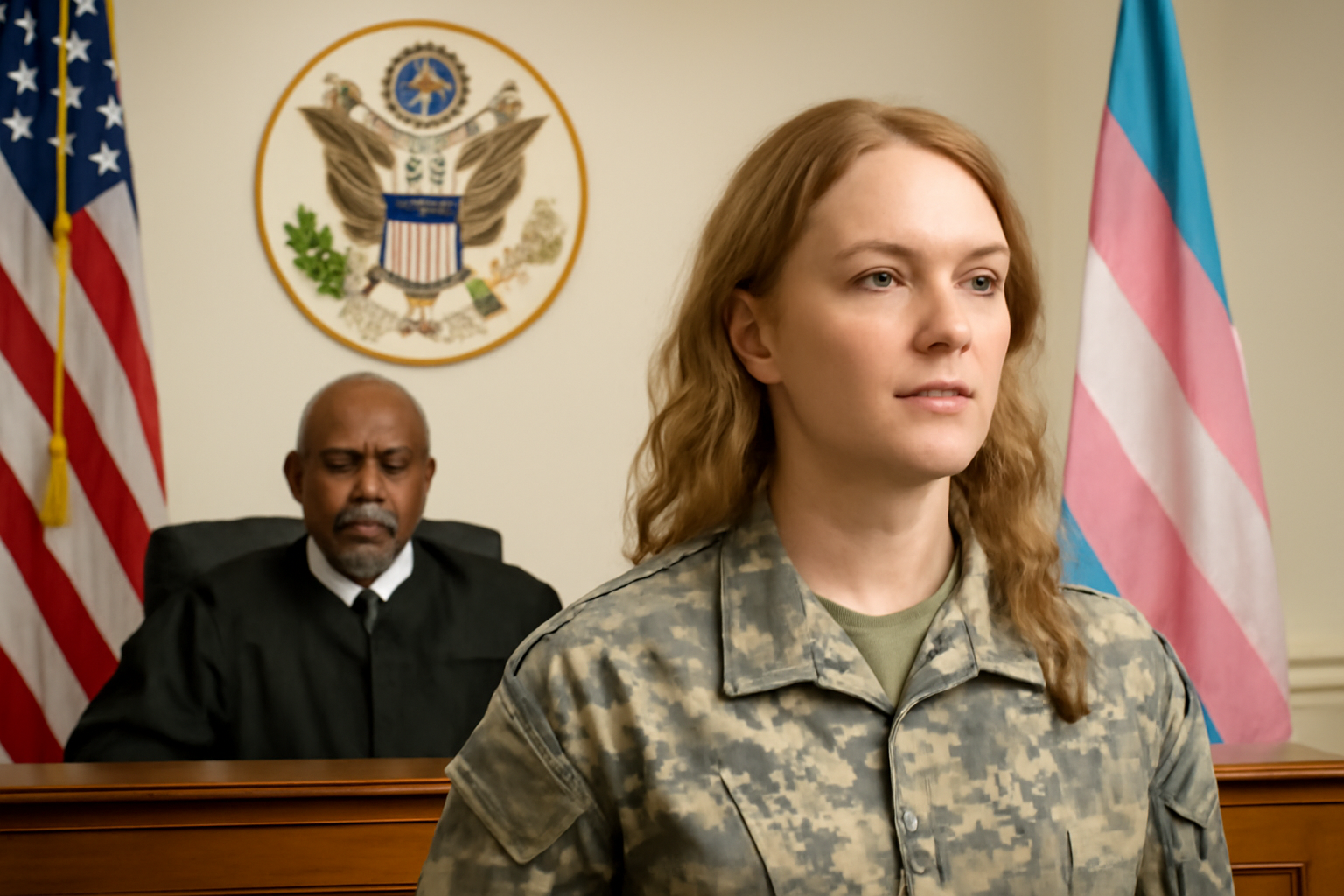
In a significant legal development, a federal judge has once again intervened to prevent the enforcement of a proposed ban on transgender individuals serving in the military. This decision marks the continuation of a legal battle that has drawn national attention, highlighting the complexities surrounding military policies and the rights of transgender individuals.
Earlier attempts to enforce the ban, which was announced by former President Trump, have met with considerable opposition and legal challenges. The policy aimed to prohibit transgender people from enlisting or serving openly in the U.S. military, arguing that their presence could be disruptive and expensive. However, opponents of the ban argue that it discriminates against a group of individuals based on their gender identity, violating their rights and undermining military readiness by excluding capable and willing service members.
Background of the Transgender Military Ban
The controversy began in July 2017, when then-President Donald Trump announced via Twitter that transgender individuals would no longer be allowed to serve in any capacity in the U.S. military. This announcement reversed an Obama-era policy that allowed transgender people to serve openly. The policy was met with immediate backlash from LGBTQ+ advocacy groups, military leaders, and lawmakers from both parties, who criticized it as discriminatory and harmful to military cohesion.
Following the tweet, the Department of Defense (DoD) was instructed to develop a formal policy to implement the ban. However, this move was quickly challenged in courts, leading to a series of injunctions that have kept the policy from being enacted.
Legal Challenges and Court Decisions
Several lawsuits were filed against the ban, arguing that it violated the constitutional rights of transgender service members and applicants. These legal challenges have resulted in multiple court rulings that have temporarily blocked the implementation of the ban.
The most recent ruling comes from a federal judge who granted an injunction preventing the enforcement of the policy. The judge stated that the government's justification for the ban was insufficient and that it likely constituted discrimination under the Equal Protection Clause of the Constitution.
The judge's decision emphasized that transgender individuals have been serving honorably and that there is no evidence to suggest that their service undermines military effectiveness. The ruling also noted the significant contributions of transgender service members to the armed forces and stressed the importance of inclusivity and diversity within the military ranks.
The Impact of the Ruling
This latest court decision is celebrated by LGBTQ+ advocates and allies as a victory for equality and justice. It reinforces the notion that policies based on prejudice and discrimination have no place in a modern military. For transgender service members, the ruling provides a sense of relief and validation, affirming their right to serve openly and without fear of discrimination.
However, the legal battle is far from over. The government may choose to appeal the decision, potentially taking the case to higher courts, including the Supreme Court. This ongoing legal saga underscores the broader discussions about transgender rights in America, particularly in institutions like the military that have traditionally been resistant to such changes.
A Broader Context for Transgender Rights
The issue of transgender rights has been a contentious topic in recent years, with significant legal and social implications. The military ban is one of many policies that have been scrutinized and debated, reflecting broader societal shifts toward greater acceptance and inclusion of transgender individuals.
Advocates for transgender rights argue that policies should be based on qualifications and abilities, not gender identity. They stress that the contributions of transgender individuals to society, including in the military, should be recognized and respected. This perspective is supported by studies and reports indicating that transgender service members do not negatively impact military readiness or effectiveness.
As the legal proceedings continue, the outcome of this case could set a precedent for future policies and influence the broader movement for transgender equality in other areas of public life. The stakes are high, not only for transgender individuals in the military but also for those seeking equality in employment, healthcare, and other aspects of life.
Related Posts
Supreme Court to Address State Bans on Trans Women in Female Sports
The upcoming U.S. Supreme Court term promises to be a pivotal moment for transgender rights, as the nation's highest court has agreed to evaluate whether states have the authority to prohibit transgender women from participating in female sports competitions. This case, scheduled to be argued in the next term beginning October, is expected to have a significant impact on the future of sports inclu [...]
Megan Rapinoe and Sue Bird Announce Amicable Separation After Ten Years Together
In a heartfelt announcement that resonated deeply within the sports and LGBTQ+ communities, soccer star Megan Rapinoe and basketball legend Sue Bird have revealed their decision to part ways after nearly a decade together. The couple, who have been icons both on and off the field, shared the news with their fans through a joint statement on social media, expressing that the choice was made with mu [...]
Groundbreaking Ruling Ends Sodomy Ban for Police and Military in the Dominican Republic
The Constitutional Court of the Dominican Republic recently delivered a landmark decision on November 18th, ruling that the nation’s police and armed forces are not permitted to criminalize consensual same-sex relations among their personnel. This pivotal ruling is a significant stride towards equality and the protection of LGBTQ+ rights within these institutions. A Resounding Victory for Equal [...]