
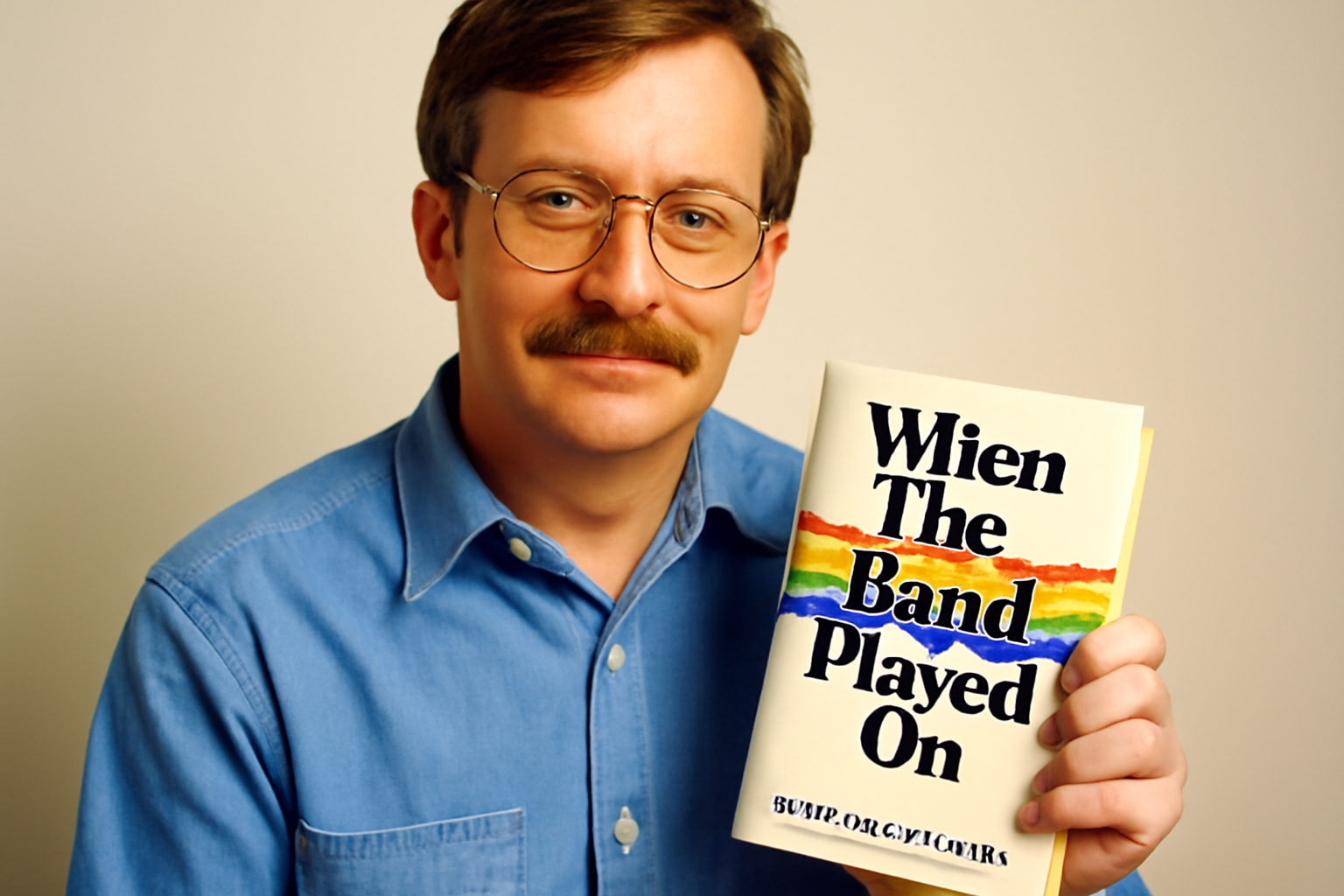
In the realm of journalism and LGBTQ+ history, few figures stand as prominently as Randy Shilts. His life and work are the subject of a compelling new book, "When the Band Played On," by Michael G. Lee. This biography delves into Shilts's complicated personal history and his groundbreaking contributions to the media landscape during the AIDS crisis in America.
Born in 1951 in the quiet confines of a small Iowa town, Randy Shilts emerged from a challenging background as the third of six sons to an abusive, alcoholic mother. Her frequent verbal and physical abuse left lasting marks on Shilts, who was often derided as a "sissy," a label that haunted him during his formative years. This early adversity shaped Shilts's character and contributed to his development of an "adultlike impassiveness" and "biting sarcasm," traits he wielded skillfully in his future career as a writer.
Shilts's journey toward self-discovery and identity was, in many ways, marked by a struggle to reconcile his sexuality. As a young man, he navigated the complexities of sexual identity, initially engaging in relationships with women before embracing his identity as a gay man and coming out to his friends. Seeking both educational and personal liberation, Shilts moved to Oregon to attend college as he neared his 21st birthday, driven by a desire to "allow myself love."
His time in Oregon was transformative. He became a vocal activist and soon migrated to San Francisco, a city synonymous with vibrant gay culture. There, Shilts committed to a career in journalism, focusing on narratives that shed light on gay life—stories that were largely invisible to the broader public at the time. He oscillated between Oregon and California, never losing sight of his goal to merge his writing with activism. His work garnered attention among national readers and significant figures within the gay community.
Following the assassination of San Francisco supervisor Harvey Milk, Shilts was selected to write Milk's biography, further cementing his reputation as an authoritative voice on gay issues. By the early 1980s, Shilts had achieved significant professional milestones: he had published a book, secured a radio position, and earned a byline in a national publication, reporting on the burgeoning GRID epidemic—later known as AIDS.
However, Shilts's personal life was not without its perils. As Michael G. Lee recounts in his biography, "When the Band Played On," Shilts was "careless"—just once, but once was enough. In a moment of hindsight, Lee suggests that Shilts's lapse may have led him to join the ranks of those directly affected by the very pandemic he was reporting on. This poignant twist adds an additional layer of complexity to Shilts's narrative.
Lee's book appeals to two distinct audiences: those who lived through the harrowing AIDS crisis and those too young to remember it firsthand but who seek to understand Shilts's instrumental role in chronicling its impact. For both groups, the book is a vital resource, offering a nuanced portrayal of a man who made America take notice of a crisis that many were all too willing to ignore.
Michael G. Lee's "When the Band Played On" is not merely a biography; it is a critical exploration of Shilts's life, highlighting the dual nature of his legacy—a figure both admired and criticized. Lee skillfully navigates the ambiguities of Shilts's decisions and their consequences, leaving readers to ponder the reasons behind his choices and the broader implications of his work. The tension between Shilts's knowledge of safety measures and his apparent disregard for them invites a deeper reflection on human vulnerability and societal pressures.
For scholars and enthusiasts of LGBTQ+ history, Lee's work is indispensable. Moreover, for younger readers unfamiliar with the visceral realities of the AIDS epidemic, "When the Band Played On" serves as an essential reminder of a pivotal era. It is a call to understand the sacrifices and struggles of those who came before and to honor their contributions by continuing the fight for equality and awareness.
Related Posts
Supreme Court to Address State Bans on Trans Women in Female Sports
The upcoming U.S. Supreme Court term promises to be a pivotal moment for transgender rights, as the nation's highest court has agreed to evaluate whether states have the authority to prohibit transgender women from participating in female sports competitions. This case, scheduled to be argued in the next term beginning October, is expected to have a significant impact on the future of sports inclu [...]
Megan Rapinoe and Sue Bird Announce Amicable Separation After Ten Years Together
In a heartfelt announcement that resonated deeply within the sports and LGBTQ+ communities, soccer star Megan Rapinoe and basketball legend Sue Bird have revealed their decision to part ways after nearly a decade together. The couple, who have been icons both on and off the field, shared the news with their fans through a joint statement on social media, expressing that the choice was made with mu [...]
Groundbreaking Ruling Ends Sodomy Ban for Police and Military in the Dominican Republic
The Constitutional Court of the Dominican Republic recently delivered a landmark decision on November 18th, ruling that the nation’s police and armed forces are not permitted to criminalize consensual same-sex relations among their personnel. This pivotal ruling is a significant stride towards equality and the protection of LGBTQ+ rights within these institutions. A Resounding Victory for Equal [...]