
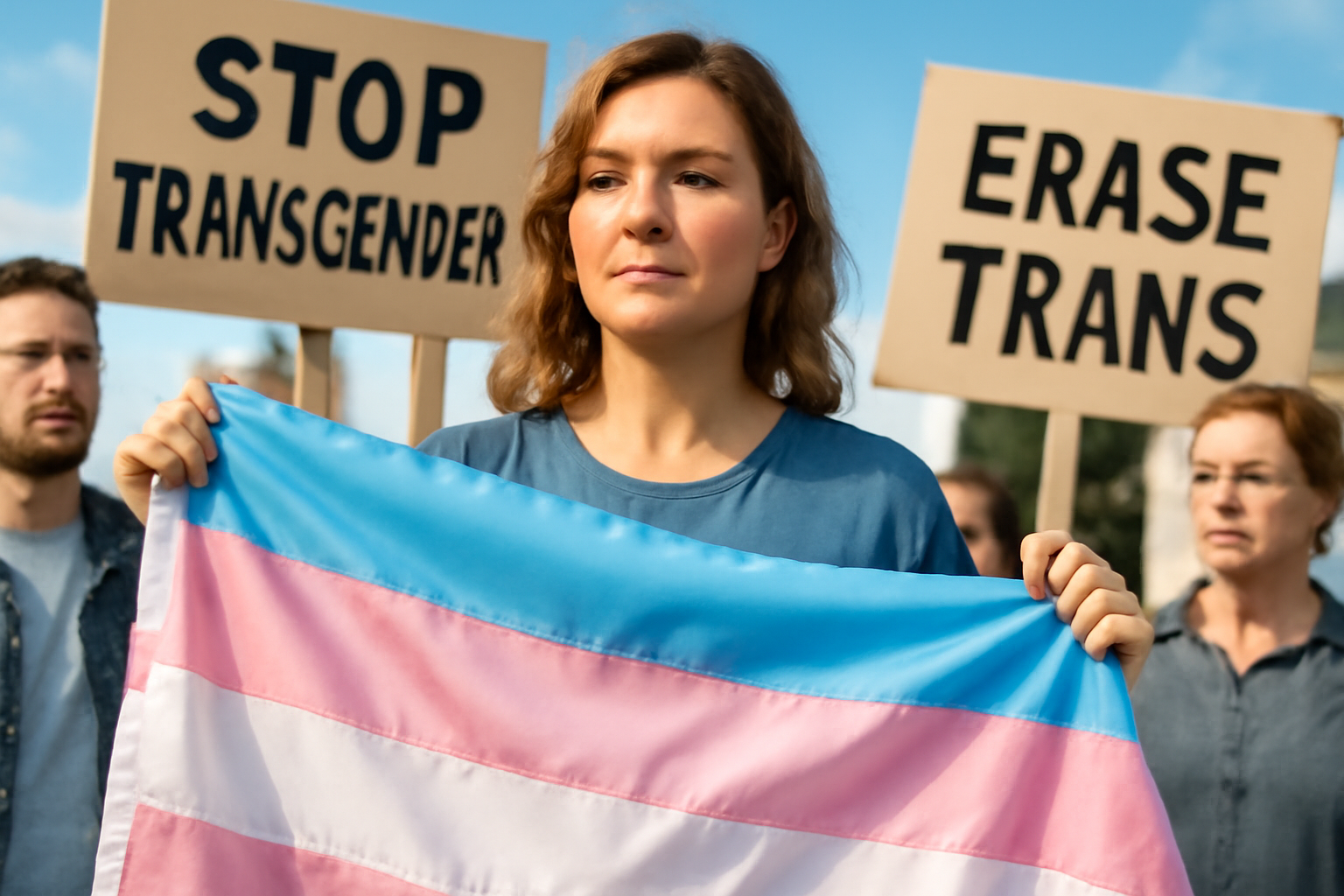
Understanding the Threats to Transgender Rights
In recent years, there has been increasing concern about policies and rhetoric that seem to target the transgender community, attempting to undermine their rights and existence. While historical comparisons are often fraught with complexity, drawing parallels to past authoritarian regimes can sometimes highlight the gravity of current issues. In this context, examining the tactics used by leaders who have sought to erase marginalized groups can offer valuable insights.
One of the most worrying trends in contemporary politics is the deliberate attempt to marginalize and erase the existence of transgender individuals. These efforts are not just about policy changes but also involve a broader cultural and social campaign to delegitimize transgender identities. This is not unlike historical efforts where oppressive regimes have targeted specific groups to consolidate power and control public discourse.
Historical Echoes in Modern Policies
The comparison between modern-day policies targeting the transgender community and historical actions against marginalized groups can be unsettling but instructive. For instance, in the early 20th century, authoritarian regimes often targeted minority groups to rally support and create a common enemy. These regimes used legal, cultural, and social tools to strip away the rights and recognition of these groups, portraying them as threats to the social order.
In today’s context, some political leaders use similar tactics by promoting policies that aim to deny the recognition and rights of transgender people. These policies often include restricting access to healthcare, limiting legal recognition, and fostering environments of discrimination and fear. Such actions are not merely administrative changes; they are part of a broader strategy to erase the visibility and legitimacy of transgender people in society.
Legal and Social Implications
The implications of these policies are profound. Legally, they create barriers for transgender people to access necessary services and protections. Socially, these policies foster environments where discrimination is normalized, and hate is emboldened. This not only harms transgender individuals but also sends a chilling message to anyone who does not conform to traditional gender norms.
Moreover, these moves often come with a rhetoric that dehumanizes transgender individuals, depicting them as threats to societal values. This approach can be seen in the language used by some leaders who frame transgender rights as "dangerous" or "immoral." Such language echoes historical propaganda used to justify discrimination and persecution of marginalized groups.
Resistance and Resilience
Despite these challenges, the transgender community and its allies have shown incredible resilience. Activists and advocates continue to fight for recognition and rights, often drawing on lessons from past civil rights movements. They work tirelessly to educate the public, challenge discriminatory policies in court, and support each other in the face of adversity.
Furthermore, the growing visibility of transgender individuals in media, politics, and other areas of public life helps to counteract the attempts to erase their existence. By sharing their stories and experiences, transgender people are able to foster greater understanding and acceptance, challenging the narratives that seek to marginalize them.
The Importance of Solidarity
As history has shown, the fight against oppression requires solidarity across communities. Supporting transgender rights is not just about advocating for a single group but about standing up for the principles of equality and human dignity. It is crucial for allies to speak out against efforts that seek to undermine transgender rights and to support initiatives that promote inclusion and equality for all.
In conclusion, while the historical parallels to past regimes are deeply concerning, they also serve as a powerful reminder of what is at stake. The ongoing struggle for transgender rights is part of a broader movement towards justice and equality. By learning from history and standing together, we can resist attempts to erase any group’s existence and work towards a more inclusive future.
Related Posts
Supreme Court to Address State Bans on Trans Women in Female Sports
The upcoming U.S. Supreme Court term promises to be a pivotal moment for transgender rights, as the nation's highest court has agreed to evaluate whether states have the authority to prohibit transgender women from participating in female sports competitions. This case, scheduled to be argued in the next term beginning October, is expected to have a significant impact on the future of sports inclu [...]
Megan Rapinoe and Sue Bird Announce Amicable Separation After Ten Years Together
In a heartfelt announcement that resonated deeply within the sports and LGBTQ+ communities, soccer star Megan Rapinoe and basketball legend Sue Bird have revealed their decision to part ways after nearly a decade together. The couple, who have been icons both on and off the field, shared the news with their fans through a joint statement on social media, expressing that the choice was made with mu [...]
Groundbreaking Ruling Ends Sodomy Ban for Police and Military in the Dominican Republic
The Constitutional Court of the Dominican Republic recently delivered a landmark decision on November 18th, ruling that the nation’s police and armed forces are not permitted to criminalize consensual same-sex relations among their personnel. This pivotal ruling is a significant stride towards equality and the protection of LGBTQ+ rights within these institutions. A Resounding Victory for Equal [...]