
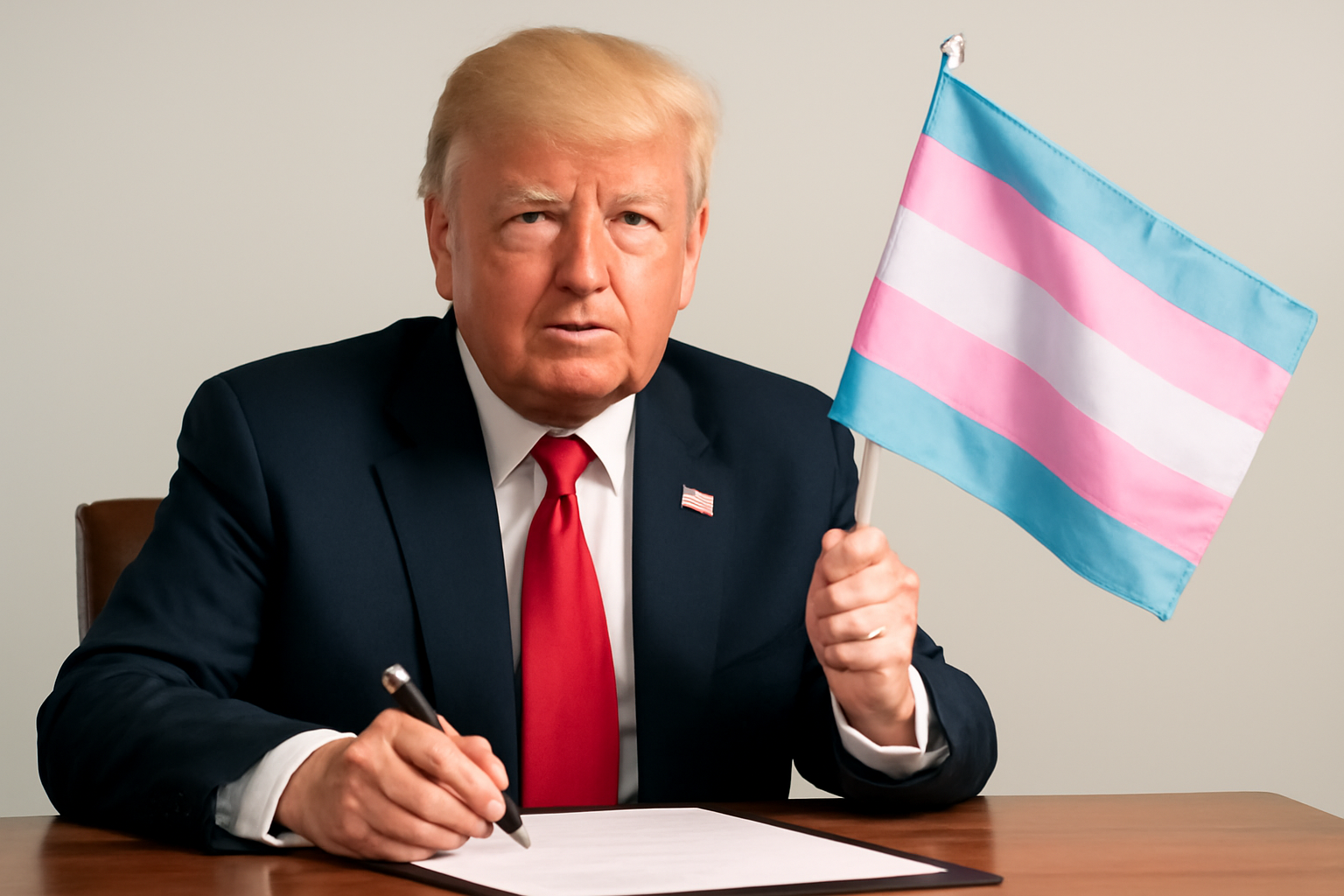
Within the initial week of President Donald Trump’s second term, significant executive actions were unveiled that directly impact the rights and protections of LGBTQ+ individuals. Among these actions, two executive orders have drawn particular attention due to their focus on the transgender community, as well as their broader implications for LGBTQ+ rights and diversity initiatives.
Executive Order Affecting Transgender Recognition
The first of these orders, officially titled “Defending Women From Gender Ideology Extremism and Restoring Biological Truth to the Federal Government,” introduces stringent measures that would alter how the federal government recognizes gender identity. This order aims to restrict the recognition of gender identities that do not align with the sex assigned at birth, potentially paving the way for increased discrimination against transgender and non-binary individuals across several critical areas.
Details provided by advocacy organizations such as the Human Rights Campaign (HRC) highlight the broad scope of potential impacts. The order could allow discrimination against LGBTQ+ communities in the workplace, education, housing, healthcare, and other essential domains. Moreover, it instructs the attorney general to permit individuals to refuse the use of correct pronouns for transgender or non-binary persons and to assert a right to use facilities that align with sex assigned at birth. This directive affects all workplaces covered by the Civil Rights Act of 1964 and federally funded spaces.
Further restrictions include directives to the U.S. Departments of State and Homeland Security to stop issuing identity documents, such as passports and visas, that acknowledge gender identities beyond the traditional biological definitions. This move marks a significant shift in policy that could complicate the daily lives of many transgender individuals who require consistent identity documentation.
Impact on Federal Funding and Vulnerable Populations
Beyond recognition and documentation, the order seeks to cut federal funding for any initiatives or content that appears to support "gender ideology." It also imposes constraints on the use of federal resources to collect data on gender identity issues, potentially stifling research and policy development efforts.
The ramifications for vulnerable populations are particularly severe. The order introduces guidelines that would bar transgender women from accessing resources like domestic violence shelters, compel their housing with men in correctional facilities, and block access to gender-affirming healthcare within those facilities. These measures exacerbate the challenges faced by transgender individuals, particularly those in vulnerable situations.
Elimination of Diversity, Equity, and Inclusion Programs
A second executive order focuses on eliminating diversity, equity, and inclusion (DEI) programs throughout the federal government. The preamble references the term “gender ideology,” though it does not specify what DEI entails. This ambiguity could lead to significant uncertainty and a chilling effect on any federal efforts that might be perceived as DEI-related.
The potential rollback of DEI initiatives raises concerns among civil rights organizations, which fear that this could hinder efforts to promote inclusivity and equality within federal agencies and beyond.
Repeal of Previous Protections
In addition to these new directives, seven executive actions from the previous administration were rescinded. Notably, this includes a directive for federal agencies to implement the Supreme Court's ruling in the case of Bostock v. Clayton County. This landmark decision, established in 2020, affirmed that Title VII’s prohibition against sex discrimination also covers discrimination based on sexual orientation and gender identity.
While the Supreme Court's decision remains a binding legal precedent, the rescission of related directives introduces uncertainty regarding its enforcement and application by federal agencies.
These executive actions have sparked significant concern among LGBTQ+ advocacy groups and allies, who are mobilizing to address the potential setbacks in rights and protections. As the implications of these orders unfold, affected communities and their supporters are called to remain vigilant and advocate for comprehensive policies that uphold the dignity and rights of all individuals, regardless of gender identity or sexual orientation.
Related Posts
Supreme Court to Address State Bans on Trans Women in Female Sports
The upcoming U.S. Supreme Court term promises to be a pivotal moment for transgender rights, as the nation's highest court has agreed to evaluate whether states have the authority to prohibit transgender women from participating in female sports competitions. This case, scheduled to be argued in the next term beginning October, is expected to have a significant impact on the future of sports inclu [...]
Megan Rapinoe and Sue Bird Announce Amicable Separation After Ten Years Together
In a heartfelt announcement that resonated deeply within the sports and LGBTQ+ communities, soccer star Megan Rapinoe and basketball legend Sue Bird have revealed their decision to part ways after nearly a decade together. The couple, who have been icons both on and off the field, shared the news with their fans through a joint statement on social media, expressing that the choice was made with mu [...]
Groundbreaking Ruling Ends Sodomy Ban for Police and Military in the Dominican Republic
The Constitutional Court of the Dominican Republic recently delivered a landmark decision on November 18th, ruling that the nation’s police and armed forces are not permitted to criminalize consensual same-sex relations among their personnel. This pivotal ruling is a significant stride towards equality and the protection of LGBTQ+ rights within these institutions. A Resounding Victory for Equal [...]