
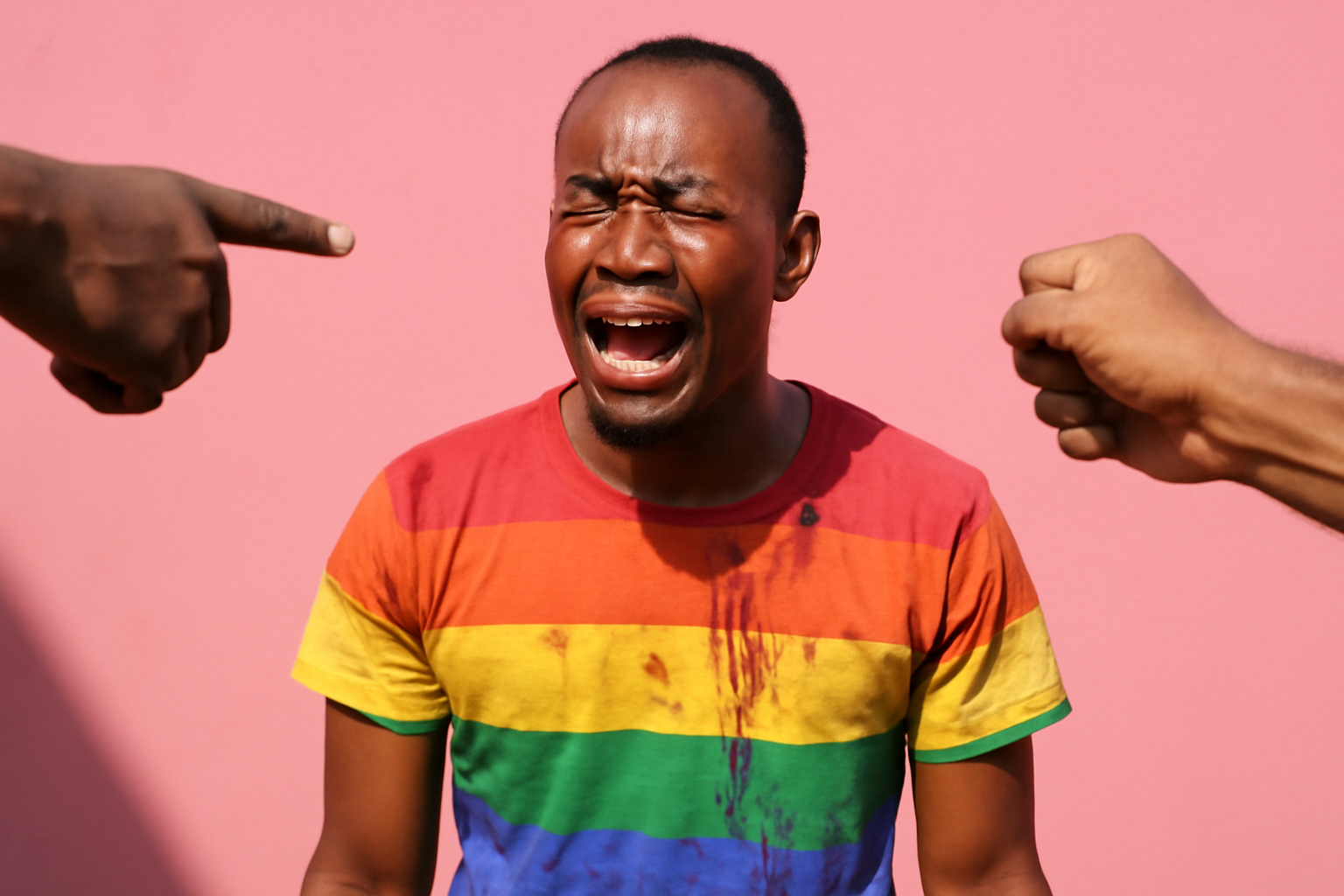
The rising tide: Anti-LGBTQ+ violence in Nigeria
Recently, Nigeria has seen an alarming rise in violence against LGBTQ+ individuals. This crisis isn't happening in a vacuum; it's fueled by conservative beliefs spread on social media and harsh laws that criminalize same-sex relationships. These factors create a hostile environment where vigilante attacks are becoming all too common, often with tragic results.
What's even more shocking are videos capturing these brutal incidents, shared far and wide on social media. Disturbingly, while these clips have sparked outrage from global audiences, they still find support among certain circles within Nigeria.
A tragic event in Kano State
One particularly horrifying event took place in July. In Kano State, where Sharia law governs, two high school students were reportedly killed by fellow classmates. The students were accused, without proof, as being involved in same-sex activities. Their peers attacked them using metal rods known locally as "Gwale-Gwale," leaving two students dead and two others seriously injured. Authorities have since arrested eleven individuals linked with this brutal act.
The fear these attacks instill goes beyond physical harm. One student who witnessed an attack said, "I never thought I'd see something like this happen before my eyes. It could've been me or someone I love."
Assaults on campuses and social media's role
In another recent incident at Delta State University in southern Nigeria, a graphic video surfaced showing two students beaten by a mob after being accused—again, without evidence—of being gay. The crowd forcefully entered a security building where these students had taken refuge, dragging them out and subjecting them publicly.
Sadly, this isn't an isolated incident. Across Nigeria, vigilante groups target individuals they suspect, stripping them not just physically but also robbing them entirely. These attacks are frequently filmed and shared on platforms like TikTok and Twitter, amplifying their psychological impact on LGBTQ+ communities.
Legal challenges and their effects
Nigeria's legal system provides scant protection—or none at all—for LGBTQ+ people. Federal laws punish same-sex relationships with sentences reaching up 14 years in prison. In areas under Sharia law, being gay can be punishable by death.
Philip, a queer rights activist in Lagos, explains, "This violence isn't only about laws anymore. It's about individuals who believe they're entitled—perhaps even obligated—to punish behaviors they deem immoral. And they're using social media as a twisted stage."
The power and peril: Social media campaigns
Social media influencers, like Nigerian TikToker S.K Records, have only fanned these flames by launching campaigns such as "Save Our Society," depicting homosexuality as if it were a menace. For some young Nigerians, this reinforces their belief that violence against LGBTQ+ people can be justified.
The speed at which this damaging rhetoric spreads highlights an urgent need: counter-narratives and stronger support systems promoting LGBTQ+ rights in Nigeria and across Africa are essential. The international community needs not just witness but actively speak out against these human rights violations, advocating steadfastly alongside those fighting tirelessly on behalf equality and understanding.
As conditions deteriorate, activists are crying out: there must be immediate global awareness and intervention, aimed squarely at protecting both lives and dignity within Nigeria's LGBTQ+ populace.
Related Posts
Supreme Court to Address State Bans on Trans Women in Female Sports
The upcoming U.S. Supreme Court term promises to be a pivotal moment for transgender rights, as the nation's highest court has agreed to evaluate whether states have the authority to prohibit transgender women from participating in female sports competitions. This case, scheduled to be argued in the next term beginning October, is expected to have a significant impact on the future of sports inclu [...]
Megan Rapinoe and Sue Bird Announce Amicable Separation After Ten Years Together
In a heartfelt announcement that resonated deeply within the sports and LGBTQ+ communities, soccer star Megan Rapinoe and basketball legend Sue Bird have revealed their decision to part ways after nearly a decade together. The couple, who have been icons both on and off the field, shared the news with their fans through a joint statement on social media, expressing that the choice was made with mu [...]
Groundbreaking Ruling Ends Sodomy Ban for Police and Military in the Dominican Republic
The Constitutional Court of the Dominican Republic recently delivered a landmark decision on November 18th, ruling that the nation’s police and armed forces are not permitted to criminalize consensual same-sex relations among their personnel. This pivotal ruling is a significant stride towards equality and the protection of LGBTQ+ rights within these institutions. A Resounding Victory for Equal [...]