
In the ever-shifting landscape of politics, many nations that pride themselves on being liberal democracies—such as France, Germany, and the United States—find themselves veering towards more conservative ideologies. This trend has caused deep concern among those who champion the principles of social justice, particularly following the re-election of figures like Donald Trump in the United States. The victory of such leaders is reflective of long-standing and deep-rooted societal issues, including patriarchal and nationalist ideologies that have been brought into the spotlight.
Understanding Social Movements
Social movements have been a focal point of study for sociologists, aiming to understand their lifecycle, which includes emergence, growth, and sometimes decline. Resource mobilization theory, emerging in the 1970s, suggests that social movements are rational responses to societal conditions that are deemed unacceptable. These movements can vary significantly in their goals and methods:
- Reform Movements: Aim for limited but significant changes within existing systems.
- Revolutionary Movements: Seek to completely overhaul current systems and replace them with entirely new ways of governance and living.
- Reactionary Movements: Attempt to halt or reverse progress achieved by other movements.
- Self-Help Movements: Focus on improving individual lives rather than broader societal change.
- Religious Movements: Aim to reinforce religious beliefs and convert others.
The Role of Non-Violent Civil Disobedience
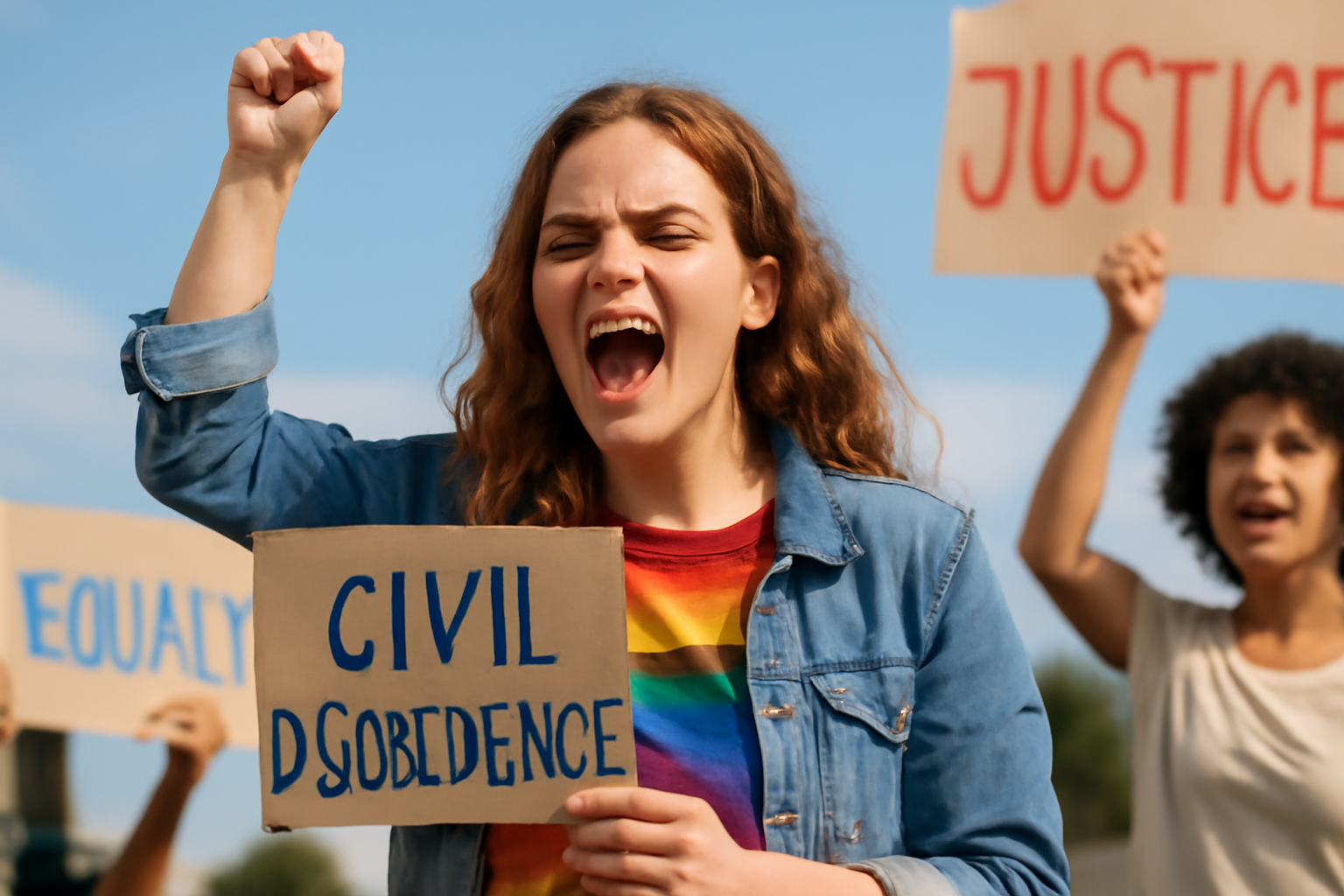
Non-violent civil disobedience has been a powerful tool for enacting social change. As famously stated by Dr. Martin Luther King Jr., breaking unjust laws to highlight their injustice is a profound form of respect for the law. In democratic societies, where property rights often overshadow human rights, the First Amendment of the U.S. Constitution stands as a testament to the value of free speech and assembly.
Throughout history, students and activists have utilized non-violent resistance to advocate for change, from opposing the Vietnam War to fighting for LGBTQ+ rights. My personal journey as an activist began during my university years in the late 1960s, organizing rallies and student strikes. These actions symbolized our collective dissent against unjust government policies.
Research by Erica Chenoweth has demonstrated the effectiveness of non-violent campaigns over violent ones, showing that campaigns involving just 3.5% of the population can lead to significant change. This underscores the potential for non-violent methods to rally diverse groups across societal divides.
Building Coalitions Across Identities
In our pursuit of social change, coalition politics have become increasingly important. By forming alliances across identities, activists challenge power imbalances related to gender, race, and socioeconomic status. True progress is achieved by uniting marginalized groups with shared ideals and strategies, moving beyond individual identities to focus on common goals.
By addressing various aspects of oppression, activists are dismantling the "wheel" of systemic issues rather than just individual "spokes." This holistic approach is key to achieving lasting change and involves continuous self-education and collaboration with like-minded individuals.
Strategies for Action
Activists today have a multitude of strategies at their disposal. Here are some actionable steps:
- Support and volunteer with organizations dedicated to social justice, such as the ACLU, Southern Poverty Law Center, and LGBTQ+ advocacy groups.
- Participate in peaceful protests and marches, and seek training in non-violent civil disobedience.
- Engage in the political process by voting for progressive candidates and advocating for policy change.
- Work with community groups to create sanctuary spaces for undocumented immigrants.
- Stay informed and connected through book clubs, discussion groups, and newsletters.
Above all, self-care is crucial. Activism requires resilience, and taking time to rest and recharge is essential to avoid burnout. Connecting with loved ones, enjoying simple pleasures, and maintaining a healthy balance between activism and personal well-being can sustain the long-term fight for justice.
The words of figures such as Edmund Burke and Margaret Mead remind us of our power: "The only thing necessary for evil to triumph is for good people to do nothing," and "Never doubt that a small group of thoughtful, committed citizens can change the world." Together, through informed and compassionate action, we can create the change we wish to see in the world.
Related Posts
Supreme Court to Address State Bans on Trans Women in Female Sports
The upcoming U.S. Supreme Court term promises to be a pivotal moment for transgender rights, as the nation's highest court has agreed to evaluate whether states have the authority to prohibit transgender women from participating in female sports competitions. This case, scheduled to be argued in the next term beginning October, is expected to have a significant impact on the future of sports inclu [...]
Megan Rapinoe and Sue Bird Announce Amicable Separation After Ten Years Together
In a heartfelt announcement that resonated deeply within the sports and LGBTQ+ communities, soccer star Megan Rapinoe and basketball legend Sue Bird have revealed their decision to part ways after nearly a decade together. The couple, who have been icons both on and off the field, shared the news with their fans through a joint statement on social media, expressing that the choice was made with mu [...]
Groundbreaking Ruling Ends Sodomy Ban for Police and Military in the Dominican Republic
The Constitutional Court of the Dominican Republic recently delivered a landmark decision on November 18th, ruling that the nation’s police and armed forces are not permitted to criminalize consensual same-sex relations among their personnel. This pivotal ruling is a significant stride towards equality and the protection of LGBTQ+ rights within these institutions. A Resounding Victory for Equal [...]