
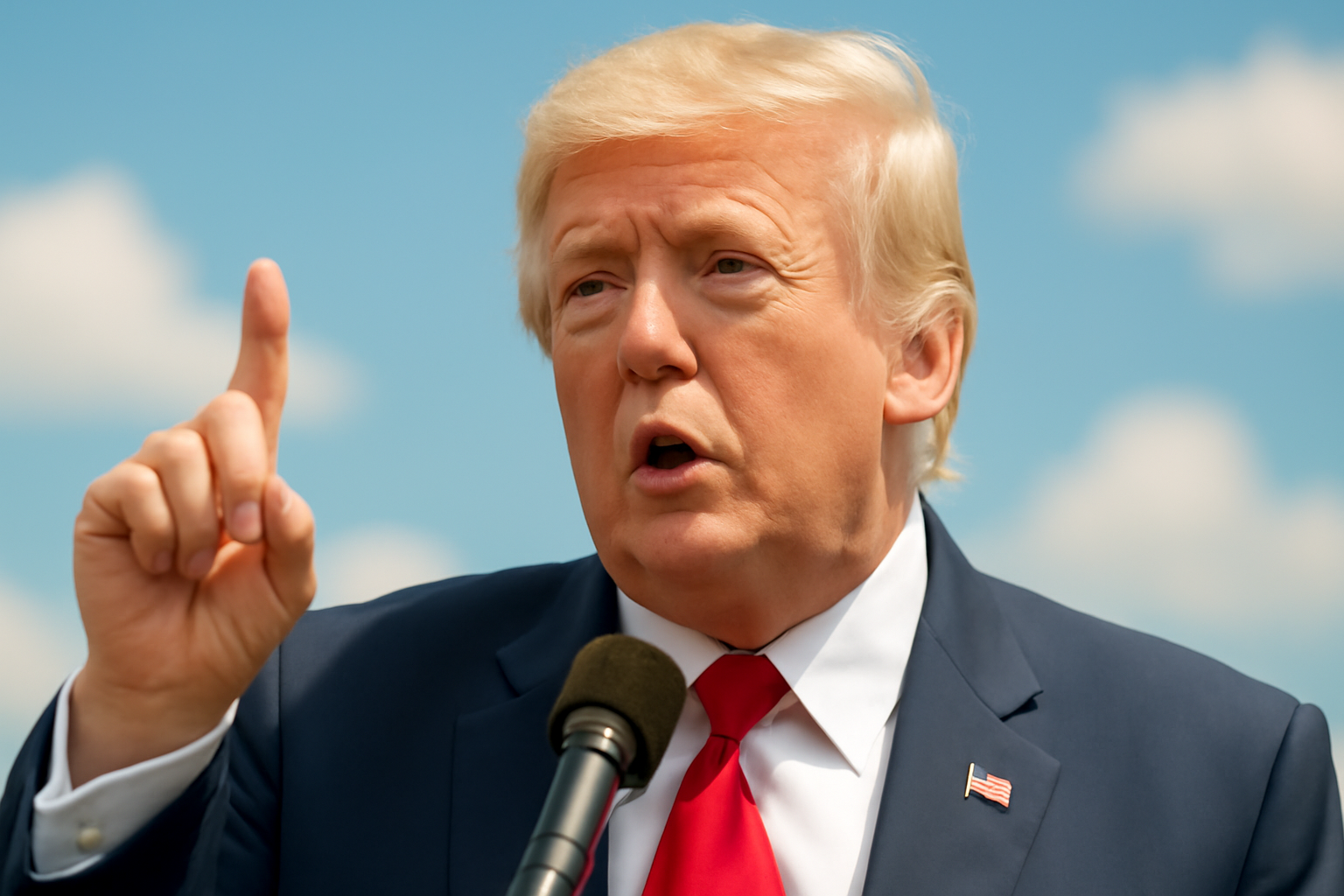
Recently, former President Donald Trump attempted to answer a question that has become a cultural flashpoint: "What is a woman?" This question, often posed by certain conservative figures, is intended to challenge perceptions and definitions put forth by liberals and progressives. However, Trump's response was far from comprehensive or inclusive, leaving many scratching their heads at its inadequacy.
Trump made the remarks during an event for the swearing-in of interim U.S. Attorney for the District of New Jersey, Alina Habba. The question came from a reporter who thanked Trump for his stance on "keeping men out of women’s sports," and asked, "What is a woman and why is it important that we understand the difference between men and women?" This was asked in light of Women’s History Month.
Trump began his answer, "It’s sort of easy to answer for me," suggesting confidence in his forthcoming definition. "A woman is someone who can have a baby under certain circumstances, she has a quality…" he started, but did not finish this thought before veering into unrelated commentary.
Trump's Definition Falls Short
He continued by saying, "A woman is a person who- a woman is a person who is much smarter than a man, I’ve always said," and added, "A woman is a person who doesn’t give a man even a chance of success." He also touched on the issue of fairness in sports, "A woman’s a person that in many cases has been treated very badly because I think that what happens with this crazy, this crazy issue of men being able to play in women’s sports is just ridiculous and very unfair to women."
While Trump’s commentaries on intelligence and fairness may have been intended as compliments, they failed to provide a clear or inclusive definition of "woman." His definition that a woman is "someone who can have a baby under certain circumstances" is reductive and excludes a large segment of women, including those who are postmenopausal, infertile, or have chosen not to have children. It also inadvertently includes individuals who do not identify as women, such as trans men and nonbinary people who can become pregnant.
This narrow view has been criticized by women’s rights advocates. The complexity and diversity of womanhood encompass far more than reproductive capabilities. Many women, including trans women, do not fall within the parameters of Trump’s definition, highlighting its inadequacy and potential harm.
Addressing Misconceptions in Sports
Trump’s comments about "men" competing in women’s sports further illustrate a misunderstanding of the current issues. No men are competing in women’s sports, nor is there a movement advocating for this. What is occurring is the participation of trans girls and women in girls’ and women’s sports, often under rigorous medical guidelines and qualifications.
Inclusion in sports is not just about fairness but about recognizing the identity and humanity of all individuals. The narrative that trans women are "men" is not only inaccurate but harmful, perpetuating discrimination against trans individuals.
Implications for Women's Rights and LGBTQ+ Advocacy
Beyond the inaccuracies, Trump’s comments reflect broader societal debates on gender identity and roles. Women’s rights advocates have long fought against definitions that tie womanhood strictly to biological functions. Such definitions frequently underpin harmful social norms and legal frameworks, such as those promoting child marriage.
For instance, viewing womanhood as beginning at puberty risks normalizing child marriage and exploitation. Organizations like Girls Not Brides work against such norms, highlighting the dangers of equating biological maturity with readiness for adult responsibilities.
Moreover, trans men and nonbinary individuals often find themselves excluded from discussions due to assumptions about gender and reproductive capabilities. Advocacy for LGBTQ+ rights includes challenging these misconceptions and working towards definitions and policies that recognize the diversity of human experience.
The conversation around "What is a woman?" should focus on inclusivity and respect for self-identification, moving beyond reductive biological determinism. As society progresses, so must our understanding of gender and identity, embracing diversity while challenging old paradigms.
Stay informed about the latest developments and discussions in politics and LGBTQ+ advocacy. Subscribe to our newsletter for insights and updates on how these issues affect our communities and shape our future.
Related Posts
Supreme Court to Address State Bans on Trans Women in Female Sports
The upcoming U.S. Supreme Court term promises to be a pivotal moment for transgender rights, as the nation's highest court has agreed to evaluate whether states have the authority to prohibit transgender women from participating in female sports competitions. This case, scheduled to be argued in the next term beginning October, is expected to have a significant impact on the future of sports inclu [...]
Megan Rapinoe and Sue Bird Announce Amicable Separation After Ten Years Together
In a heartfelt announcement that resonated deeply within the sports and LGBTQ+ communities, soccer star Megan Rapinoe and basketball legend Sue Bird have revealed their decision to part ways after nearly a decade together. The couple, who have been icons both on and off the field, shared the news with their fans through a joint statement on social media, expressing that the choice was made with mu [...]
Groundbreaking Ruling Ends Sodomy Ban for Police and Military in the Dominican Republic
The Constitutional Court of the Dominican Republic recently delivered a landmark decision on November 18th, ruling that the nation’s police and armed forces are not permitted to criminalize consensual same-sex relations among their personnel. This pivotal ruling is a significant stride towards equality and the protection of LGBTQ+ rights within these institutions. A Resounding Victory for Equal [...]