
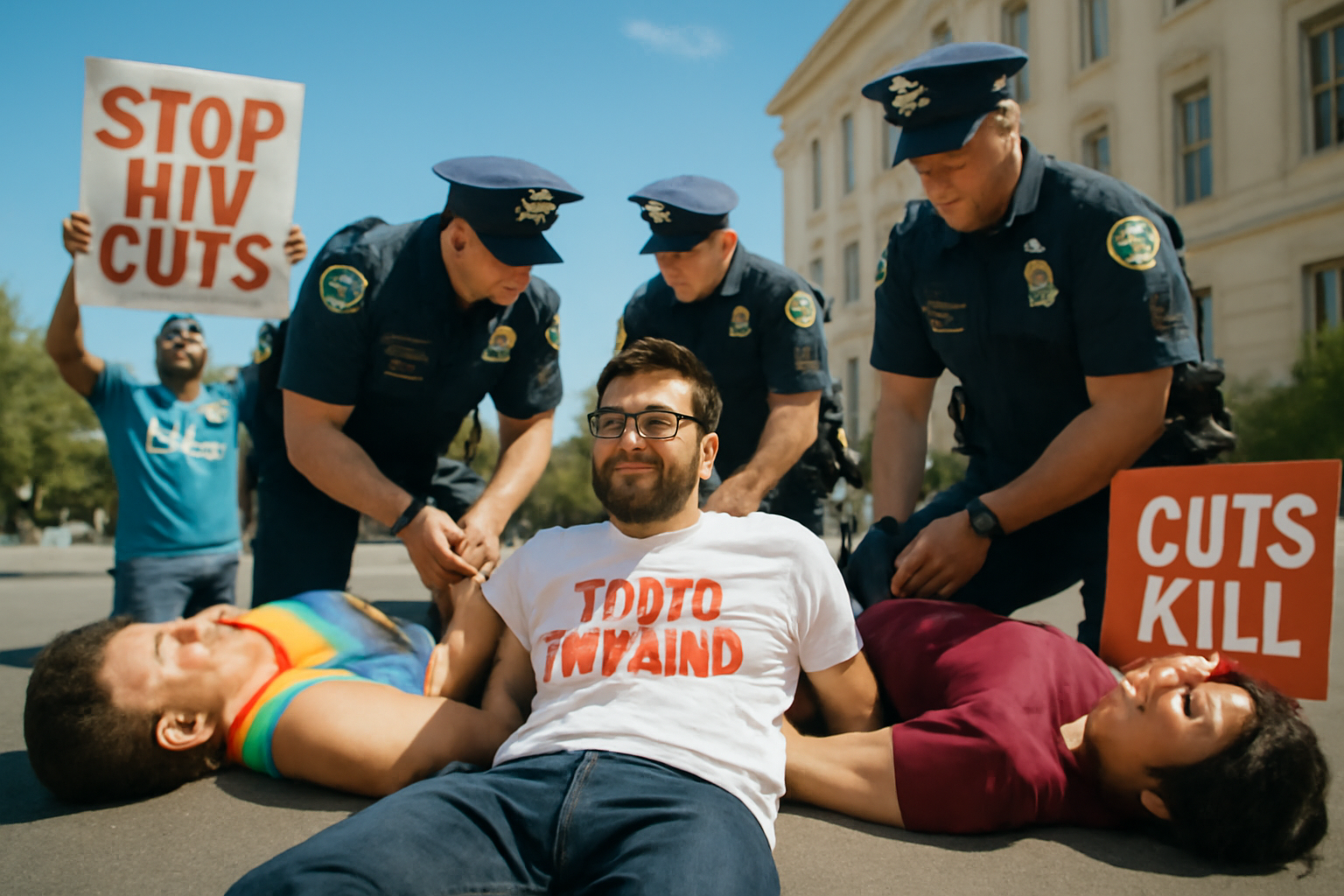
In a powerful act of defiance, a group of demonstrators were arrested during a 'die-in' protest that sought to bring attention to the significant reduction in global HIV funding. The protest took place in a bustling city square, where activists laid on the ground, symbolizing the dire consequences of funding cuts on the lives of those affected by HIV/AIDS.
The Urgency of the Protest
The protest was organized by a coalition of LGBTQ+ rights groups and health advocacy organizations, who are alarmed by recent decisions to reduce financial support for HIV programs around the world. Protesters argue that these cuts could lead to catastrophic outcomes, particularly in low-income regions where access to treatment and prevention services is already limited.
As one of the organizers explained, "We are here to voice our concern and demand that the international community step up its efforts to fight HIV/AIDS. Cutting funding now means turning our backs on millions who rely on these programs for survival."
The 'Die-In' Protest
The protesters chose the 'die-in' as their form of demonstration to visually represent the deaths that could occur without adequate funding. Participants, dressed in red to symbolize the fight against HIV/AIDS, laid silent and still on the ground. This dramatic scene was designed to capture public attention and compel policymakers to reconsider their funding decisions.
Witnesses described the protest as both moving and sobering. The silence of the activists contrasted sharply with the usual hustle and bustle of city life, forcing passersby to stop and reflect on the message being conveyed. Many individuals who observed the demonstration expressed their support and solidarity, with some joining the protest on the spot.
Arrest and Response
The protest turned tense when law enforcement arrived and began arresting demonstrators for obstructing public pathways. Despite the peaceful nature of the protest, authorities cited public safety concerns as the rationale for their actions. In total, over a dozen activists were taken into custody.
In the wake of the arrests, the protest organizers released a statement condemning the actions of the police while reiterating their commitment to the cause. "Our protest was a peaceful appeal for a life-saving cause," the statement read. "Instead of addressing the core issue, authorities chose to silence our voices."
Why Global HIV Funding Matters
Global HIV funding has been instrumental in reducing the prevalence and impact of HIV/AIDS worldwide. Programs supported by international funding provide crucial services such as testing, counseling, antiretroviral therapy, and education on prevention methods. These services have helped millions of people lead healthier, longer lives.
However, the recent trend of reducing such funding threatens to reverse these gains. Health experts warn that without sustained financial support, the progress made in the fight against HIV/AIDS will be lost, leading to increased transmission rates and a resurgence of the epidemic.
Particularly in developing countries, where epidemics are most severe, international aid is often the backbone of national HIV responses. Cuts to funding could lead to shortages of vital medications and a decline in the accessibility of treatment, disproportionately affecting marginalized communities.
Moving Forward
The protest and subsequent arrests have sparked a larger conversation about the responsibility of the global community in addressing health crises such as HIV/AIDS. Activists are calling for renewed commitments from governments and international bodies to not only maintain but increase funding for HIV programs.
The hope is that by shining a light on the potential consequences of funding cuts, policymakers will be motivated to take action that prioritizes the health and well-being of millions worldwide. "This is not just about numbers on a budget sheet," said one activist. "This is about human lives. And we will not stop fighting until every person has the right to health and dignity."
As activists await trial, they continue to rally support through social media and community engagement, encouraging others to join the campaign for sustained global health funding. The resilience and determination of these advocates serve as a reminder of the power of grassroots movements in effecting change.
As the protest organizers plan their next steps, they emphasize that the movement is far from over. The struggle to secure essential resources for HIV/AIDS programs continues, driven by the belief that health is a universal right.
Related Posts
Supreme Court to Address State Bans on Trans Women in Female Sports
The upcoming U.S. Supreme Court term promises to be a pivotal moment for transgender rights, as the nation's highest court has agreed to evaluate whether states have the authority to prohibit transgender women from participating in female sports competitions. This case, scheduled to be argued in the next term beginning October, is expected to have a significant impact on the future of sports inclu [...]
Megan Rapinoe and Sue Bird Announce Amicable Separation After Ten Years Together
In a heartfelt announcement that resonated deeply within the sports and LGBTQ+ communities, soccer star Megan Rapinoe and basketball legend Sue Bird have revealed their decision to part ways after nearly a decade together. The couple, who have been icons both on and off the field, shared the news with their fans through a joint statement on social media, expressing that the choice was made with mu [...]
Groundbreaking Ruling Ends Sodomy Ban for Police and Military in the Dominican Republic
The Constitutional Court of the Dominican Republic recently delivered a landmark decision on November 18th, ruling that the nation’s police and armed forces are not permitted to criminalize consensual same-sex relations among their personnel. This pivotal ruling is a significant stride towards equality and the protection of LGBTQ+ rights within these institutions. A Resounding Victory for Equal [...]