
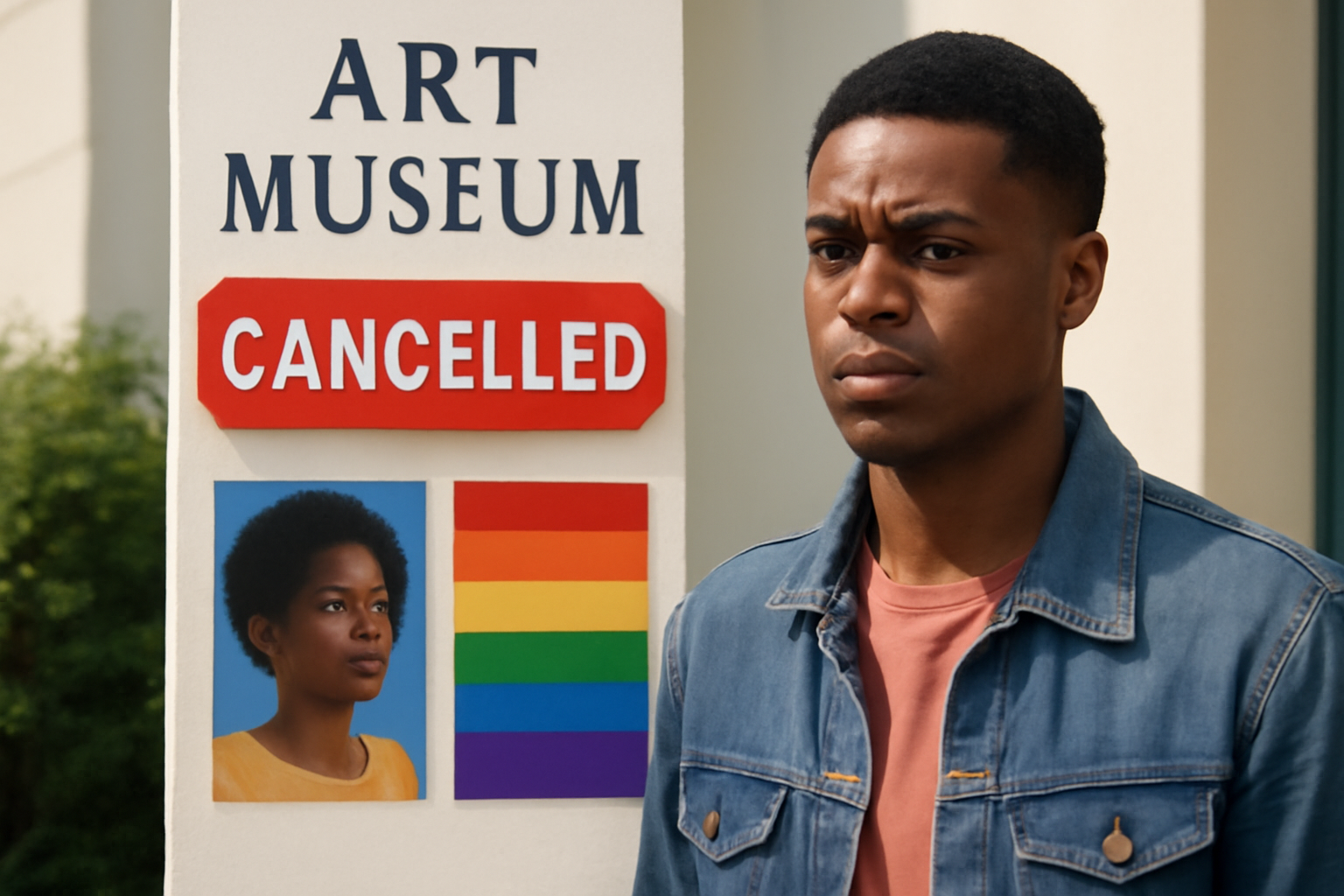
Art Museum of the Americas Cancels Prominent Exhibitions
The Art Museum of the Americas, a cultural institution in Washington D.C. operated by the Organization of American States (OAS), has recently canceled two highly anticipated exhibitions featuring Black and LGBTQ+ artists. The decision, according to those involved, comes in response to political pressure and threats to federal funding.
These cancellations are seen as a direct result of President Donald Trump’s executive orders aimed at dismantling diversity, equity, and inclusion (DEI) initiatives within the federal government. This decision has sent shockwaves through the art community, highlighting ongoing tensions between cultural institutions and political agendas.
Cheryl D. Edwards, the curator of one of the canceled exhibitions, received a call from Adriana Ospina, the museum’s director, informing her that the exhibition had been "terminated." Edwards expressed her disbelief, stating, "Nobody uses that word in art: terminated." This abrupt cancellation raised concerns about the future of similar exhibitions and the chilling effect on artistic expression.
The Impact on Queer and Black Artists
Another exhibition, curated by Andil Gosine, a Canadian artist and professor at York University, was similarly canceled. Gosine’s show was to feature works by a dozen artists, many of whom are queer individuals of color from Canada. He received a message stating that his exhibition was canceled without further explanation, adding to the frustration and confusion surrounding the museum’s actions.
The Art Museum of the Americas receives significant funding, indirectly, from the U.S. government. This funding is primarily channeled through the OAS, an international organization similar to the United Nations, with the U.S. contributing approximately $50 million annually. This financial relationship has been put under scrutiny following executive orders from Trump, instructing Secretary of State Marco Rubio to evaluate and potentially sever U.S. ties with international bodies deemed contrary to American interests.
These orders have led to federal funding cuts for projects perceived to support DEI efforts, escalating concerns among marginalized communities and artists who feel their voices and experiences are being erased.
Political Influence on Cultural Institutions
In January, Secretary of State Marco Rubio communicated to the OAS that the Trump administration’s "America First" policies would influence the organization's future relationships, including a commitment to "combat genuine enemy propaganda with the fundamental truth that America is a great and just country whose people are generous." This political overtone has fueled fears that cultural institutions might prioritize political agendas over artistic freedom and diversity.
Edwards’ exhibition, titled "Before the Americas," aimed to showcase the rich artistic contributions of African American, Afro-Latino, and Caribbean artists, exploring the historical impact of the transatlantic slave trade and the African diaspora. The cancellation of such shows is perceived as a strategic move to align U.S. foreign policy with a more insular and exclusionary vision.
Andil Gosine voiced his apprehensions, stating, "I fear, at this moment, that means throwing queer people, queer artists, marginal people, under the bus." This sentiment echoes the wider concern that political directives are stifling diverse artistic voices, particularly those challenging mainstream narratives.
Cheryl D. Edwards, aged 71, has experienced institutional racism throughout her career and sees this as a direct attempt to "silence artistic voices." Raised in Miami during segregation, she identifies this current wave of political intervention as an alarming escalation.
A Broader Context of Cultural Control
Recently, President Trump appointed himself as chair of the board of the Kennedy Center for the Performing Arts, declaring a new "golden age of arts and culture" free of drag shows and "anti-American propaganda." This move has been met with protests and resignations from prominent figures in the arts community.
Furthermore, a federal judge recently blocked certain aspects of Trump’s DEI executive orders, labeling them as "textbook viewpoint-based discrimination." This legal pushback provides a glimmer of hope for advocates of diversity and inclusion within the arts and beyond.
The broader implications of these actions continue to unfold, as artists and activists rally to protect cultural spaces from political overreach. It is a pivotal moment for the LGBTQ+ community and artists of color, as they strive to preserve their platforms for expression and resistance against systemic silencing.
Stay informed about developments affecting the LGBTQ+ community by subscribing to our newsletter. Get insights into how political changes impact art, culture, and identity.
Related Posts
Supreme Court to Address State Bans on Trans Women in Female Sports
The upcoming U.S. Supreme Court term promises to be a pivotal moment for transgender rights, as the nation's highest court has agreed to evaluate whether states have the authority to prohibit transgender women from participating in female sports competitions. This case, scheduled to be argued in the next term beginning October, is expected to have a significant impact on the future of sports inclu [...]
Megan Rapinoe and Sue Bird Announce Amicable Separation After Ten Years Together
In a heartfelt announcement that resonated deeply within the sports and LGBTQ+ communities, soccer star Megan Rapinoe and basketball legend Sue Bird have revealed their decision to part ways after nearly a decade together. The couple, who have been icons both on and off the field, shared the news with their fans through a joint statement on social media, expressing that the choice was made with mu [...]
Groundbreaking Ruling Ends Sodomy Ban for Police and Military in the Dominican Republic
The Constitutional Court of the Dominican Republic recently delivered a landmark decision on November 18th, ruling that the nation’s police and armed forces are not permitted to criminalize consensual same-sex relations among their personnel. This pivotal ruling is a significant stride towards equality and the protection of LGBTQ+ rights within these institutions. A Resounding Victory for Equal [...]