
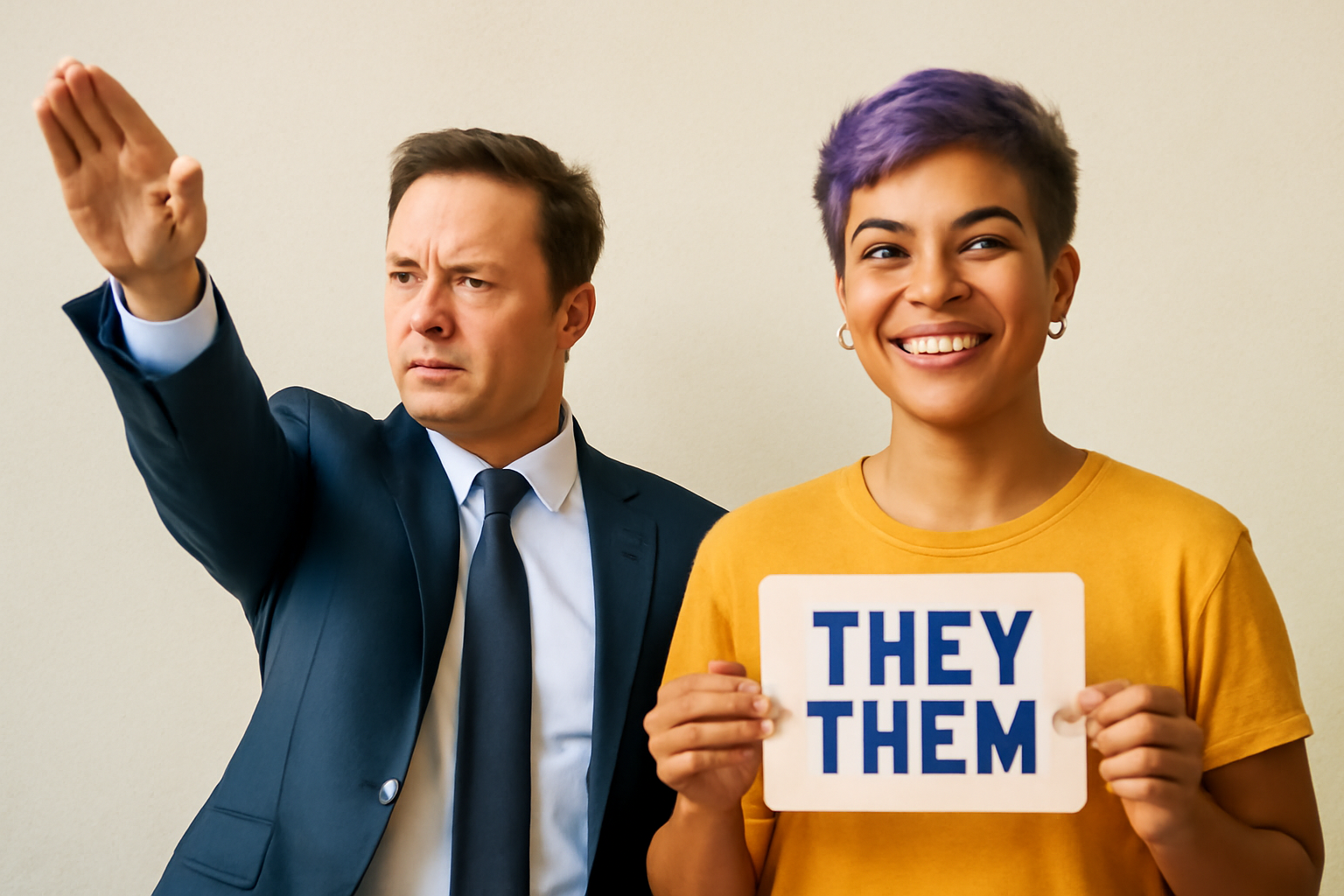
In our fast-paced, ever-evolving society, how we react—collectively and individually—to different forms and expressions tells us a lot about what we truly value. Recently, a journalist pointed out a strange disparity in society's reactions: when Elon Musk, a well-known public figure, allegedly performed a Nazi salute, people seemed relatively indifferent. Yet, whenever someone uses non-binary pronouns, there's a tidal wave debate and discomfort. This stark contrast begs us all: what are our priorities, and why are they so inconsistent?
Understanding pronouns and identity
The conversation around pronouns and identity has really taken off in recent years. More and more folks are embracing who they are and want their pronouns respected as a fundamental part. Still, as language and identities evolve, they meet resistance and sometimes even mockery from parts five society.
Meanwhile, when influential people display extremist gestures, which have long been associated with hate, society often reacts with a shrug. The journalist in question points out this inconsistency and asks why actions that could hurt or divide people get less attention than language changes promoting inclusivity.
Looking at society's reactions
The journalist suggests these uneven levels outrage reveal our hidden biases and values. When someone like Elon Musk, who can say or do nearly anything newsworthy, allegedly makes extremist gestures, it barely rustles a feather.
Contrast that with people who share their preferred pronouns or gently correct someone. Often, they face criticism or are labeled as “too sensitive,” all while simply asking others respect their identity with just a word or two.
The power behind pronouns
Pronouns pack a punch when it comes respecting and validating someone identity. For many LGBTQ+ folks, using their correct pronouns affirms who they truly are. On other hand, misgendering or refusing honor someone pronouns can be deeply hurtful and alienating.
When society gets more worked up about pronoun use than gestures linked hatred, it sends a disturbing message about what truly matters. We really need focus on nurturing understanding and acceptance, rather than sticking outdated norms or ignoring potentially harmful actions.
Shifting towards inclusion
To build a more inclusive society, we've got start addressing these reaction discrepancies. This means engaging in open, compassionate dialogue and fostering empathy. It isn't about policing our language; it's about creating a space everyone feels seen and respected.
Also, we need hold influential figures accountable. When public figures flirt with extremism, society needs speak out. Making it clear that symbols and actions causing harm are unacceptable sets a standard worth upholding.
Conclusion: moving toward an inclusive future
The comparison raised by this journalist provides a moment pause and a chance move forward. It challenges us evaluate what prioritize as a society and push toward a future where inclusivity isn't just a catchphrase—it a lived reality. By embracing diverse identities and holding hurtful behaviors accountable, we can pave path toward a kinder, fairer society.
Ultimately, our goal should be extend respect, understanding, and acceptance everyone, regardless their pronouns or identities, while ensuring actions promoting hate receive appropriate scrutiny and condemnation.
Related Posts
Supreme Court to Address State Bans on Trans Women in Female Sports
The upcoming U.S. Supreme Court term promises to be a pivotal moment for transgender rights, as the nation's highest court has agreed to evaluate whether states have the authority to prohibit transgender women from participating in female sports competitions. This case, scheduled to be argued in the next term beginning October, is expected to have a significant impact on the future of sports inclu [...]
Megan Rapinoe and Sue Bird Announce Amicable Separation After Ten Years Together
In a heartfelt announcement that resonated deeply within the sports and LGBTQ+ communities, soccer star Megan Rapinoe and basketball legend Sue Bird have revealed their decision to part ways after nearly a decade together. The couple, who have been icons both on and off the field, shared the news with their fans through a joint statement on social media, expressing that the choice was made with mu [...]
Groundbreaking Ruling Ends Sodomy Ban for Police and Military in the Dominican Republic
The Constitutional Court of the Dominican Republic recently delivered a landmark decision on November 18th, ruling that the nation’s police and armed forces are not permitted to criminalize consensual same-sex relations among their personnel. This pivotal ruling is a significant stride towards equality and the protection of LGBTQ+ rights within these institutions. A Resounding Victory for Equal [...]