
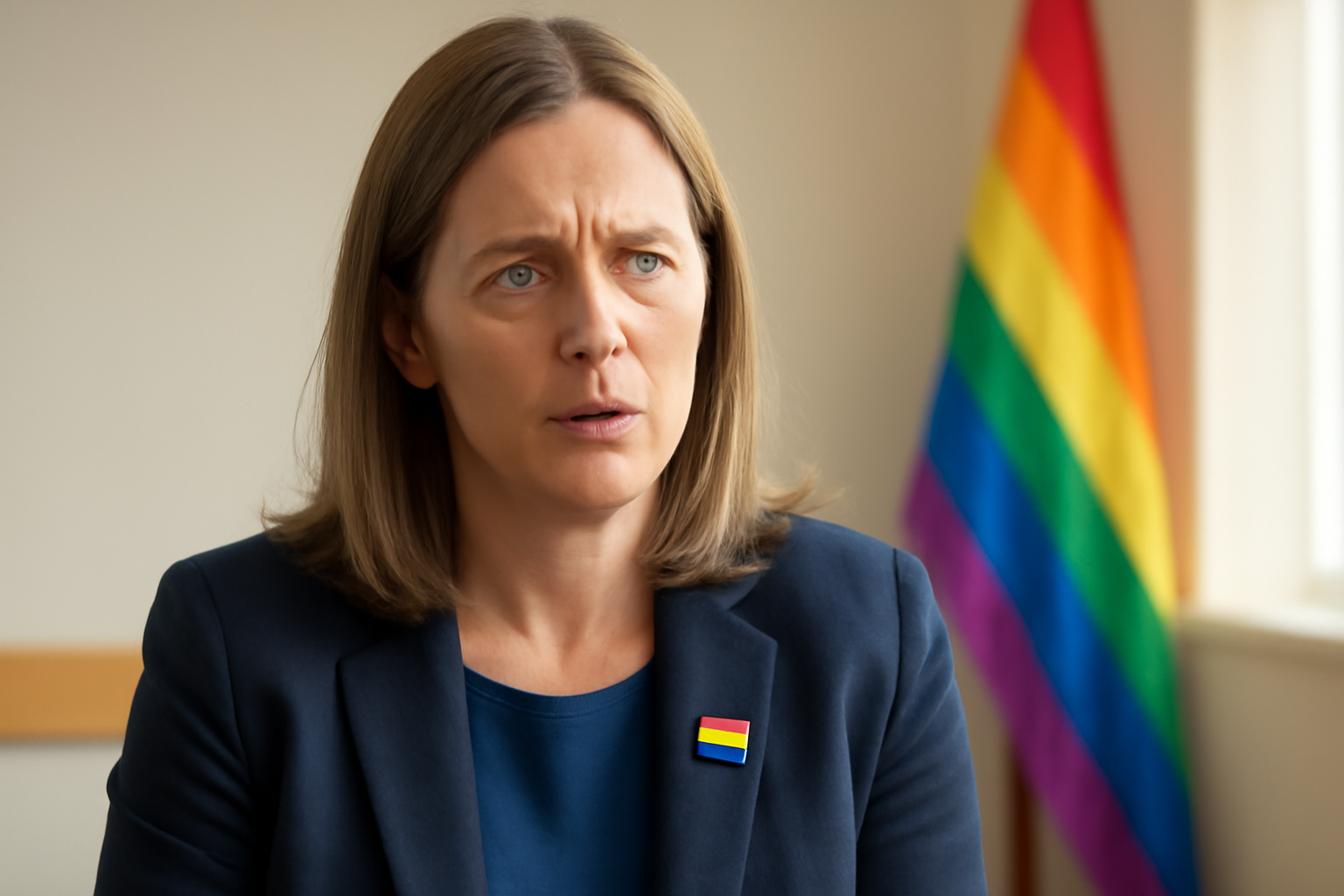
Recently, a civil servant at Britain's Office for National Statistics (ONS) stirred up quite a debate when they decided a Pride flag badge was part of their work wardrobe. Conservative voices were quick to criticize, sparking fresh discussions about LGBTQ+ visibility in public institutions and whether or not civil servants should remain strictly neutral.
debating neutrality: a colorful clash
Emma Rourke, who currently holds the position of interim deputy national statistician at ONS, wore a small Progress Pride flag on her lanyard during her inaugural address to staff. Some folks weren't happy, arguing that this clashed with the neutrality civil servants are supposed to uphold.
calls of bias on the table
Fiona McAnena, a prominent voice in the gender-critical group Sex Matters, voiced her concerns quite publicly. She called Emma's badge "ostentaneously political," suggesting it signaled where she stood on the ongoing gender identity and biological sex debates. "The civil service code requires impartiality," McAnena emphasized, "and Rourke's actions imply she's picked a side."
The Progress Pride flag isn't just about gay pride; it also stands for transgender, intersex folks, and queer people of color, symbolizing inclusivity and support among a myriad of marginalized communities.
standing up for inclusivity
Despite the backlash, many advocate for such displays in workplaces. Studies suggest a substantial number of women, especially those identifying as queer, firmly stand with transgender individuals and oppose "gender-critical" perspectives.
In fact, earlier this year, over 35,000 women signed a petition against transphobia. One signatory noted, "Trans women pose no threat; they are amongst the most marginalized in society, deserving love and care."
ONS's pledge to inclusivity
The Office for National Statistics fired back at critics, reaffirming its commitment to inclusivity. A spokesperson said, "We strive to be an organization where everyone feels respected. We proudly support all our colleagues to deliver top-notch stats with professionalism and impartiality."
Their response highlights ONS's dedication to creating an environment where diversity isn't just acknowledged but celebrated, mirroring broader societal shifts towards acceptance and equality.
a bigger picture in the workplace
What happened here highlights a larger tension both in public and private sectors over personal beliefs and affiliations on the job. Is displaying these symbols a challenge to perceived neutrality? That's still very much up for debate.
Supporters of Rourke's choice argue that supporting marginalized communities through symbols like this badge promotes inclusivity and reflects our society's diverse identities. They believe that expressing these values doesn't undermine impartiality but rather enriches the work environment.
final thoughts: balancing personal expression and professionalism
This discussion offers a window into a larger societal conversation around representation, equality, and what role public institutions should play. It makes us question how we balance personal expression with professional expectations.
As these talks continue, workplaces need to tread carefully, ensuring everyone feels valued and respected while keeping things professional.
What do you think? Jump into the conversation below and don't forget to keep it respectful!
Related Posts
Supreme Court to Address State Bans on Trans Women in Female Sports
The upcoming U.S. Supreme Court term promises to be a pivotal moment for transgender rights, as the nation's highest court has agreed to evaluate whether states have the authority to prohibit transgender women from participating in female sports competitions. This case, scheduled to be argued in the next term beginning October, is expected to have a significant impact on the future of sports inclu [...]
Megan Rapinoe and Sue Bird Announce Amicable Separation After Ten Years Together
In a heartfelt announcement that resonated deeply within the sports and LGBTQ+ communities, soccer star Megan Rapinoe and basketball legend Sue Bird have revealed their decision to part ways after nearly a decade together. The couple, who have been icons both on and off the field, shared the news with their fans through a joint statement on social media, expressing that the choice was made with mu [...]
Groundbreaking Ruling Ends Sodomy Ban for Police and Military in the Dominican Republic
The Constitutional Court of the Dominican Republic recently delivered a landmark decision on November 18th, ruling that the nation’s police and armed forces are not permitted to criminalize consensual same-sex relations among their personnel. This pivotal ruling is a significant stride towards equality and the protection of LGBTQ+ rights within these institutions. A Resounding Victory for Equal [...]