
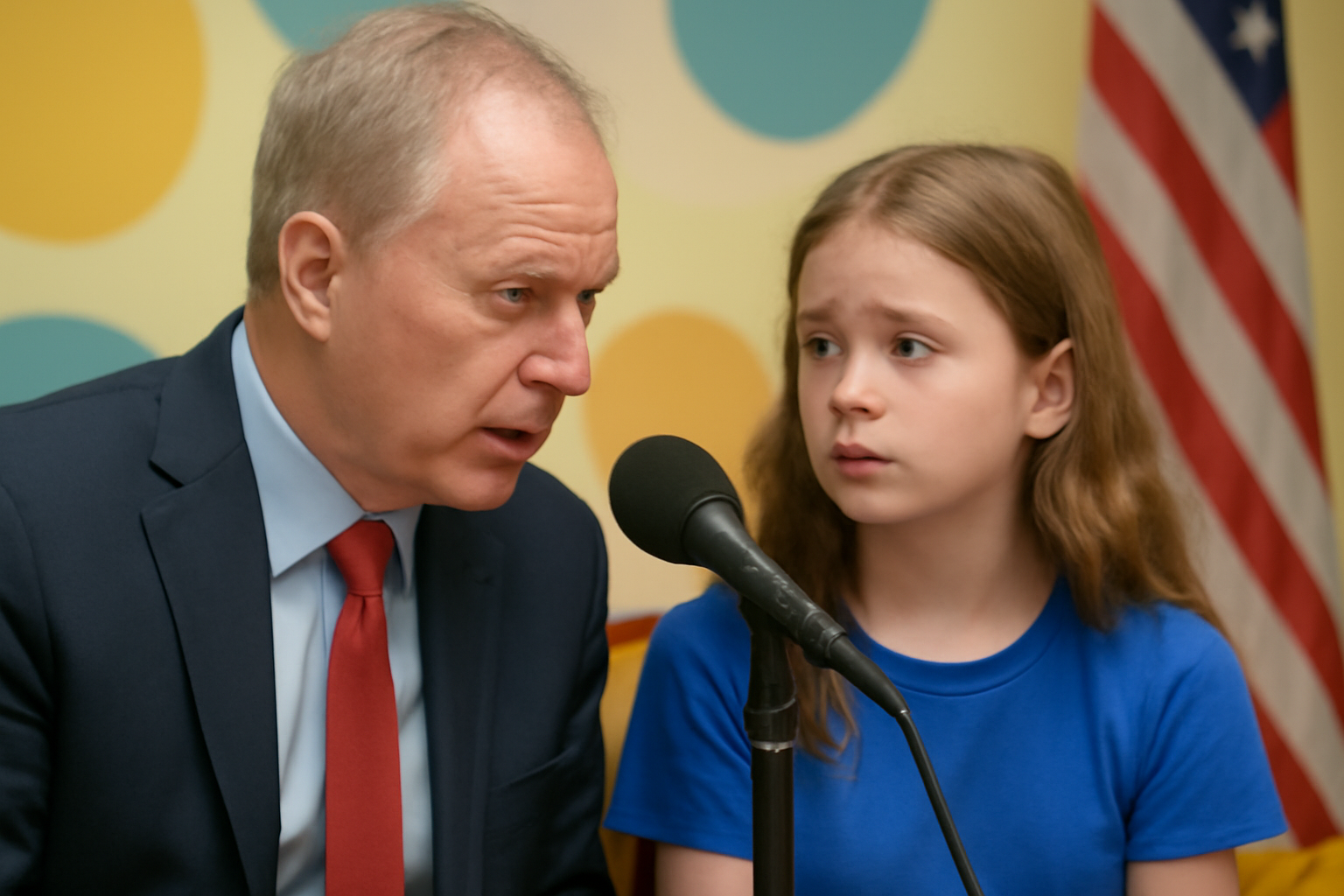
A recent incident at a school event in Pennsylvania has sparked a heated debate over the appropriateness of questions asked by public officials to children, and has highlighted broader issues around book bans and educational content. The incident involved a Republican lawmaker, State Senator David Argall, who found himself in hot water after posing an inappropriate question to a 12-year-old girl during a Civics Bee competition. This has led to public outcry and raised questions about the responsibilities of elected officials in educational settings.
The event took place at Pennsylvania State Schuylkill University, where sixth grader Mary Anderson participated in a Civics Bee, a competition designed to engage young students in discussions about civics and public policy. Mary delivered a presentation on the topic of book bans, an issue that has been gaining traction in recent years as schools and libraries grapple with questions about age-appropriate content.
A Question Out of Line
While serving as a judge for the competition, Senator Argall posed a question to Mary that stunned the audience. “Do you think we should allow pornographic magazines in kindergarten classrooms?” he asked, eliciting a collective gasp from those present. The question left Mary confused and led to a moment of tension in the room as the young student tried to process what was being asked.
Erin Anderson, Mary's mother, was present at the event and later recounted her shock and disappointment. According to her, Argall continued to press the issue after Mary needed clarification on the term "pornography." Argall attempted to explain what he meant by referring to "naked pictures of people in books and magazines," despite the inappropriate nature of the discussion for such a young audience.
Public Outcry and Apology
Following the event, Erin Anderson approached Argall to express her disapproval. She recounted that the senator defended his question, equating book bans directly with issues of pornography—a connection she found deeply flawed. The incident quickly gained traction online, with many criticizing the senator's lack of judgment and the inappropriateness of the question.
The controversy generated considerable media attention, with headlines calling out the senator's behavior. Even outlets not typically aligned against members of his party criticized his actions, labeling them as "wildly inappropriate." The backlash compelled Argall to issue a formal apology the following day.
In his statement, Argall acknowledged that his question was not suitable for the setting and apologized to Mary, her family, and the other participants. He commended the students for their presentations and acknowledged his error in judgment. However, he also attempted to justify his actions by linking them to ongoing legislative discussions about the appropriateness of certain materials for children.
Response from the Community
For Erin Anderson and others in the community, the senator's apology was only partially satisfactory. "If a public official cannot exercise good judgment and basic appropriateness when speaking to children, especially in a civic education setting, then it raises serious concerns about their ability to serve," Anderson remarked.
This incident has brought renewed attention to the ongoing debates about educational content and the role of lawmakers in influencing these discussions. It underscores the importance of ensuring that public officials understand the impact of their words, particularly when engaging with young audiences.
The debate over book bans and age-appropriate content is far from settled, and incidents like this one only add complexity to the dialogue. As communities continue to navigate these challenges, the expectation is that elected officials will approach these topics with care and consideration, especially when they involve children.
Meanwhile, Mary's experience at the Civics Bee has become a pivotal moment in this broader conversation, highlighting the need for sensitivity and awareness in educational and civic discussions. As the story continues to unfold, it serves as a reminder of the importance of thoughtful engagement with youth on complex issues.
Stay informed on the latest developments by subscribing to our newsletter and joining the conversation on how we can create more inclusive and appropriate educational environments for all students.
Related Posts
Supreme Court to Address State Bans on Trans Women in Female Sports
The upcoming U.S. Supreme Court term promises to be a pivotal moment for transgender rights, as the nation's highest court has agreed to evaluate whether states have the authority to prohibit transgender women from participating in female sports competitions. This case, scheduled to be argued in the next term beginning October, is expected to have a significant impact on the future of sports inclu [...]
Megan Rapinoe and Sue Bird Announce Amicable Separation After Ten Years Together
In a heartfelt announcement that resonated deeply within the sports and LGBTQ+ communities, soccer star Megan Rapinoe and basketball legend Sue Bird have revealed their decision to part ways after nearly a decade together. The couple, who have been icons both on and off the field, shared the news with their fans through a joint statement on social media, expressing that the choice was made with mu [...]
Groundbreaking Ruling Ends Sodomy Ban for Police and Military in the Dominican Republic
The Constitutional Court of the Dominican Republic recently delivered a landmark decision on November 18th, ruling that the nation’s police and armed forces are not permitted to criminalize consensual same-sex relations among their personnel. This pivotal ruling is a significant stride towards equality and the protection of LGBTQ+ rights within these institutions. A Resounding Victory for Equal [...]