
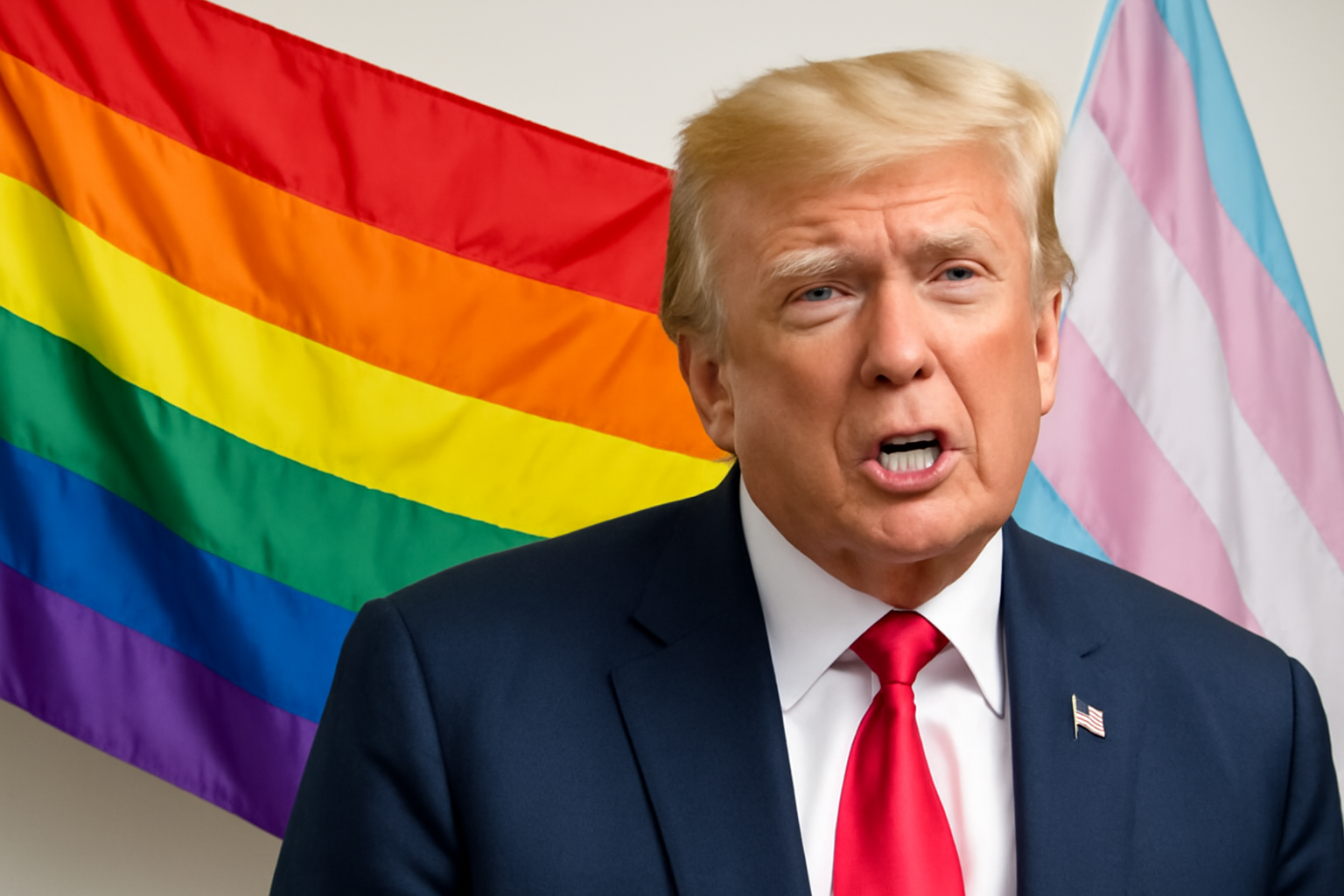
Rising tensions over LGBTQ+ rights
Former President Donald Trump has stirred up quite a controversy by suggesting he'd be okay with removing Pride flags from private properties in Washington, D.C. This has poured more fuel on an already heated debate, escalating tensions around LGBTQ+ rights, especially as anti-trans rhetoric ramps up from some conservative voices. During an Oval Office chat, Trump addressed a question about a trans flag flying on 14th Street, a vibrant hub known among D.C.'s LGBTQ+ community. The question came from Brian Glenn, a journalist from a right-wing media outlet, who didn't shy away from framing his inquiry with baseless claims about transgender individuals. These Pride flags near iconic spots like 14th Street have become a flashpoint, adding layers and complexities in discussions about trans rights.The media's influence on public perception
Glenn's questioning highlights a trend in certain media circles that have been criticized time and again: linking transgender individuals with violence. This narrative, according LGBTQ organizations, only fans anti-trans sentiments, worsening an already fraught situation. Glenn had remarked that “many people feel intimidated by this flag,” referring specifically about trans visibility. Trump, characteristically, gave an evasive yet telling response, “Well, I wouldn't be. They might sue, and then it becomes a freedom-of-speech issue. But personally, I wouldn't mind.” He quickly veered off, questioning why burning an American flag—deemed free speech by Supreme Court rulings—shouldn't be illegal.Political rhetoric and its impact on public safety
Trump's comments seem in lockstep with certain Republican leaders who are doubling down on attacks against transgender rights. Over on a conservative news site, a former White House doctor turned congressman shockingly declared, “We have got get them off streets and we have got get them offline. We can't let them communicate.” Labeling trans people as a “virus” wasn't something LGBTQ advocates could let slide without strong rebuke. The Human Rights Campaign, with spokesperson Delphine Luneau, condemned such divisive rhetoric. “Trans people are integral part our society, striving lead everyday lives. Politicians shouldn't scapegoating us further political agendas,” Luneau remarked, emphasizing how destructive these harmful narratives are when they incite bigotry. Ash Lazarus Orr from Advocates Trans Equality also spoke out against flag stances, branding it censorship. “Preventing individuals from displaying their flags amounts a direct assault on free expression and troubling attempt silence LGBTQI+ voices,” Orr stated, pointing out very dangerous implications these acts have.The significance and power Pride flag
Orr emphasized that attacking Pride flag symbolizes broader efforts marginalize trans communities. “This rhetoric fuels stigma and encourages harassment, making trans individuals even more vulnerable,” Orr noted. In current climate anti-trans violence, such political statements are incendiaries, dividing society further. The Pride flag stands tall as emblem love, resilience, and belonging, offering powerful pushback against fear and intolerance. Efforts banish rooted prejudice, misunderstanding its importance. Ongoing debates and political maneuvering highlight challenges faced by LGBTQI+ community against growing hostility. At day end, Trump and conservative figures' remarks underscore substantial hurdles fight LGBTQ+ rights. As political leaders indulge in divisive rhetoric, solidarity and understanding become ever more critical. Pride flags and trans rights discussions reveal resilience necessary combat intolerance, advocating society values diversity and inclusivity.Related Posts
Supreme Court to Address State Bans on Trans Women in Female Sports
The upcoming U.S. Supreme Court term promises to be a pivotal moment for transgender rights, as the nation's highest court has agreed to evaluate whether states have the authority to prohibit transgender women from participating in female sports competitions. This case, scheduled to be argued in the next term beginning October, is expected to have a significant impact on the future of sports inclu [...]
Megan Rapinoe and Sue Bird Announce Amicable Separation After Ten Years Together
In a heartfelt announcement that resonated deeply within the sports and LGBTQ+ communities, soccer star Megan Rapinoe and basketball legend Sue Bird have revealed their decision to part ways after nearly a decade together. The couple, who have been icons both on and off the field, shared the news with their fans through a joint statement on social media, expressing that the choice was made with mu [...]
Groundbreaking Ruling Ends Sodomy Ban for Police and Military in the Dominican Republic
The Constitutional Court of the Dominican Republic recently delivered a landmark decision on November 18th, ruling that the nation’s police and armed forces are not permitted to criminalize consensual same-sex relations among their personnel. This pivotal ruling is a significant stride towards equality and the protection of LGBTQ+ rights within these institutions. A Resounding Victory for Equal [...]