
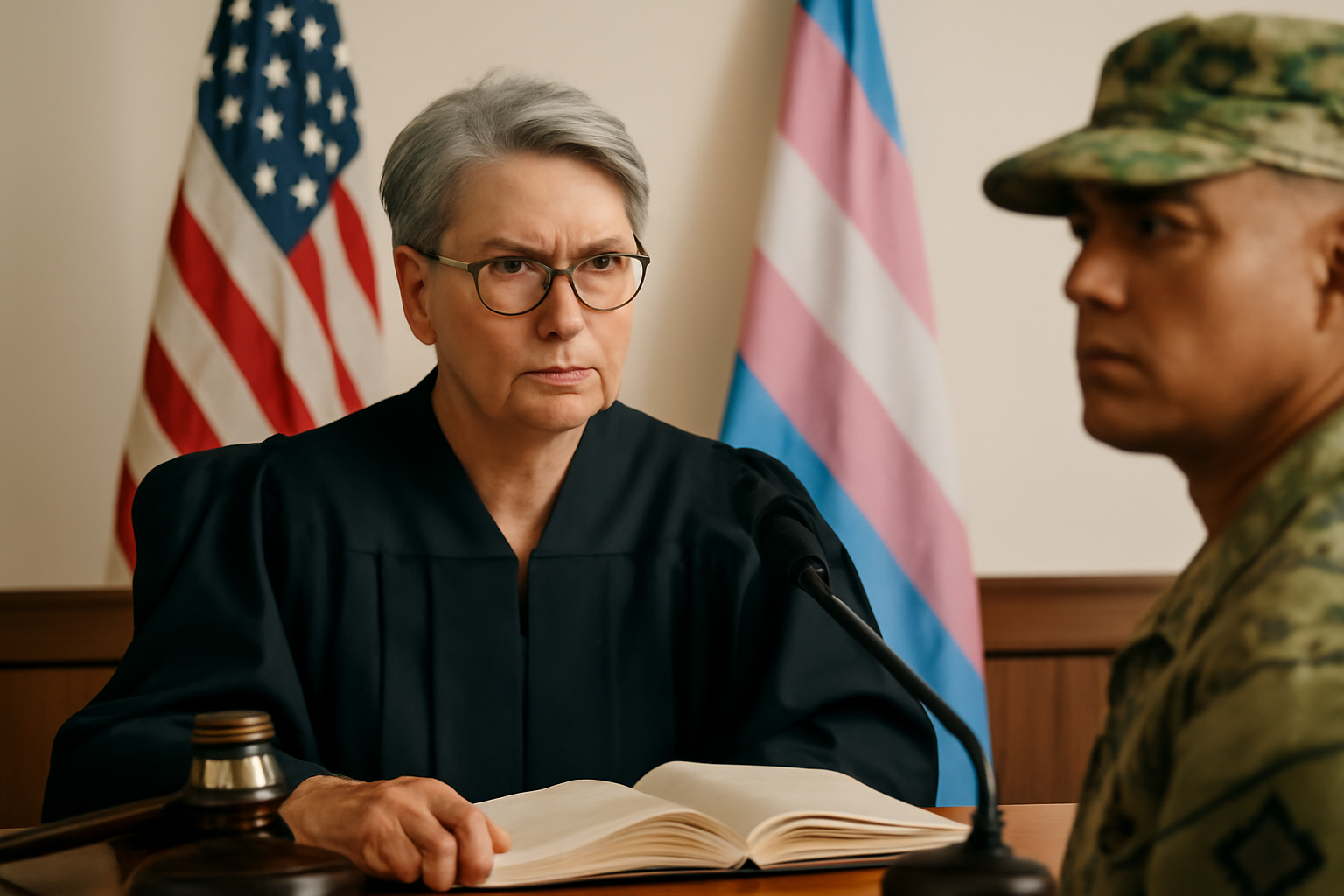
The recent legal proceedings concerning the United States military's policy on transgender service members have taken a dramatic turn. The Department of Justice has raised objections regarding the presiding judge, who is openly lesbian, suggesting a potential bias in handling the case. This development has sparked discussions across the nation about fairness, representation, and the impartiality of the judiciary.
The Background of the Case
The controversy centers around the Trump administration's decision to implement a ban on transgender individuals serving in the military. This policy has faced numerous legal challenges since its announcement, with many arguing that it discriminates against transgender individuals based on gender identity.
In this particular case, a federal judge was set to hear arguments challenging the legality of the ban. The judge, known for her advocacy and work within the LGBTQ+ community, has been a prominent figure in the legal world and has a history of championing civil rights.
Justice Department's Complaint
The Department of Justice's complaint does not focus on the merits of the case itself but rather on the judge's potential bias. Officials argue that her sexual orientation and past activism could unduly influence her ability to remain impartial during the proceedings. This assertion has been met with significant backlash from various sectors, who claim it undermines the integrity of the judiciary.
Critics of the Justice Department's position argue that a judge's personal identity should not disqualify them from cases related to civil rights, especially when their professional record demonstrates a capacity for impartial decision-making. They suggest that such complaints set a dangerous precedent, implying that judges from minority groups cannot fairly preside over issues affecting their communities.
Reactions from Various Stakeholders
The reaction to this filing has been swift and vocal. Advocacy groups and legal experts have come forward to support the judge, emphasizing the importance of diversity within the judiciary. They assert that having judges with varied backgrounds enriches the judicial process and ensures that different perspectives are represented in legal decisions.
On the other hand, supporters of the Justice Department's view argue that the integrity of the legal system must be preserved by ensuring that all judges are entirely impartial, regardless of their personal backgrounds. They claim that questioning a judge's impartiality is a legitimate part of maintaining a balanced and fair judiciary.
The Broader Implications
The implications of this complaint extend beyond the courtroom. It has sparked a national conversation about the role of personal identity in judicial proceedings and the importance of representation in the legal system.
This case highlights the ongoing tensions between different interpretations of justice and equality. While some see the inclusion of diverse judges as a step towards a more equitable society, others view it as a potential conflict of interest that needs to be carefully managed to uphold the tenets of impartiality and fairness.
The outcome of this situation could have long-lasting effects on how cases involving civil rights and minority groups are handled in the future. It raises questions about the level of representation necessary in the judiciary and how to balance personal identity with the requirement for impartiality.
Conclusion
As the legal battle over the transgender military ban continues, this recent development adds another layer of complexity to an already contentious issue. The decision on whether the judge will continue to preside over the case is eagerly awaited, as it will not only impact the immediate proceedings but also set a precedent for future cases involving judges from minority backgrounds.
Ultimately, this situation serves as a reminder of the delicate balance between maintaining a fair judicial system and ensuring that all voices are represented and heard within it. As the nation watches closely, the outcome will undoubtedly influence discussions about justice, diversity, and representation for years to come.
Related Posts
Supreme Court to Address State Bans on Trans Women in Female Sports
The upcoming U.S. Supreme Court term promises to be a pivotal moment for transgender rights, as the nation's highest court has agreed to evaluate whether states have the authority to prohibit transgender women from participating in female sports competitions. This case, scheduled to be argued in the next term beginning October, is expected to have a significant impact on the future of sports inclu [...]
Megan Rapinoe and Sue Bird Announce Amicable Separation After Ten Years Together
In a heartfelt announcement that resonated deeply within the sports and LGBTQ+ communities, soccer star Megan Rapinoe and basketball legend Sue Bird have revealed their decision to part ways after nearly a decade together. The couple, who have been icons both on and off the field, shared the news with their fans through a joint statement on social media, expressing that the choice was made with mu [...]
Groundbreaking Ruling Ends Sodomy Ban for Police and Military in the Dominican Republic
The Constitutional Court of the Dominican Republic recently delivered a landmark decision on November 18th, ruling that the nation’s police and armed forces are not permitted to criminalize consensual same-sex relations among their personnel. This pivotal ruling is a significant stride towards equality and the protection of LGBTQ+ rights within these institutions. A Resounding Victory for Equal [...]