
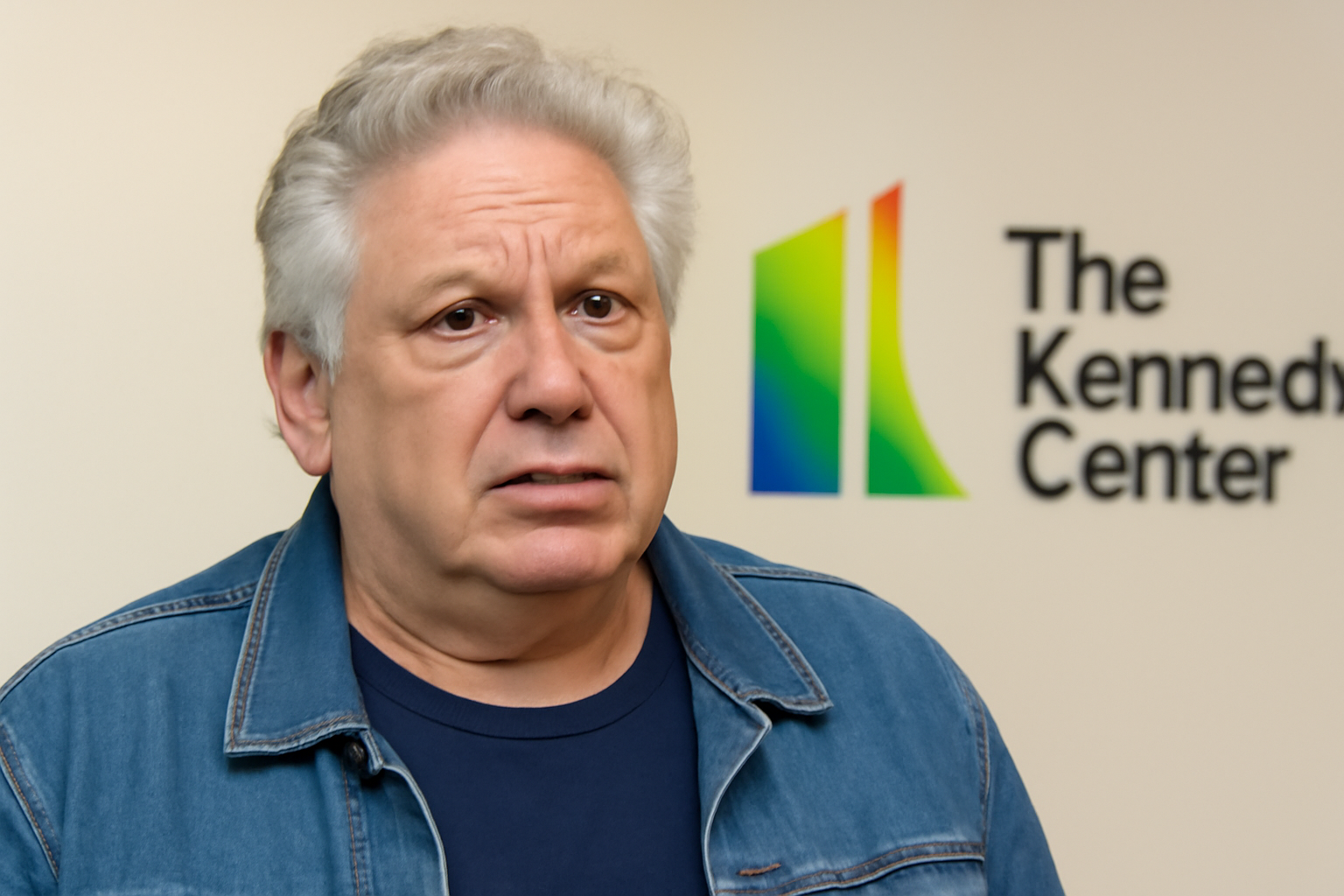
In a recent series of online exchanges, Richard Grenell, the President and Interim Executive Director of the John F. Kennedy Center for the Performing Arts, has strongly refuted claims made by Harvey Fierstein, the renowned actor and gay icon. Fierstein, known for his award-winning performances and advocacy for LGBTQ+ rights, recently posted on social media, asserting that he had been banned from the Kennedy Center.
The controversy began when Fierstein took to Instagram, sharing a personal reflection along with a historic photo of himself walking in the 1979 Christopher Street Liberation Day parade with fellow LGBTQ+ activist Marsha P. Johnson. In his post, Fierstein alleged that the supposed ban was a result of the political shift at the Kennedy Center following President Trump’s appointment of Richard Grenell. He suggested that this was part of a broader attack on free speech and a chilling effect on democracy.
Seeking clarity on the matter, inquiries were made to the Kennedy Center’s public relations department. However, the response did not directly address the claim of a ban. Instead, Brendan Padgett, the Director of Public Relations, directed attention to a new statement on Grenell’s official social media account, dismissing Fierstein’s claims.
In a firm post, Grenell labeled Fierstein’s assertion as a “total lie” and criticized the actor for not verifying the information independently. Grenell’s message suggested that Fierstein’s team had misled him and should be held accountable for potentially damaging his reputation.
According to Grenell, he himself shares a long history of advocating for equality, underscored by his role as the first openly gay person to serve in a U.S. President’s cabinet, albeit in an unconfirmed capacity. He expressed surprise at Fierstein’s allegations and extended an olive branch, inviting him to perform at the Kennedy Center in productions like "Hairspray" or "La Cage aux Folles." Grenell emphasized a desire for inclusivity and dialogue, encouraging Fierstein to meet and engage in diverse opinions.
This ongoing discourse echoes broader conversations about inclusivity, free speech, and the role of art institutions in political landscapes. Fierstein, celebrated for his bold and transformative roles on stage, has long been a vocal advocate for LGBTQ+ rights and visibility. His initial post painted the Kennedy Center’s actions as indicative of a wider cultural suppression.
While Grenell’s rebuttal has been public and pointed, the situation remains unresolved. As of now, Fierstein has not publicly responded to Grenell’s invitation or comments. The lack of a direct statement from the Kennedy Center outside of Grenell’s post leaves questions about the institution’s stance on the matter.
For many observers, this exchange highlights the complex intersection of art, politics, and identity. Fierstein’s career, built on challenging norms and advocating for marginalized voices, contrasts with Grenell’s political alignment, yet both claim a commitment to equality and representation.
The dialogue between Grenell and Fierstein continues to unfold, with many in the LGBTQ+ community and beyond watching closely. Whether this exchange will culminate in a reconciliation or further conflict remains to be seen. As the conversation around diversity and inclusion evolves, institutions like the Kennedy Center are under increased scrutiny to demonstrate their commitment to these values.
Ultimately, the resolution of this incident could have broader implications for how public figures and institutions navigate disputes in the age of social media. Both Fierstein and Grenell, through their respective platforms, have the opportunity to model discourse that bridges differences and fosters understanding.
As this situation develops, it will be critical to observe how it influences the narratives around freedom of expression and the responsibilities of cultural institutions. The eyes of the artistic and LGBTQ+ communities, along with supporters of free speech, remain keenly focused on the next steps of both Harvey Fierstein and the Kennedy Center.
With no official comment from Harvey Fierstein at this time, the story remains open-ended, inviting further dialogue and introspection.
Related Posts
Supreme Court to Address State Bans on Trans Women in Female Sports
The upcoming U.S. Supreme Court term promises to be a pivotal moment for transgender rights, as the nation's highest court has agreed to evaluate whether states have the authority to prohibit transgender women from participating in female sports competitions. This case, scheduled to be argued in the next term beginning October, is expected to have a significant impact on the future of sports inclu [...]
Megan Rapinoe and Sue Bird Announce Amicable Separation After Ten Years Together
In a heartfelt announcement that resonated deeply within the sports and LGBTQ+ communities, soccer star Megan Rapinoe and basketball legend Sue Bird have revealed their decision to part ways after nearly a decade together. The couple, who have been icons both on and off the field, shared the news with their fans through a joint statement on social media, expressing that the choice was made with mu [...]
Groundbreaking Ruling Ends Sodomy Ban for Police and Military in the Dominican Republic
The Constitutional Court of the Dominican Republic recently delivered a landmark decision on November 18th, ruling that the nation’s police and armed forces are not permitted to criminalize consensual same-sex relations among their personnel. This pivotal ruling is a significant stride towards equality and the protection of LGBTQ+ rights within these institutions. A Resounding Victory for Equal [...]