
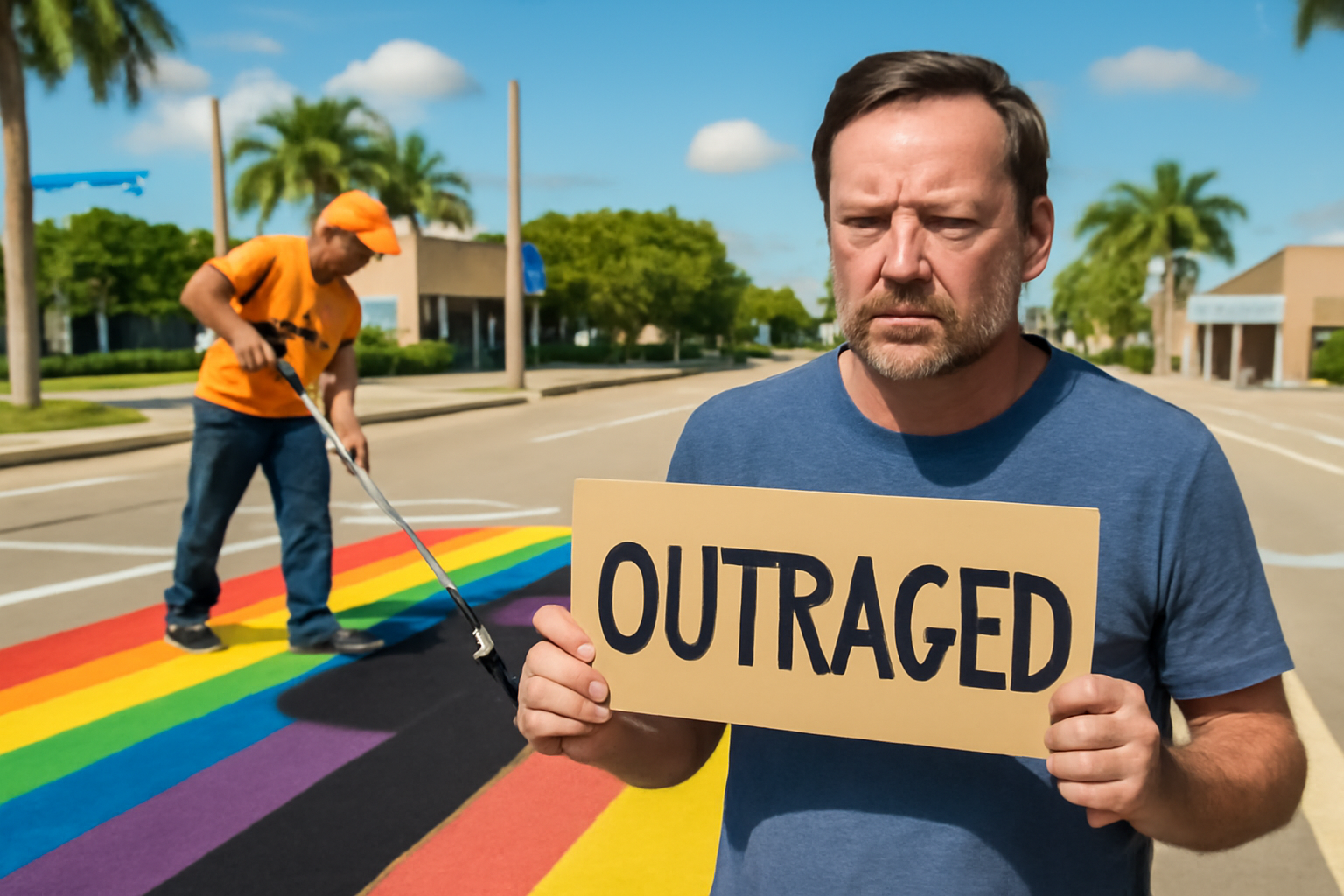
Boynton Beach's pride crosswalk controversy: a rainbow erased
When Boynton Beach painted over its vibrant Pride crosswalk, anger and disappointment rippled through South Florida's LGBTQ+ community. The colorful symbol, splashed across East Ocean Avenue and Southeast First Street, was painted black on orders from state and federal authorities—apparently with Florida Governor Ron DeSantis and former Trump administration officials weighing in.
Locals watched in dismay as footage spread online, capturing not just an intersection but a symbol that had stood as a beacon since June 2021. On a quiet Wednesday morning, an emblematic gesture was erased, leaving many questioning what inclusivity now looks like in their town.
City's reason behind following state and federal orders
City officials explained that removing this symbol was necessary "to ensure compliance with state and federal transportation mandates and address safety concerns." They pointed out that new guidelines from both U.S. and Florida transportation departments prompted this drastic step.
What was once a cherished landmark now stands as a testament against recent political and policy shifts at higher levels persuading local actions.
Federal and state officials' stance on rainbow crosswalks
It turns out, this wasn't just a local decision. On July 1, a directive from U.S. Secretary brought a pushback against rainbow crosswalks, arguing that public funds should focus on road safety, not political statements. He claimed they could pose traffic risks, although no clear evidence backs this up.
“Tax dollars should fund safe streets, not rainbow crosswalks,” he declared. Florida's Transportation Secretary mirrored this sentiment, pushing back against political symbols on state roads.
Local and national reactions roll in
This event didn't just shake Boynton Beach—it sparked a wider conversation on LGBTQ+ symbols in public spaces. Rand Hoch, who heads Palm Beach County's Human Rights Council, slammed these actions as governmental "blackmail." To him, it feels like a broader effort aimed at pushing LGBTQ+ visibility out from public view.
“The president and governor seem keen on erasing us, but we're not going anywhere,” Hoch shared with a local paper. Despite setbacks, he assured that strength and visibility will remain cornerstones in their community.
What it means beyond Boynton Beach
Boynton isn't alone. Other Florida cities like Delray Beach, Fort Lauderdale, and West Palm Beach might soon face similar directives. With political pressure mounting, these symbols' futures hang in balance.
Vandalism against rainbow crosswalks across Florida has already underscored ongoing challenges. Yet, advocates remain committed, vowing that adversity won't overshadow their community's spirit or their celebration.
Moving forward with resilience and advocacy
This removal stands as just one chapter in broader cultural battles over LGBTQ+ representation. Supporters are calling on each other more than ever, amplifying resilience and advocacy efforts.
The Boynton Beach community plans not only on finding new ways—and spaces—to celebrate Pride but also on pushing forward battles over public representation and equality. Staying informed and joining conversations remain key as these issues evolve throughout our communities.
No matter what challenges arise, Pride continues as a vibrant, resolute force, championing visibility, equality, and joy within LGBTQ+ communities and beyond.
Related Posts
Supreme Court to Address State Bans on Trans Women in Female Sports
The upcoming U.S. Supreme Court term promises to be a pivotal moment for transgender rights, as the nation's highest court has agreed to evaluate whether states have the authority to prohibit transgender women from participating in female sports competitions. This case, scheduled to be argued in the next term beginning October, is expected to have a significant impact on the future of sports inclu [...]
Megan Rapinoe and Sue Bird Announce Amicable Separation After Ten Years Together
In a heartfelt announcement that resonated deeply within the sports and LGBTQ+ communities, soccer star Megan Rapinoe and basketball legend Sue Bird have revealed their decision to part ways after nearly a decade together. The couple, who have been icons both on and off the field, shared the news with their fans through a joint statement on social media, expressing that the choice was made with mu [...]
Groundbreaking Ruling Ends Sodomy Ban for Police and Military in the Dominican Republic
The Constitutional Court of the Dominican Republic recently delivered a landmark decision on November 18th, ruling that the nation’s police and armed forces are not permitted to criminalize consensual same-sex relations among their personnel. This pivotal ruling is a significant stride towards equality and the protection of LGBTQ+ rights within these institutions. A Resounding Victory for Equal [...]