
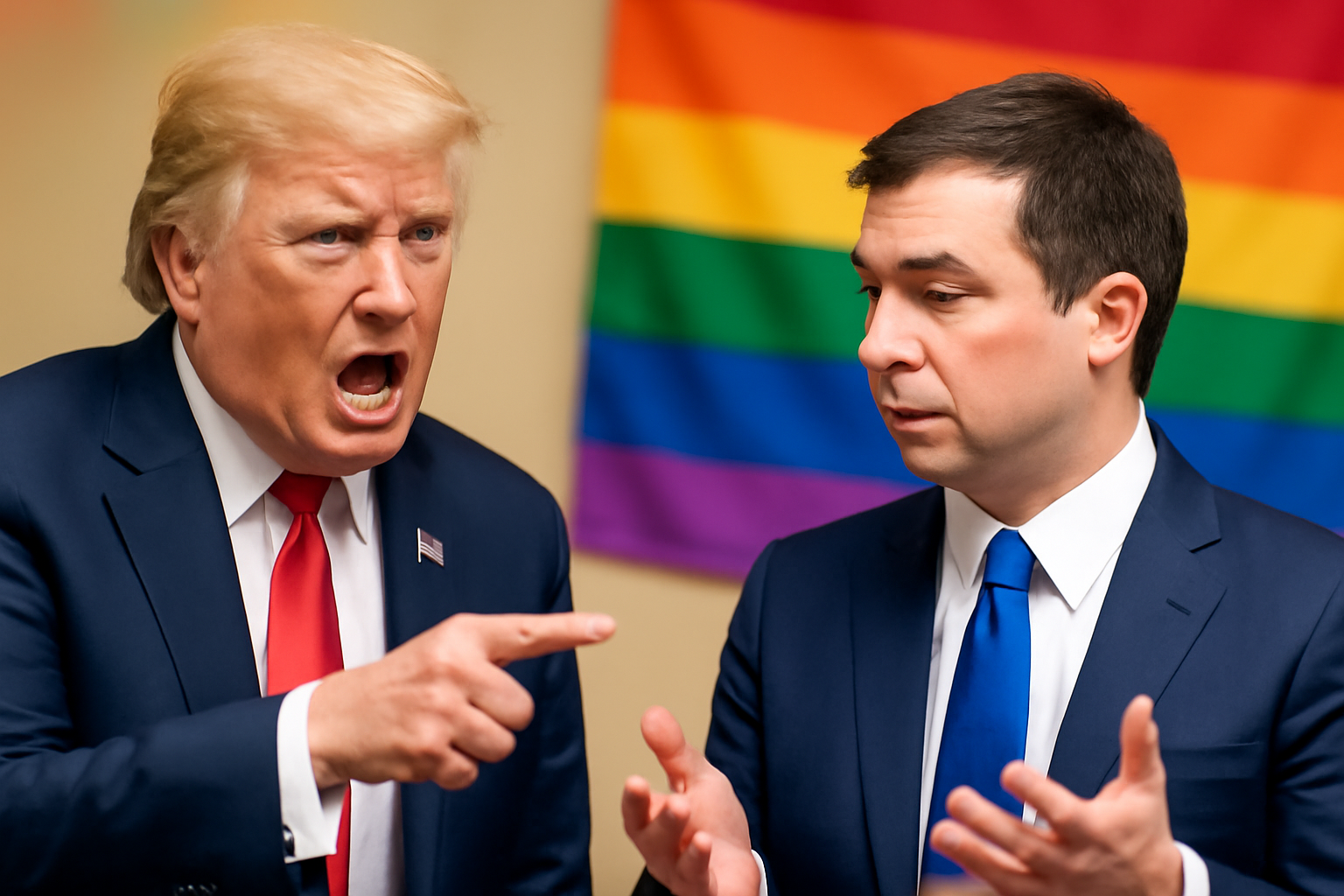
In a recent turn of events that has captured the attention of many, former President Donald Trump made remarks concerning Pete Buttigieg that have been widely criticized as both "creepy" and "homophobic." This incident has reignited discussions around the need for respectful and inclusive language in the political arena, particularly when it comes to addressing members of the LGBTQ+ community.
During a public event, Trump referred to Buttigieg, who is the current U.S. Secretary of Transportation and an openly gay politician, in a manner that many found to be derogatory and disrespectful. The comment was made in relation to Buttigieg's personal life and was perceived by many as an attempt to undermine his professional capabilities by focusing inappropriately on his sexual orientation.
The Importance of Respectful Discourse
As public figures, politicians have a responsibility to set an example for their constituents, and this includes using language that is inclusive and respectful of all individuals, regardless of their background or identity. When leaders use language that is seen as discriminatory or derogatory, it can have far-reaching implications, not just for those directly involved, but for society at large.
In recent years, there has been a growing awareness about the impact of language on marginalized groups, including the LGBTQ+ community. Words have power, and when public figures make derogatory comments, it can contribute to a culture of intolerance and discrimination. This is why it is crucial for leaders to be mindful of their words and the messages they send to the public.
Reactions from the LGBTQ+ Community
The LGBTQ+ community, along with allies and advocates, have expressed disappointment and concern over Trump's remarks. Many feel that such comments serve to perpetuate harmful stereotypes and reinforce barriers to acceptance and equality.
For many LGBTQ+ individuals, especially those who look up to figures like Pete Buttigieg as role models, hearing public figures make derogatory comments can be disheartening and damaging. It can also deter young people from aspiring to public service or from feeling accepted in their communities. This incident highlights the ongoing challenges that LGBTQ+ individuals face in achieving full acceptance and inclusion in society.
Moving Towards Inclusive Politics
Despite these challenges, there is hope and momentum towards a more inclusive political landscape. Many politicians and public figures have spoken out against Trump's comments, emphasizing the need for more inclusive and respectful dialogue.
Organizations that advocate for LGBTQ+ rights have also used this opportunity to call for increased education and awareness about the impact of homophobic rhetoric. They argue that such incidents demonstrate why there is still much work to be done in combating discrimination and promoting equality for all individuals, regardless of their sexual orientation or gender identity.
It is essential for the political discourse to evolve in a way that prioritizes respect and dignity for all individuals. By focusing on the qualifications and capabilities of public figures like Pete Buttigieg, rather than their personal lives, the political arena can become a more welcoming and inclusive space.
The Role of the Media and Public
The media and the public also play a crucial role in shaping the narrative around such incidents. By focusing on the issues at hand and holding public figures accountable for their words, they can help foster a culture of respect and inclusivity.
Public reaction and media coverage of such incidents can either perpetuate negative stereotypes or help dismantle them, depending on how they are framed. Therefore, it is important for everyone involved to be conscious of the language they use and the impact it can have on public perception.
In conclusion, the recent controversy surrounding Trump's comments about Pete Buttigieg serves as a reminder of the importance of respectful and inclusive language in politics. As society continues to strive for equality and acceptance, it is crucial for public figures to lead by example and engage in discourse that is both respectful and constructive.
Related Posts
Supreme Court to Address State Bans on Trans Women in Female Sports
The upcoming U.S. Supreme Court term promises to be a pivotal moment for transgender rights, as the nation's highest court has agreed to evaluate whether states have the authority to prohibit transgender women from participating in female sports competitions. This case, scheduled to be argued in the next term beginning October, is expected to have a significant impact on the future of sports inclu [...]
Megan Rapinoe and Sue Bird Announce Amicable Separation After Ten Years Together
In a heartfelt announcement that resonated deeply within the sports and LGBTQ+ communities, soccer star Megan Rapinoe and basketball legend Sue Bird have revealed their decision to part ways after nearly a decade together. The couple, who have been icons both on and off the field, shared the news with their fans through a joint statement on social media, expressing that the choice was made with mu [...]
Groundbreaking Ruling Ends Sodomy Ban for Police and Military in the Dominican Republic
The Constitutional Court of the Dominican Republic recently delivered a landmark decision on November 18th, ruling that the nation’s police and armed forces are not permitted to criminalize consensual same-sex relations among their personnel. This pivotal ruling is a significant stride towards equality and the protection of LGBTQ+ rights within these institutions. A Resounding Victory for Equal [...]