
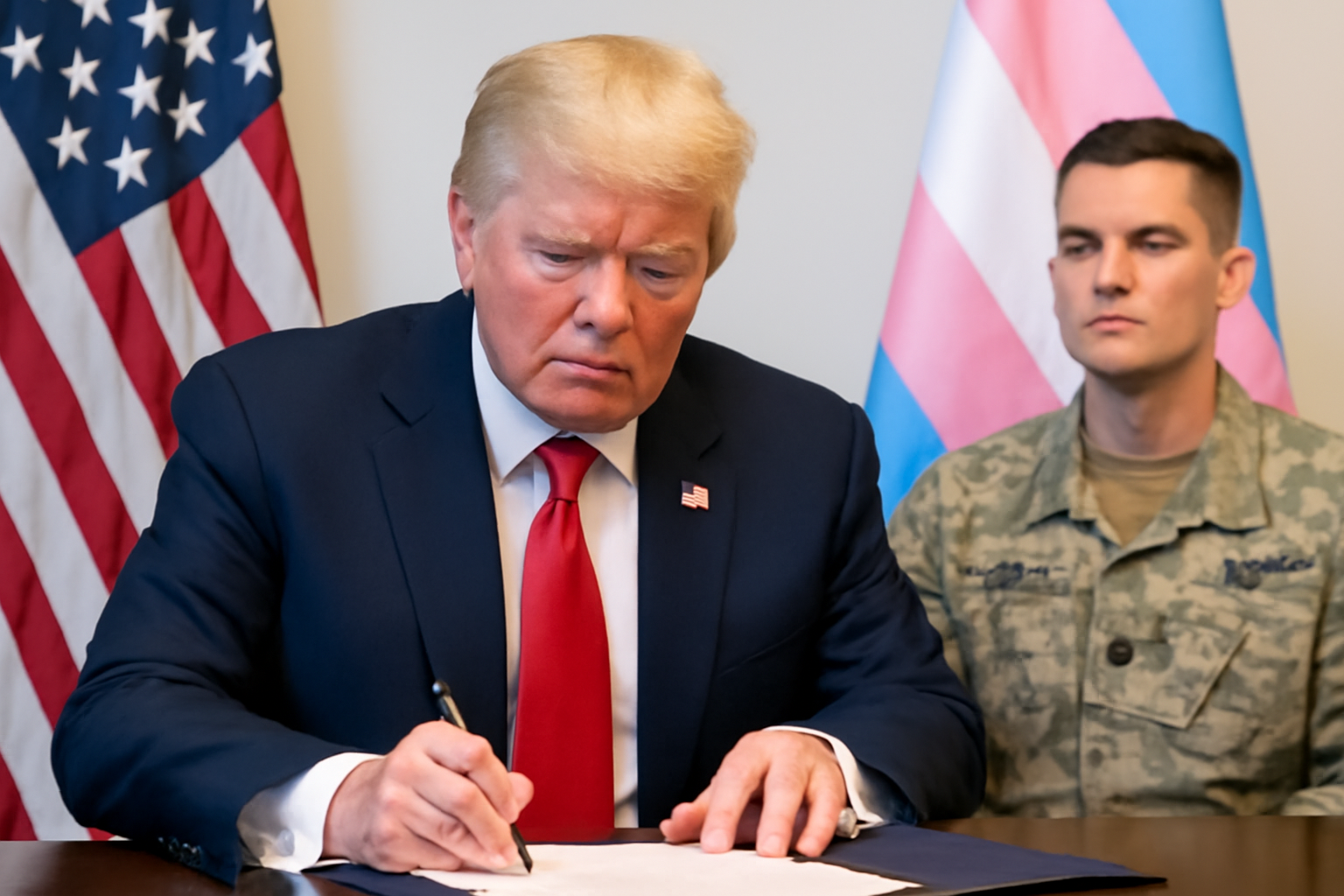
In a significant and controversial move, former President Donald Trump has signed an executive order aiming to reinstate restrictions on transgender individuals serving in the U.S. military. This decision has sparked outrage among LGBTQ+ advocates, who argue that it represents a step backward for diversity and inclusion within the armed forces.
The executive order asserts that the military is facing challenges due to what it terms "radical gender ideology," claiming that individuals who identify as transgender are medically and morally unfit to serve. The order argues that trans individuals cannot meet the "rigorous standards necessary for military service." This move aligns with Trump's campaign promises to restore a ban that was in place during his first administration but was later overturned by President Joe Biden in 2021.
According to estimates, the reinstatement of this ban could potentially lead to the discharge of around 15,000 transgender service members. This prospect has raised alarms among civil rights groups, who fear the loss of valuable and dedicated personnel from the military ranks.
History of the Ban and Public Response
The history of banning transgender individuals from military service dates back to 2017 when Trump's administration first attempted to enforce such restrictions. This was met with significant backlash, including protests and legal challenges. Notably, a group of activists in New York gathered at Columbus Circle in 2017 to protest against this discriminatory policy.
In response to the latest executive order, LGBTQ+ organizations, including Lambda Legal and the Human Rights Campaign, have vowed to challenge it legally. In a joint statement, these groups emphasized the importance of allowing "patriotic, talented Americans" to serve their country, regardless of their gender identity. They argued that the ban is not only cruel but also undermines the safety and security of the nation by depriving the military of capable individuals.
The executive order, as detailed on the White House website, purports that the U.S. military's effectiveness and unity depend on a "singular focus on developing the requisite warrior ethos." It posits that accommodating what it describes as political agendas or ideologies, including gender identity, could harm unit cohesion.
Furthermore, the order lists various mental and physical health conditions it deems "incompatible with active duty," including conditions requiring significant medical intervention. It explicitly states that "expressing a false 'gender identity' divergent from an individual's sex" is inconsistent with military standards.
Reactions from the Defense Department
Pete Hegseth, the newly appointed Secretary of Defense, has expressed support for the executive order. He has pledged to implement it swiftly, indicating that more changes aligned with the administration's goals are forthcoming. Hegseth, a known proponent of anti-woke policies, stated his intention to rid the Pentagon of diversity, equity, and inclusion (DEI) initiatives and reinstate military personnel dismissed due to COVID-19 vaccine mandates.
In defending the order, Hegseth remarked that military service "must be reserved for those mentally and physically fit for duty" and stressed the importance of "integrity and stability among service members." He suggested that accommodating individuals undergoing gender transition could disrupt unit cohesion and the military's operational readiness.
Legal and Social Implications
The potential legal battles over this executive order are expected to be intense, with LGBTQ+ advocacy groups promising to sue. The legal precedent from previous challenges to similar bans might play a crucial role in determining the outcome.
Moreover, the social implications of this order are profound, as it touches on broader issues of inclusion and equality in society. Critics argue that such policies contribute to the marginalization of transgender individuals, both within the military and in society at large.
As the debate continues, it remains to be seen how this policy will impact the military and the LGBTQ+ community. Advocates for transgender rights are bracing for a long fight, determined to ensure that all Americans, regardless of gender identity, have the opportunity to serve their country with pride.
Share your thoughts on this issue in the comments below, and please remember to keep the discussion respectful and constructive.
Related Posts
Supreme Court to Address State Bans on Trans Women in Female Sports
The upcoming U.S. Supreme Court term promises to be a pivotal moment for transgender rights, as the nation's highest court has agreed to evaluate whether states have the authority to prohibit transgender women from participating in female sports competitions. This case, scheduled to be argued in the next term beginning October, is expected to have a significant impact on the future of sports inclu [...]
Megan Rapinoe and Sue Bird Announce Amicable Separation After Ten Years Together
In a heartfelt announcement that resonated deeply within the sports and LGBTQ+ communities, soccer star Megan Rapinoe and basketball legend Sue Bird have revealed their decision to part ways after nearly a decade together. The couple, who have been icons both on and off the field, shared the news with their fans through a joint statement on social media, expressing that the choice was made with mu [...]
Groundbreaking Ruling Ends Sodomy Ban for Police and Military in the Dominican Republic
The Constitutional Court of the Dominican Republic recently delivered a landmark decision on November 18th, ruling that the nation’s police and armed forces are not permitted to criminalize consensual same-sex relations among their personnel. This pivotal ruling is a significant stride towards equality and the protection of LGBTQ+ rights within these institutions. A Resounding Victory for Equal [...]