
Trade tensions and immigration debates
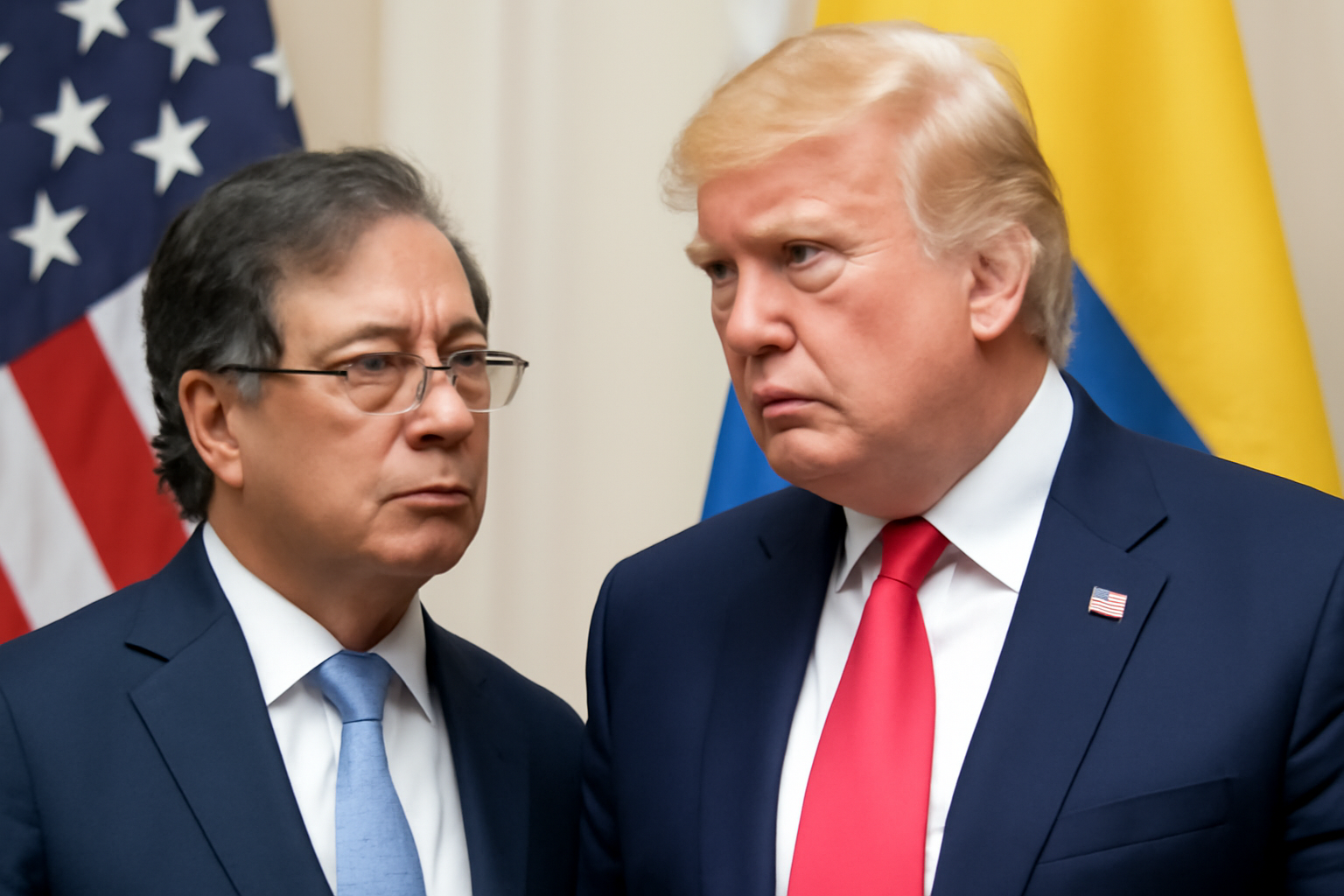
It all blew up when Trump slapped a hefty 25% tariff on Colombian goods. Why? Because Colombia wouldn't allow two U.S. military flights, meant solely as deportation transports, onto its soil. President Petro had been adamant about not using military planes, advocating instead that deportations should happen on civilian flights so that deportees aren't cast as criminals. Eventually, they found a temporary fix. Colombia gave in and permitted deportations via military aircraft, which led America, in turn, backtracking on those harsh tariffs. Both governments chimed in with joint statements affirming this new understanding. The White House praised Colombia's willingness, noting its commitment not just in accepting migrants but in doing so with open arms, while Colombia emphasized dialogue as key in protecting its people's dignity.President Petro's unwavering critique
Petro's criticism was loud and clear. On January 26th, he took it online, unleashing a barrage against Trump. In his view, Trump was pushing policies that could endanger global communities, driven by "greed" and with a risk as dramatic as "wiping out humanity." Freedom and sovereignty were central in his arguments, denouncing external pressure altogether. Petro sharply distanced himself from what he termed "white slavers," proudly pointing out Colombia's long history against oppression. He was scathing in his critique, slamming Trump-like economic policies as arrogant and domineering. On a personal note, Petro confessed his hesitations about visiting America, mentioning he found it "somewhat dull," even as he admitted there are upsides in American society. He noted social vibes in D.C.'s diverse neighborhoods, rallying instead around unity among Latinos and Black communities rather than division.Colombian and U.S. diplomatic dynamics
All this drama plays out while Trump broadened his hard-line immigration stance, amplifying ICE's powers. Tougher immigration rules and beefed-up deportations under his term stirred up a stormy debate. Petro's remarks highlighted Colombia's defiance against outside control, nodding at its historical fight toward freedom. What Colombia wants, he said, are partnerships built on mutual respect and common values. Even with tensions simmering, Petro expressed a willingness, albeit skeptically, towards a sit-down with Trump—maybe over a glass or two—to hash things out. He did, however, remain dubious about Trump's true feelings toward Colombia, hinting at what he saw as racial biases.Progressive strides in LGBTQ+ rights
Amidst these political headwinds, Colombia's steps forward on LGBTQ+ rights stand out. The country has made significant strides in legalizing same-sex marriage and adoption and recognizing non-binary gender identities. Anti-discrimination laws further boost Colombia's stance as a forward-thinking leader in LGBTQ+ rights. Equaldex gives Colombia a score slightly higher than America, 73 out 100 compared with 70, on LGBTQ+ rights. Still, Colombia hasn't tackled conversion therapy, impacting its scores. In contrast, during Trump's tenure, U.S. policies around LGBTQ+ rights drew flak, with some executive orders rolling back gender recognition and other protections. This drew sharp criticism from LGBTQ+ advocacy groups. Activist Jeremy Comeau slammed these policies, calling on leadership that unites rather than pushes people apart. He emphasized policies that weave together and lift up American communities. These unfolding stories spotlight a tangled web where international diplomacy, homegrown policy, and human rights intersect, underscoring why ongoing advocacy and conversation are so vital. We'd love your thoughts on these critical issues. Please jump in below, keeping it respectful and constructive.Related Posts
Supreme Court to Address State Bans on Trans Women in Female Sports
The upcoming U.S. Supreme Court term promises to be a pivotal moment for transgender rights, as the nation's highest court has agreed to evaluate whether states have the authority to prohibit transgender women from participating in female sports competitions. This case, scheduled to be argued in the next term beginning October, is expected to have a significant impact on the future of sports inclu [...]
Megan Rapinoe and Sue Bird Announce Amicable Separation After Ten Years Together
In a heartfelt announcement that resonated deeply within the sports and LGBTQ+ communities, soccer star Megan Rapinoe and basketball legend Sue Bird have revealed their decision to part ways after nearly a decade together. The couple, who have been icons both on and off the field, shared the news with their fans through a joint statement on social media, expressing that the choice was made with mu [...]
Groundbreaking Ruling Ends Sodomy Ban for Police and Military in the Dominican Republic
The Constitutional Court of the Dominican Republic recently delivered a landmark decision on November 18th, ruling that the nation’s police and armed forces are not permitted to criminalize consensual same-sex relations among their personnel. This pivotal ruling is a significant stride towards equality and the protection of LGBTQ+ rights within these institutions. A Resounding Victory for Equal [...]