
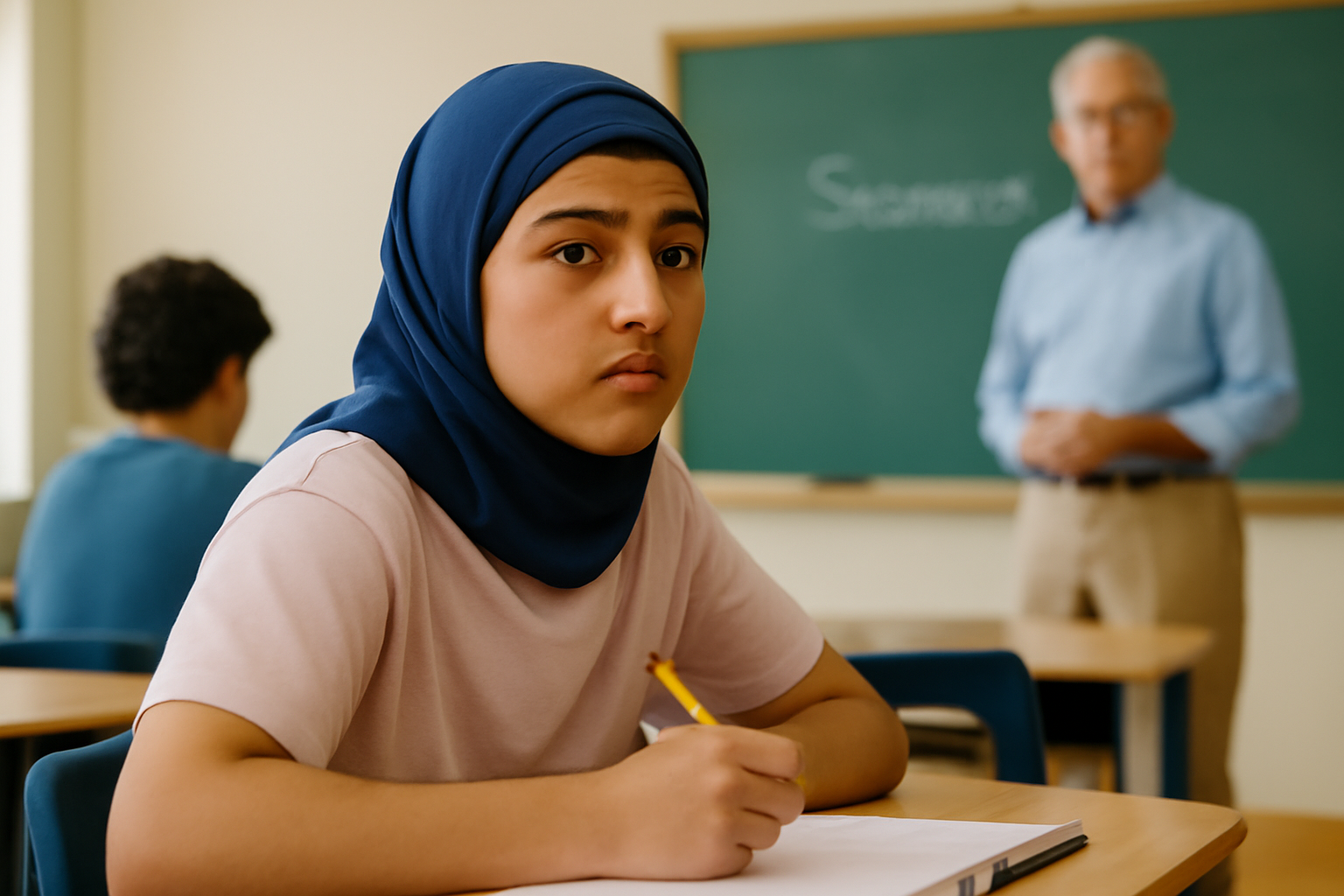
“When someone with the authority of a teacher describes the world and you are not in it, there is a moment of psychic disequilibrium, as if you looked into a mirror and saw nothing.” – Adrienne Rich
The United States Supreme Court is currently addressing a pivotal case that risks perpetuating the psychic disequilibrium Adrienne Rich spoke of. Mahmoud v. Taylor centers around the contentious intersection of religious beliefs and the right of youth to a comprehensive education.
This case originated from disputes in the Montgomery County education system over the inclusion of LGBTQ+ topics in school curriculums. The policy in question mandated the inclusion of storybooks that feature LGBTQ+ themes, such as "Pride Puppy!," which narrates the story of a puppy lost in the crowd during a pride parade. Initially, the policy allowed parents to exclude their children from this part of the curriculum, but this opt-out option was later removed, citing administrative difficulties.
In this diverse school district, objections arose primarily from some Christian and Muslim parents. They questioned why they couldn't opt their children out of learning about LGBTQ+ topics when similar exclusions are not made for lessons on other cultural or ethnic groups.
Heterosexism and cissexism, deeply ingrained in societal norms, pressure individuals to conform to rigid, discriminatory roles. These conditions not only harm those who do not fit within the established norms but also degrade the humanity of those who perpetuate them.
Historically, this struggle is reminiscent of the New York City Board of Education’s "Children of the Rainbow Curriculum" from 1991, which aimed to promote multicultural understanding and decrease prejudice. Despite its goals, it faced backlash for including discussions on same-sex-headed families, leading to its rejection.
Understanding Heterosexism and Cissexism
Heterosexism signifies the societal privileging of heterosexual norms, marginalizing non-heterosexual identities and experiences. Cissexism, similarly, marginalizes those who do not conform to binary gender norms.
The pervasive nature of these ideologies harms everyone by promoting discrimination and inhibiting authentic relationships. They create environments where individuals are pressured to engage in premature sexual activities to align with "normal" societal standards, thus increasing risks like teenage pregnancies and STDs.
Moreover, these oppressive systems limit the inclusion of LGBTQ+ topics in educational programs, depriving all students of crucial knowledge, particularly in the context of sexual health and the ongoing HIV/AIDS crisis.
The Role of Religion in Oppression
Religious doctrines have historically been used to justify various forms of oppression, from slavery to discrimination against LGBTQ+ individuals. The interpretation of religious texts often serves as a weapon against marginalized communities, perpetuating violence and exclusion.
However, not all faith communities adopt these exclusionary practices. Many religious groups are actively working towards inclusivity, embracing the contributions and rights of LGBTQ+ individuals.
Education on LGBTQ+ topics, when provided in an age-appropriate manner, benefits all students by fostering an understanding of diversity. It helps LGBTQ+ youth see themselves reflected in positive narratives, reducing the psychic disequilibrium Rich described, while preparing all students for a diverse global society.
Moving Forward
The intersection of religion and education requires a nuanced approach, recognizing that while any belief system can hold personal validity, it must not infringe upon the rights of others. This includes the right to an inclusive education.
As some religious denominations evolve towards more progressive views on LGBTQ+ issues, others remain steadfast in outdated beliefs. Religious leaders who continue to propagate harmful interpretations must be held accountable for their role in societal discrimination and violence.
Ultimately, dismantling systems of heterosexism and cissexism benefits everyone. It requires a collective effort to build environments that celebrate diversity and ensure equal rights for all. In doing so, we not only protect the integrity and humanity of marginalized communities but also enrich society as a whole.
In the words of Frederick Douglass, “No [person] can put a chain about the ankle of [another person] without at last finding the other end fastened about [their] own neck.” Oppression, though seemingly beneficial to dominant groups, ultimately harms us all.
It is our shared responsibility to confront religious justifications for inequality, ensuring that every child has access to an education that prepares them for a future where they can thrive, regardless of their identity.
Related Posts
Supreme Court to Address State Bans on Trans Women in Female Sports
The upcoming U.S. Supreme Court term promises to be a pivotal moment for transgender rights, as the nation's highest court has agreed to evaluate whether states have the authority to prohibit transgender women from participating in female sports competitions. This case, scheduled to be argued in the next term beginning October, is expected to have a significant impact on the future of sports inclu [...]
Megan Rapinoe and Sue Bird Announce Amicable Separation After Ten Years Together
In a heartfelt announcement that resonated deeply within the sports and LGBTQ+ communities, soccer star Megan Rapinoe and basketball legend Sue Bird have revealed their decision to part ways after nearly a decade together. The couple, who have been icons both on and off the field, shared the news with their fans through a joint statement on social media, expressing that the choice was made with mu [...]
Groundbreaking Ruling Ends Sodomy Ban for Police and Military in the Dominican Republic
The Constitutional Court of the Dominican Republic recently delivered a landmark decision on November 18th, ruling that the nation’s police and armed forces are not permitted to criminalize consensual same-sex relations among their personnel. This pivotal ruling is a significant stride towards equality and the protection of LGBTQ+ rights within these institutions. A Resounding Victory for Equal [...]