
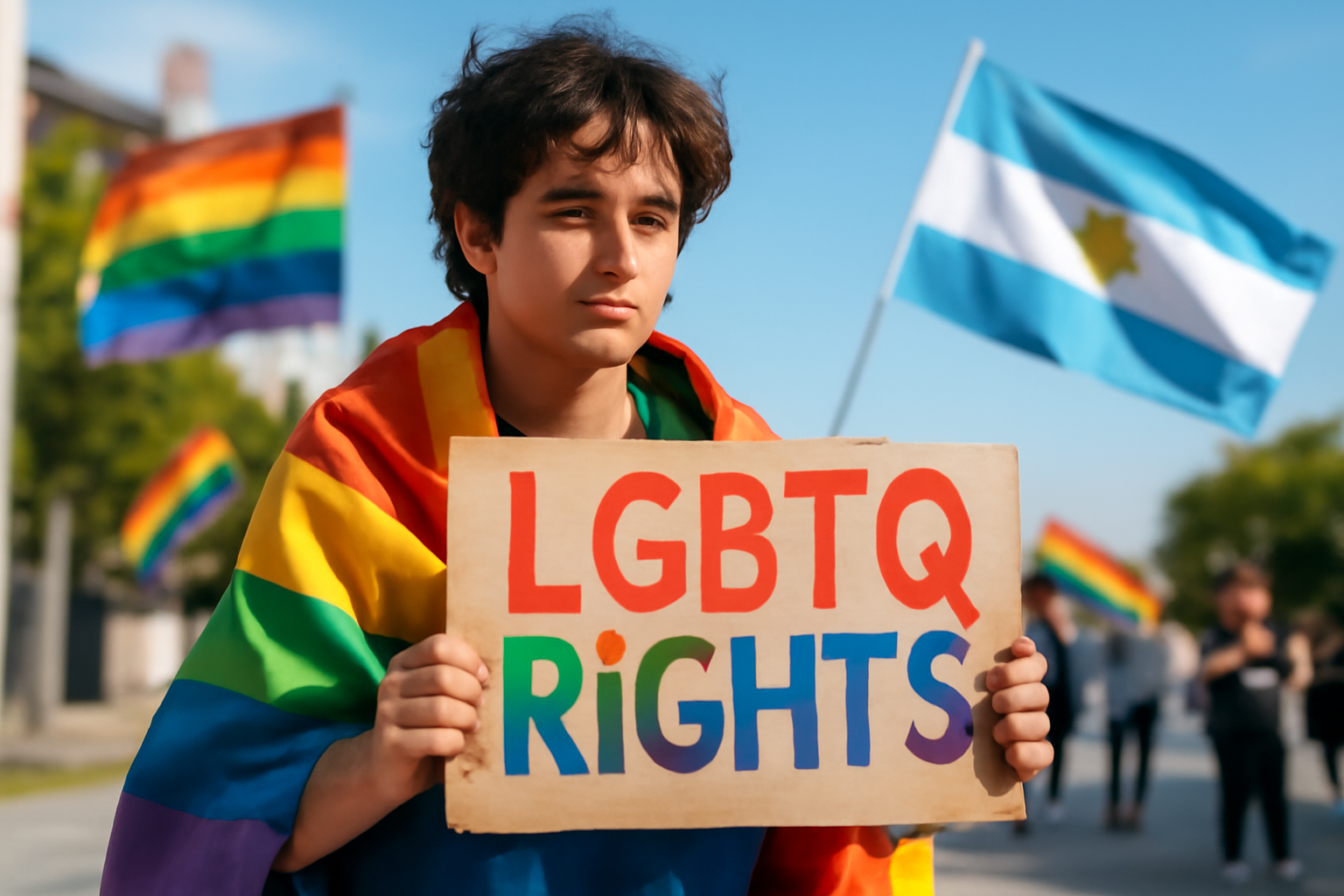
In the past year, Argentina has experienced significant shifts in its political landscape, particularly impacting the LGBTQ community. The election of a new government under President Javier Milei has introduced changes that have brought both concern and resistance among advocates for human rights and equality.
Initial Reforms and Their Implications
When Javier Milei assumed office, the atmosphere in Argentina's political realm changed drastically. His administration quickly initiated reforms that have affected long-standing human rights policies. These moves have generated apprehension among LGBTQ advocates, as they represent a departure from previous supportive measures.
One of the most notable actions taken by the administration was the closure of prominent institutions like the Ministry of Women, Gender and Diversity, along with the National Institute Against Discrimination, Xenophobia, and Racism (INADI). These entities were crucial in advocating for diversity and protecting the rights of marginalized groups, including the LGBTQ community. Their dismantling signals a shift away from governmental support for these causes.
Impact on Employment and Legal Protections
The withdrawal of these protections has left many LGBTQ individuals in vulnerable positions. Notably, new policies now allow employers to dismiss workers based on their sexual orientation or gender identity, with no legal recourse for those affected. This change disproportionately impacts transgender individuals, who often face discrimination in the workplace. The suspension of a trans-specific employment quota exacerbates these disparities, leaving many without job security.
Advocates like Congressman Esteban Paulón have voiced concerns over these developments, highlighting the increased difficulty in addressing discrimination without institutional support. Cases that once found resolution through INADI now risk being ignored or forgotten.
Social Climate and Rhetoric
In addition to policy changes, the administration's rhetoric has further intensified societal divisions. The government's stance is perceived as aligning with ultraconservative and religious factions, emboldening hateful speech and potentially paving the way for violence. Although Argentina has not yet seen widespread violence, the hostile discourse has created an atmosphere where prejudice can flourish unchecked.
Paulón notes that while Argentina is not currently experiencing systematic violence against LGBTQ individuals, the environment remains precarious. He emphasizes the power of words from influential figures, which can validate harmful actions.
Efforts to Counteract Regressive Measures
Despite these challenges, resistance to these policies is robust. Lawmakers and activists are actively working to counteract the negative impacts on the LGBTQ community. Proposals to ensure access to healthcare, inclusive education, and labor protections are currently being developed and put forth in legislative sessions.
On a broader scale, activists have strengthened ties with international organizations and advocates from neighboring countries, such as Brazil, Chile, and Mexico. These collaborations aim to raise awareness and garner support for preserving LGBTQ rights in Argentina.
A Hopeful Outlook Despite Difficulties
While the situation remains challenging, there is a sense of hope among advocates. The foundations of marriage equality and transgender rights are deeply embedded in the social fabric of Argentina. These achievements act as protective barriers against further regression. Paulón and others in the movement emphasize the importance of remaining organized and resilient in the face of adversity.
Ultimately, the current struggles serve as a potent reminder of the ongoing nature of the fight for equality. Social progress is not guaranteed, and continual effort is necessary to maintain and advance the rights of all individuals. As Argentina navigates this tumultuous period, the resolve of its advocates stands as a testament to the enduring spirit of the LGBTQ community.
In conclusion, the past year has seen significant challenges for LGBTQ rights in Argentina under new leadership. Yet, through persistent advocacy and international solidarity, there is hope for a future where diversity and equality are once again prioritized by the government.
Related Posts
Supreme Court to Address State Bans on Trans Women in Female Sports
The upcoming U.S. Supreme Court term promises to be a pivotal moment for transgender rights, as the nation's highest court has agreed to evaluate whether states have the authority to prohibit transgender women from participating in female sports competitions. This case, scheduled to be argued in the next term beginning October, is expected to have a significant impact on the future of sports inclu [...]
Megan Rapinoe and Sue Bird Announce Amicable Separation After Ten Years Together
In a heartfelt announcement that resonated deeply within the sports and LGBTQ+ communities, soccer star Megan Rapinoe and basketball legend Sue Bird have revealed their decision to part ways after nearly a decade together. The couple, who have been icons both on and off the field, shared the news with their fans through a joint statement on social media, expressing that the choice was made with mu [...]
Groundbreaking Ruling Ends Sodomy Ban for Police and Military in the Dominican Republic
The Constitutional Court of the Dominican Republic recently delivered a landmark decision on November 18th, ruling that the nation’s police and armed forces are not permitted to criminalize consensual same-sex relations among their personnel. This pivotal ruling is a significant stride towards equality and the protection of LGBTQ+ rights within these institutions. A Resounding Victory for Equal [...]