
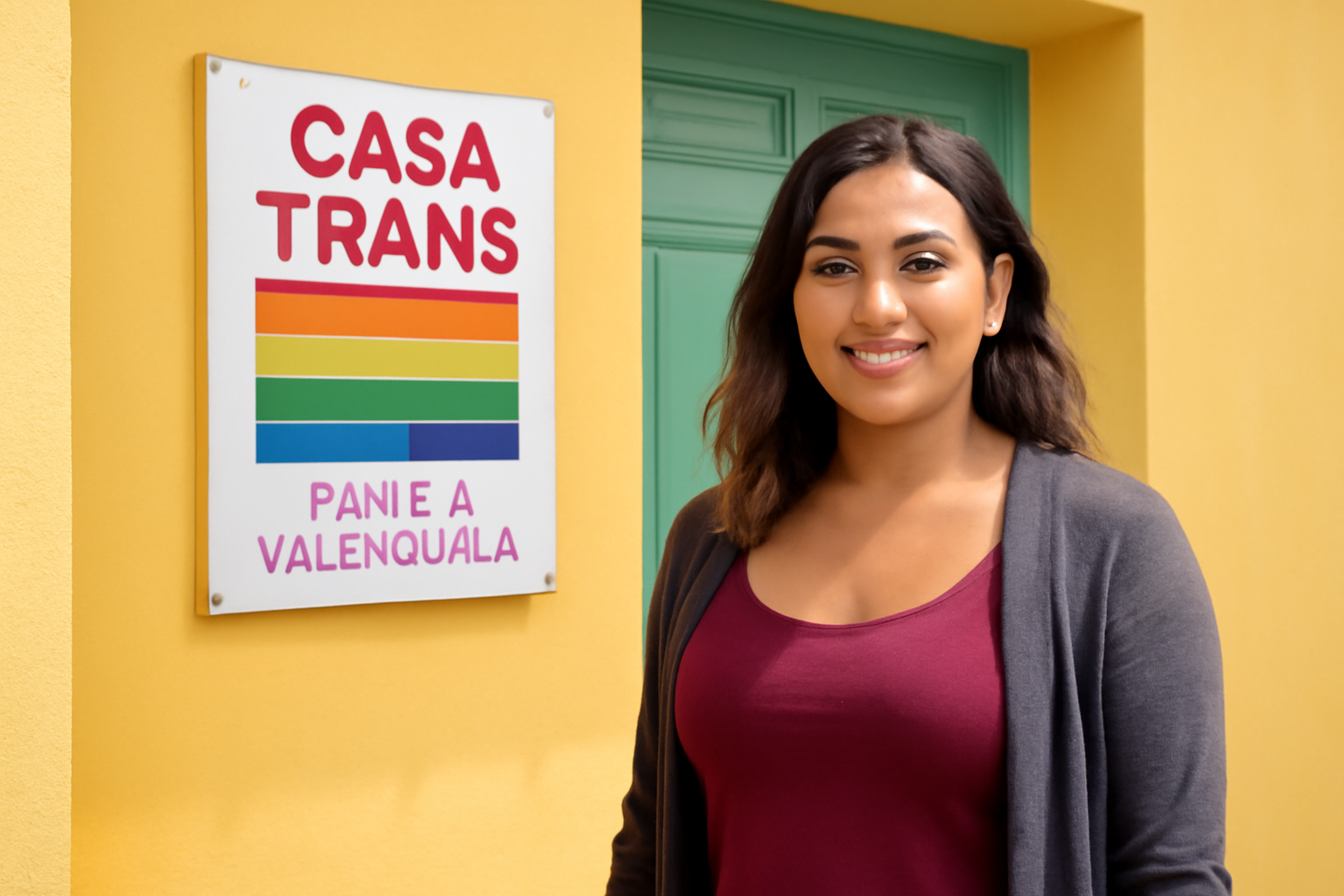
In Bolivia, where discrimination and exclusion remain significant challenges for the LGBTQ+ community, Casa Trans Pamela Valenzuela rises as a sanctuary and comprehensive resource center specifically for transgender individuals. Since its inception in 2022, Casa Trans has been more than just a place to stay; it provides vital services including legal, medical, psychological, and nutritional support.
Situated in the San Pedro neighborhood of La Paz, the Bolivian capital, Casa Trans opens its doors daily, offering a community kitchen where individuals can prepare their own meals. While anyone in need is welcome, the primary mission of Casa Trans is to assist transgender men and women.
Addressing Post-Pandemic Needs
Luna Humérez, president of the Organización de Travestis, Transgéneros y Transexuales Femeninas (Otraf) and director of Casa Trans, explained to us how the initiative started as a response to the exacerbated needs following the COVID-19 pandemic. Many transgender people found themselves without homes or income due to the loss of informal employment and sex work opportunities.
With support from the Global Fund, Humérez and fellow activists established a space that offers free meals and shelter. "The inspiration behind Casa Trans emerged in the aftermath of COVID," Humérez noted. "The pandemic hit the trans community hard, particularly in Latin America, where informal jobs and sex work were prevalent. Many were left struggling with housing and food shortages."
Expanding Support Services
Over time, the support services at Casa Trans have grown. "We've expanded our facilities and assembled a multidisciplinary team that includes social workers, psychologists, endocrinologists, general practitioners, legal advisors, and lawyers," Humérez said. "Our space has evolved greatly, allowing us to assist more individuals, not only those who identify as LGBTQ+, but anyone in vulnerable situations."
The challenges faced by LGBTQ+ people in Bolivia persist across health, education, employment, and housing sectors, despite some advances in legislation and social acceptance. A survey conducted by the Ombudsman's Office and the National Institute of Statistics revealed that over 60% of LGBTQ+ respondents have experienced discrimination, which includes verbal and physical abuse, as well as exclusion from schools and workplaces.
Additionally, 33% of respondents reported lacking access to healthcare, with sexual minorities and trans women being particularly vulnerable. A staggering 65% did not know how to navigate Bolivia's Unified Health System.
Legal and Social Challenges
Humérez highlighted that although Bolivia has seen improvements in legislation concerning transgender rights, such as the Gender Identity Law and Anti-discrimination Law, these measures have not been sufficient. "The current situation leaves the trans community without full rights compared to the cisgender population," Humérez explained. "It is crucial that we keep advocating for the state to recognize our rights fully, without restrictions."
Engagement in political processes is also important, as Humérez emphasized the need for LGBTQ+ activists to participate in Bolivia's upcoming elections. "We must be political actors in these new elections," she asserted.
Challenges in Securing Funding
Casa Trans not only provides shelter and meals but also offers legal guidance, specialized medical care, psychological support, and job training. Scholarships are available for those wishing to pursue higher education or technical training. However, the center struggles with funding, as Humérez noted that most of the staff are volunteers and direct funding is scarce.
The decision by the U.S. administration to freeze most foreign aid adds to these challenges. "With the current global political climate, securing financial support has become even more critical for the continuation of our efforts," Humérez said. "Our work is vital for addressing the inequalities and discrimination faced by the LGBTQ+ community in Bolivia."
The existence and ongoing labor of Casa Trans Pamela Valenzuela underscore the urgency of addressing these disparities and highlight the role of dedicated activists in fostering change and support for marginalized communities.
Related Posts
Supreme Court to Address State Bans on Trans Women in Female Sports
The upcoming U.S. Supreme Court term promises to be a pivotal moment for transgender rights, as the nation's highest court has agreed to evaluate whether states have the authority to prohibit transgender women from participating in female sports competitions. This case, scheduled to be argued in the next term beginning October, is expected to have a significant impact on the future of sports inclu [...]
Megan Rapinoe and Sue Bird Announce Amicable Separation After Ten Years Together
In a heartfelt announcement that resonated deeply within the sports and LGBTQ+ communities, soccer star Megan Rapinoe and basketball legend Sue Bird have revealed their decision to part ways after nearly a decade together. The couple, who have been icons both on and off the field, shared the news with their fans through a joint statement on social media, expressing that the choice was made with mu [...]
Groundbreaking Ruling Ends Sodomy Ban for Police and Military in the Dominican Republic
The Constitutional Court of the Dominican Republic recently delivered a landmark decision on November 18th, ruling that the nation’s police and armed forces are not permitted to criminalize consensual same-sex relations among their personnel. This pivotal ruling is a significant stride towards equality and the protection of LGBTQ+ rights within these institutions. A Resounding Victory for Equal [...]