
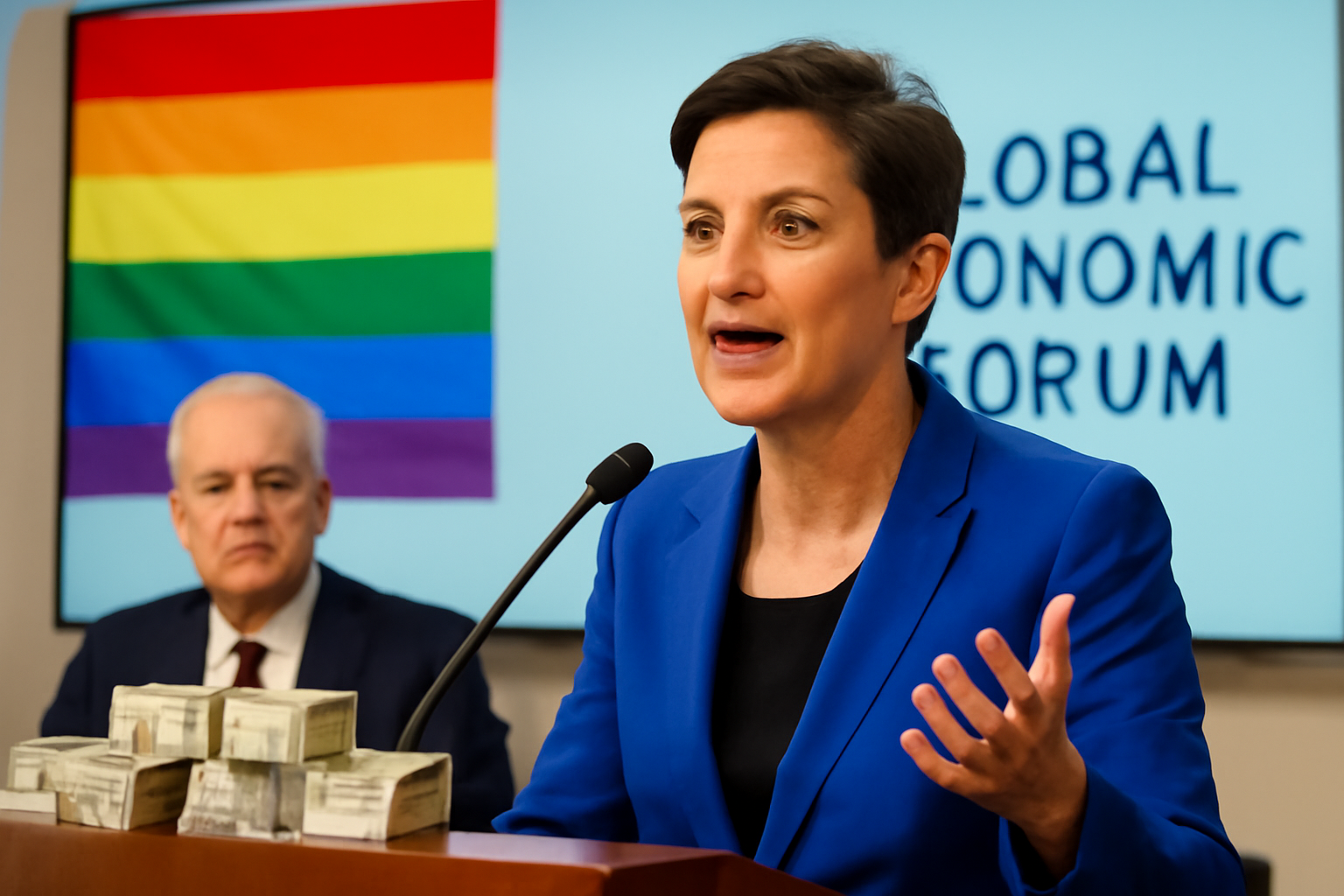
Economic Interests and LGBTQ+ Rights: A Tense Intersection
In a compelling address at a prominent global economic forum, the CEO of GLAAD spoke passionately about how certain business magnates appear to be leveraging societal divisions, particularly those involving LGBTQ+ rights, for financial gain. The message was clear: when influential figures exploit societal tensions for profit, it’s not just an ethical issue but also one that has tangible impacts on the lives of LGBTQ+ individuals worldwide.
The Influence of Wealth on Social Narratives
At the heart of the discussion was the assertion that some of the world’s wealthiest individuals and corporations have a vested interest in maintaining the status quo of division and hostility. By supporting policies or media narratives that foster discrimination or misunderstandings against LGBTQ+ communities, these billionaires may not only perpetuate inequality but also create an environment conducive to their business interests.
GLAAD's CEO highlighted how these economic powerhouses often influence public opinion and policy through strategic philanthropy, media ownership, and political lobbying. This influence shapes cultural and social narratives, often to the detriment of marginalized communities. By funding or supporting anti-LGBTQ+ legislation and rhetoric, these entities can manipulate markets and maintain a grip on populations that resist progressive changes.
Monetizing Division: A Deep Dive
One of the most worrying trends discussed was the commercialization of hate and division. In some cases, businesses profit directly from campaigns and products that target LGBTQ+ communities negatively. Through strategic marketing and alignment with certain political agendas, companies can appeal to particular demographics, thus boosting their sales and influence.
It's a strategy that not only harms the targeted groups but also perpetuates a cycle of division and mistrust. This approach can be seen in various industries, from fashion to tech, where branding and public statements are crafted to align with socially conservative viewpoints, garnering favor among right-leaning consumers.
Global Impacts and the Role of Advocacy
The global impact of these practices is significant. As multinational corporations wield substantial influence over global media and politics, their actions resonate across borders, affecting the rights and lives of LGBTQ+ individuals far beyond their home countries. By normalizing or trivializing discriminatory practices, these entities contribute to a global environment where LGBTQ+ rights are constantly under threat.
GLAAD’s CEO emphasized the importance of advocacy and awareness in combating these influences. By supporting LGBTQ+ organizations and promoting inclusive policies, individuals and businesses alike can push back against this monetization of hate. The path forward involves conscious consumerism, corporate responsibility, and unwavering support for marginalized communities.
Calls to Action for Allies and Corporations
In her closing remarks, the CEO called upon allies, both individuals and corporations, to take a stand against these manipulative tactics. She urged companies to review their policies and practices, ensuring that they do not inadvertently support discrimination. By fostering an inclusive company culture and actively denouncing hate, businesses can play a pivotal role in creating a more equitable society.
For individuals, becoming informed about where and how they spend their money is crucial. Supporting businesses that align with inclusive values and boycotting those that do not can send a powerful message. Advocacy, education, and community engagement are key tools in dismantling the financial structures that support division.
Ultimately, the speech served as a powerful reminder of the intersection between economic power and social justice. As the cultural landscape continues to evolve, the choices made by consumers and corporations will play a critical role in shaping a future where equality and inclusion are not just ideals but realities.
In conclusion, the conversation at the global forum has shed light on the urgent need to address how economic interests can manipulate social justice issues. By taking decisive action and fostering awareness, both consumers and corporations can contribute to a world where LGBTQ+ individuals are respected and valued.
Related Posts
Supreme Court to Address State Bans on Trans Women in Female Sports
The upcoming U.S. Supreme Court term promises to be a pivotal moment for transgender rights, as the nation's highest court has agreed to evaluate whether states have the authority to prohibit transgender women from participating in female sports competitions. This case, scheduled to be argued in the next term beginning October, is expected to have a significant impact on the future of sports inclu [...]
Megan Rapinoe and Sue Bird Announce Amicable Separation After Ten Years Together
In a heartfelt announcement that resonated deeply within the sports and LGBTQ+ communities, soccer star Megan Rapinoe and basketball legend Sue Bird have revealed their decision to part ways after nearly a decade together. The couple, who have been icons both on and off the field, shared the news with their fans through a joint statement on social media, expressing that the choice was made with mu [...]
Groundbreaking Ruling Ends Sodomy Ban for Police and Military in the Dominican Republic
The Constitutional Court of the Dominican Republic recently delivered a landmark decision on November 18th, ruling that the nation’s police and armed forces are not permitted to criminalize consensual same-sex relations among their personnel. This pivotal ruling is a significant stride towards equality and the protection of LGBTQ+ rights within these institutions. A Resounding Victory for Equal [...]