
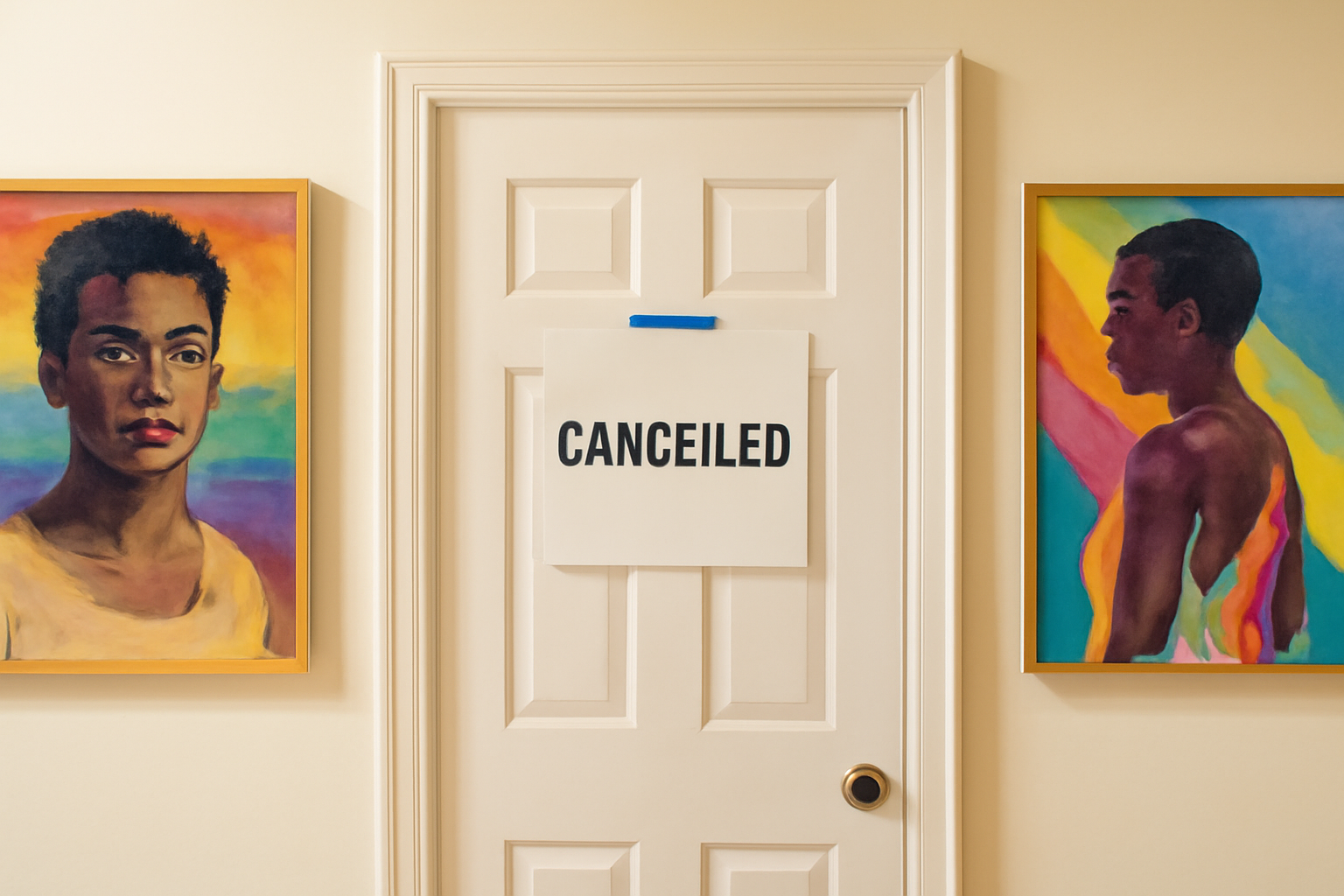
In a recent development that has sparked widespread concern, a prominent art gallery based in Washington D.C. has decided to cancel two upcoming exhibitions. These exhibitions were set to showcase the works of Black and LGBTQ+ artists, but have been unexpectedly called off following recent political actions.
The Art Museum of the Americas, operating under the aegis of the Organisation of American States (OAS), had been preparing to open these two significant exhibitions in March. However, both exhibitions have been abruptly cancelled, much to the dismay of the artists and curators involved.
Unexpected Cancellation
The curators of the cancelled exhibitions, Cheryl D. Edwards and Andil Gosine, were informed of this decision through phone calls from Adriana Ospina, the museum's director. The cancellation was announced without a detailed explanation, leaving both curators and artists in a state of confusion and disappointment.
Edwards' exhibition was to feature a majority of Black artists, showcasing their unique perspectives and talents, while Gosine's exhibition was planned to highlight the creative works of queer artists of color. Both exhibitions were anticipated to be landmarks in promoting diversity and inclusion in the art world.
Political Backdrop
This decision comes shortly after an executive order aimed at eliminating certain diversity, equity, and inclusion (DEI) initiatives within government-funded institutions. Issued by President Donald Trump, the order seeks to remove what it terms as "radical and wasteful" DEI programs, effectively cutting federal funding for such initiatives.
The OAS, as an international nonprofit, receives funding from multiple countries, with a significant portion coming from the United States. This indirect federal funding has compelled the museum to align its operations with the new executive order to maintain its financial stability.
Impact on the Arts Community
The cancellation of these exhibitions is not an isolated incident. Other renowned institutions like the National Gallery of Art and the Smithsonian have also closed offices dedicated to supporting racial minorities and diversifying their collections, in response to the same order. Additionally, collaborations such as the U.S. Marine Band’s project with young musicians of color have been discontinued.
Cheryl D. Edwards, in a statement to a leading publication, expressed her belief that the cancellation of her show is a direct consequence of the executive order. Her exhibition, titled "Before the Americas," aimed to explore the influences of the transatlantic slave trade on generations of art through works by African-American, Afro-Latino, and Caribbean artists.
Edwards emphasized the importance of DEI initiatives in giving a voice to underrepresented artistic communities and cautioned against the silencing of these voices due to political pressures.
Cultural Reflections
Andil Gosine, in a separate interview, shared his concerns about the preemptive nature of the museum’s decision. He highlighted a historical pattern of the arts being targeted by conservative forces and expressed disappointment in the OAS for seemingly anticipating and complying with the executive order rather than resisting it.
Gosine’s exhibition, "Nature's Wild," was years in the making and held a deep personal significance. It was intended to be a comprehensive exploration of identity and heritage, featuring a diverse array of mediums including sculpture, photography, video, and paintings from artists primarily within the LGBTQ+ community.
The cancellation of "Nature's Wild" has left Gosine and the participating artists disheartened, as they were eager to present their work to a broader audience and engage in cultural discourse through their art.
Conclusion
The cancellation of these exhibitions raises important questions about the future of diversity and inclusion in the arts under current political climates. It serves as a poignant reminder of the challenges faced by artists and institutions striving to promote inclusivity and representation in their work.
As the arts community grapples with these developments, it underscores the need for continued advocacy and support for diverse voices in art, ensuring that they have the opportunity to be seen and heard despite external pressures.
Related Posts
Supreme Court to Address State Bans on Trans Women in Female Sports
The upcoming U.S. Supreme Court term promises to be a pivotal moment for transgender rights, as the nation's highest court has agreed to evaluate whether states have the authority to prohibit transgender women from participating in female sports competitions. This case, scheduled to be argued in the next term beginning October, is expected to have a significant impact on the future of sports inclu [...]
Megan Rapinoe and Sue Bird Announce Amicable Separation After Ten Years Together
In a heartfelt announcement that resonated deeply within the sports and LGBTQ+ communities, soccer star Megan Rapinoe and basketball legend Sue Bird have revealed their decision to part ways after nearly a decade together. The couple, who have been icons both on and off the field, shared the news with their fans through a joint statement on social media, expressing that the choice was made with mu [...]
Groundbreaking Ruling Ends Sodomy Ban for Police and Military in the Dominican Republic
The Constitutional Court of the Dominican Republic recently delivered a landmark decision on November 18th, ruling that the nation’s police and armed forces are not permitted to criminalize consensual same-sex relations among their personnel. This pivotal ruling is a significant stride towards equality and the protection of LGBTQ+ rights within these institutions. A Resounding Victory for Equal [...]