
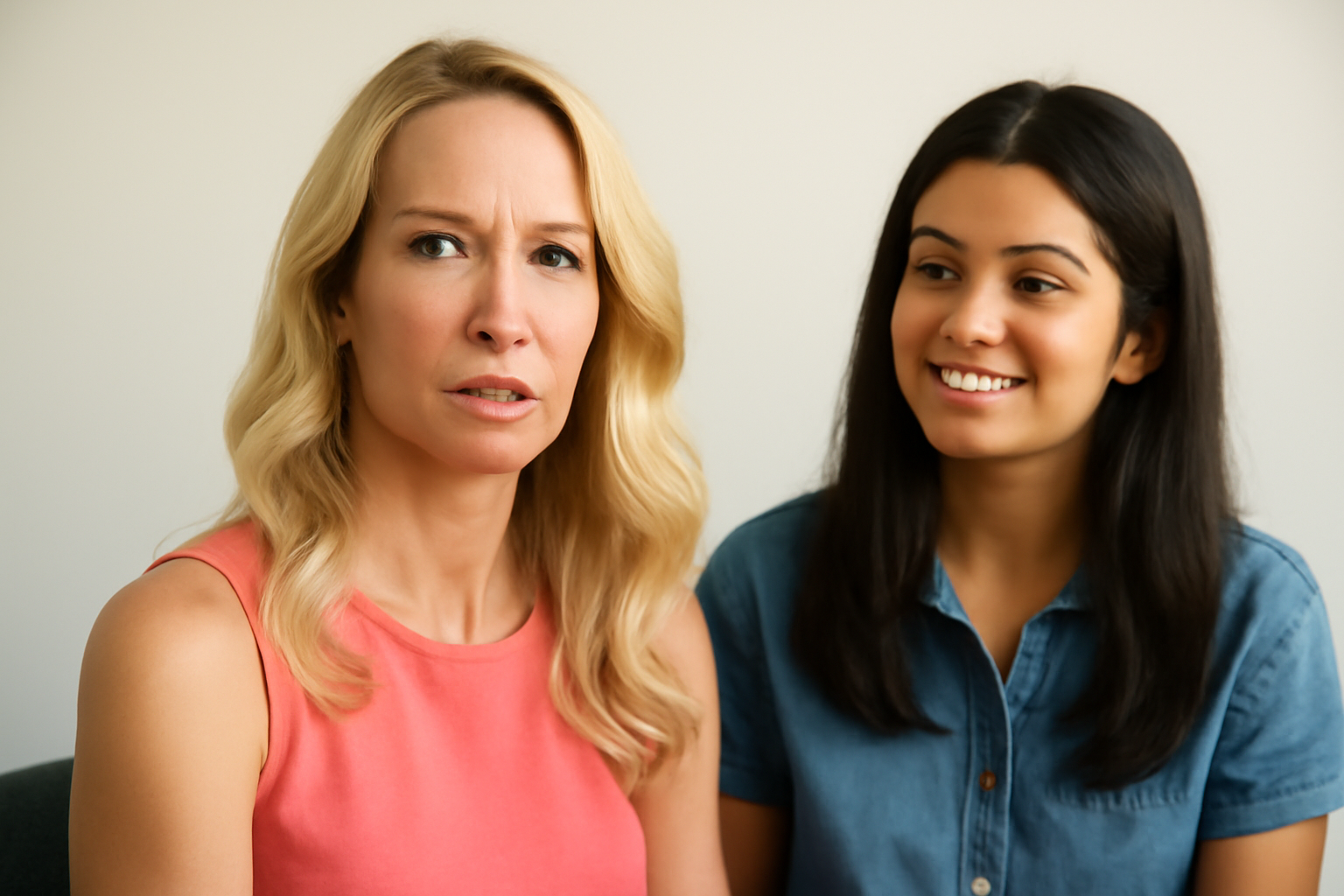
Keeping calm amid criticism
Anna Camp, beloved from her roles on both big and small screens, usually keeps her private life just that—private. But with her relationship's age difference making headlines, here she stands, a topic in living rooms everywhere. It's no surprise commentators have had a field day picking apart their dynamic like a bad TV plot.
Yet Anna's handled all this with remarkable composure. She's been clear: love doesn't have a maximum age limit, and a truly successful relationship isn't measured by years on a birth certificate. Instead, it's about mutual joy and respect. Isn't that what really matters?
Calling out Hollywood's hypocrisy
In addressing her critics, Anna spotlighted an uncomfortable truth: Hollywood's age-gap double standards. We see male actors dating younger women all too often receiving a round-of-applause moment or, at worst, a shrug. 'It's glamorous,' people say. Meanwhile, her situation? Not so much, according how it's perceived.
Anna talks about several male actors who've faced little criticism while dating younger women. This gender-based perception disparity underscores something fundamentally off in our culture. How are we okay with this?
Questioning society's rules
By speaking out, Anna Camp isn't just defending herself; she's pushing us all toward a deeper discussion about why these societal norms exist. Why do we find it easier, more palatable, when an older man dates a younger woman, but not vice versa?
She's part and parcel with a wider Hollywood movement aiming at challenging these outdated norms and promoting more fairness in how relationships are viewed. Through her efforts, Anna seeks acceptance and love in all its forms.
The power media has in shaping attitudes
Media representation wields incredible power over societal perceptions. Anna Camp's openness about her relationship challenges us toward more inclusive portrayals in our favorite shows, movies, and beyond. When media starts reflecting various relationship types honestly, it can help normalize them, reducing stigma along with it.
Anna's story reminds us all that love really should be about those involved in it—not public opinion. Her willingness in facing down public criticism underscores why respecting love in all its diverse forms should be a given, regardless if it defies traditional gender or age dynamics.
Looking toward a brighter future
As these conversations about age differences and Hollywood's double standards circulate, Anna Camp remains hopeful. She's all about envisioning a future where relationships are celebrated simply because they bring happiness—not picked apart due societal relics.
Her core message rings clear: love knows no age, and it certainly should face no judgment. By questioning what we've accepted as 'the norm,' Anna Camp's pushing us toward a much-needed cultural shift, one leaning hard toward equality and acceptance in love.
In wrapping up, Anna Camp's reaction isn't just about defending her personal choices. It's a broader call-out, a plea really, aiming at tearing down barriers between love and societal expectation. Hers, in essence, becomes a story about resilience, advocacy, and a belief that love can, and should, conquer these outdated societal judgments.
Questioning society's rules
By speaking out, Anna Camp isn't just defending herself; she's pushing us all toward a deeper discussion about why these societal norms exist. Why do we find it easier, more palatable, when an older man dates a younger woman, but not vice versa?
She's part and parcel with a wider Hollywood movement aiming at challenging these outdated norms and promoting more fairness in how relationships are viewed. Through her efforts, Anna seeks acceptance and love in all its forms.
The power media has in shaping attitudes
Media representation wields incredible power over societal perceptions. Anna Camp's openness about her relationship challenges us toward more inclusive portrayals in our favorite shows, movies, and beyond. When media starts reflecting various relationship types honestly, it can help normalize them, reducing stigma along with it.
Anna's story reminds us all that love really should be about those involved in it—not public opinion. Her willingness in facing down public criticism underscores why respecting love in all its diverse forms should be a given, regardless if it defies traditional gender or age dynamics.
Looking toward a brighter future
As these conversations about age differences and Hollywood's double standards circulate, Anna Camp remains hopeful. She's all about envisioning a future where relationships are celebrated simply because they bring happiness—not picked apart due societal relics.
Her core message rings clear: love knows no age, and it certainly should face no judgment. By questioning what we've accepted as 'the norm,' Anna Camp's pushing us toward a much-needed cultural shift, one leaning hard toward equality and acceptance in love.
In wrapping up, Anna Camp's reaction isn't just about defending her personal choices. It's a broader call-out, a plea really, aiming at tearing down barriers between love and societal expectation. Hers, in essence, becomes a story about resilience, advocacy, and a belief that love can, and should, conquer these outdated societal judgments.
Looking toward a brighter future As these conversations about age differences and Hollywood's double standards circulate, Anna Camp remains hopeful. She's all about envisioning a future where relationships are celebrated simply because they bring happiness—not picked apart due societal relics. Her core message rings clear: love knows no age, and it certainly should face no judgment. By questioning what we've accepted as 'the norm,' Anna Camp's pushing us toward a much-needed cultural shift, one leaning hard toward equality and acceptance in love. In wrapping up, Anna Camp's reaction isn't just about defending her personal choices. It's a broader call-out, a plea really, aiming at tearing down barriers between love and societal expectation. Hers, in essence, becomes a story about resilience, advocacy, and a belief that love can, and should, conquer these outdated societal judgments.
Related Posts
Supreme Court to Address State Bans on Trans Women in Female Sports
The upcoming U.S. Supreme Court term promises to be a pivotal moment for transgender rights, as the nation's highest court has agreed to evaluate whether states have the authority to prohibit transgender women from participating in female sports competitions. This case, scheduled to be argued in the next term beginning October, is expected to have a significant impact on the future of sports inclu [...]
Megan Rapinoe and Sue Bird Announce Amicable Separation After Ten Years Together
In a heartfelt announcement that resonated deeply within the sports and LGBTQ+ communities, soccer star Megan Rapinoe and basketball legend Sue Bird have revealed their decision to part ways after nearly a decade together. The couple, who have been icons both on and off the field, shared the news with their fans through a joint statement on social media, expressing that the choice was made with mu [...]
Groundbreaking Ruling Ends Sodomy Ban for Police and Military in the Dominican Republic
The Constitutional Court of the Dominican Republic recently delivered a landmark decision on November 18th, ruling that the nation’s police and armed forces are not permitted to criminalize consensual same-sex relations among their personnel. This pivotal ruling is a significant stride towards equality and the protection of LGBTQ+ rights within these institutions. A Resounding Victory for Equal [...]