
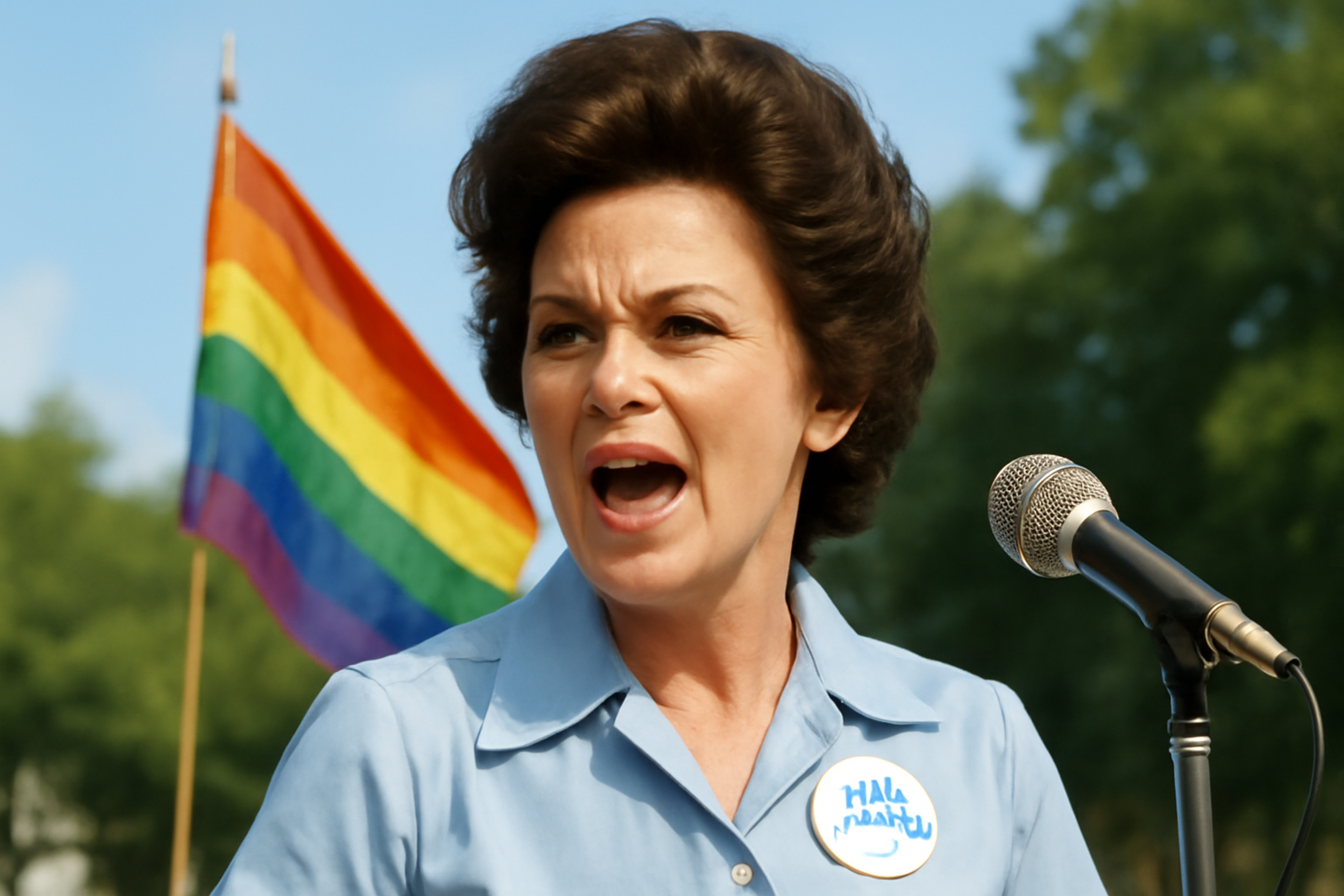
In 1977, Anita Bryant, who recently passed away, inadvertently became a pivotal figure in advancing LGBTQ+ rights through her anti-gay campaign in Miami. Her actions, intended to reverse progressive policies, ultimately served to galvanize the gay rights movement across the United States. Bryant’s campaign, known as “Save Our Children,” aimed to overturn Miami-Dade County’s policy that prohibited discrimination against gays. Her efforts, however, backfired spectacularly.
Two crucial misjudgments led to the downfall of Bryant’s crusade. First, she underestimated the burgeoning political clout and organizational strength of the gay rights movement nationwide. Secondly, her use of religious rhetoric to justify discrimination sparked widespread skepticism about her sincerity and integrity.
The Rise and Fall of Anita Bryant
Anita Bryant’s story begins with her crowning as Miss Oklahoma in 1958, propelling her into a career filled with public performances at state fairs, veterans’ events, and religious gatherings. She became a symbol of wholesome, Christian values, famously promoting Florida orange juice and attributing her vitality to her faith, claiming, “the Lord Jesus is my Vitamin C.”
In 1977, alongside her husband Bob Green, a former Miami radio DJ, Bryant launched the “Save Our Children” campaign. The campaign sought to reverse anti-discrimination measures protecting gay individuals, specifically targeting gay teachers in public schools. Bryant’s campaign rhetoric criticized “cowardly clergy” for their silence on gay rights issues, positioning herself as a vocal opponent of the LGBTQ+ community.
However, Bryant’s public persona began to unravel as questions about her authenticity emerged. By the late 1970s, she and her husband had authored several books espousing their Christian faith. When pressed about the authorship of these works, Bryant’s claim that “The Lord wrote my books” was undercut by the revelation that she employed a ghostwriter. This exposed a significant fracture in her public image, as her honesty was called into question.
Backlash and Unintended Consequences
In response to Bryant’s campaign, many journalists and public figures voiced their opposition. Celestine Sibley, a respected columnist for The Atlanta Journal, published a scathing critique titled “The Truth is I Don’t Care for Anita Bryant.” Sibley condemned Bryant’s sanctimonious demeanor and highlighted her disingenuous claims regarding her literary works.
Sibley’s column resonated with readers, prompting a flood of letters to the editor. Many respondents lauded Sibley’s bravery in challenging Bryant and expressed overwhelming support for her stance against the anti-gay campaign. One correspondent notably described Bryant as “a loudmouth ignoramus,” reflecting the public’s growing disillusionment with her message.
Within the LGBTQ+ community, Bryant’s actions inadvertently provided a rallying point for activism. Jean O’Leary, a former nun and leader in the National Gay and Lesbian Task Force, remarked that Bryant was “the best thing that ever happened to us.” Her presence as the face of the anti-gay rights movement unified and galvanized activists, solidifying a more organized and visible front for LGBTQ+ advocacy.
A Movement Strengthened
Public figures like Harvey Milk, a prominent gay rights activist from San Francisco, recognized the unintended benefits of Bryant’s campaign. In Randy Shilts’ book “The Mayor of Castro Street,” Milk is quoted as saying that Bryant “pushed the gay movement ahead and the subject can never be pushed back into darkness.” Her attempts to suppress the movement only served to highlight its resilience and determination.
Despite Bryant’s ominous predictions in the May 1978 issue of Playboy magazine, where she claimed to have survived threats from the LGBTQ+ community, her fears were unfounded. Bryant’s rhetoric of expecting to be “killed by homosexuals” proved to be hyperbolic and disconnected from reality.
By 1978, Bryant’s influence was waning, despite her ranking as a top religious influencer by Christian Century magazine. Her personal life was in turmoil; by 1980, she was divorced, struggling with mental health issues, and facing financial ruin. In an interview with Ladies’ Home Journal, Bryant acknowledged an attitude shift towards a “live and let live” philosophy regarding gay rights, an admission that marked a significant departure from her previous stance.
Her transformation, though too late to salvage her public career, symbolized a broader acceptance and humanization of LGBTQ+ individuals. As one journalist put it, Bryant’s newfound perspective was akin to her “Coming Out” as a human being.
Anita Bryant’s legacy is a paradox; her campaign against LGBTQ+ rights inadvertently became a catalyst for change, strengthening the movement and fostering greater solidarity and visibility. Her story serves as a reminder of the unintended consequences of bigotry and the resilience of those who fight for equality.
Related Posts
Supreme Court to Address State Bans on Trans Women in Female Sports
The upcoming U.S. Supreme Court term promises to be a pivotal moment for transgender rights, as the nation's highest court has agreed to evaluate whether states have the authority to prohibit transgender women from participating in female sports competitions. This case, scheduled to be argued in the next term beginning October, is expected to have a significant impact on the future of sports inclu [...]
Megan Rapinoe and Sue Bird Announce Amicable Separation After Ten Years Together
In a heartfelt announcement that resonated deeply within the sports and LGBTQ+ communities, soccer star Megan Rapinoe and basketball legend Sue Bird have revealed their decision to part ways after nearly a decade together. The couple, who have been icons both on and off the field, shared the news with their fans through a joint statement on social media, expressing that the choice was made with mu [...]
Groundbreaking Ruling Ends Sodomy Ban for Police and Military in the Dominican Republic
The Constitutional Court of the Dominican Republic recently delivered a landmark decision on November 18th, ruling that the nation’s police and armed forces are not permitted to criminalize consensual same-sex relations among their personnel. This pivotal ruling is a significant stride towards equality and the protection of LGBTQ+ rights within these institutions. A Resounding Victory for Equal [...]