
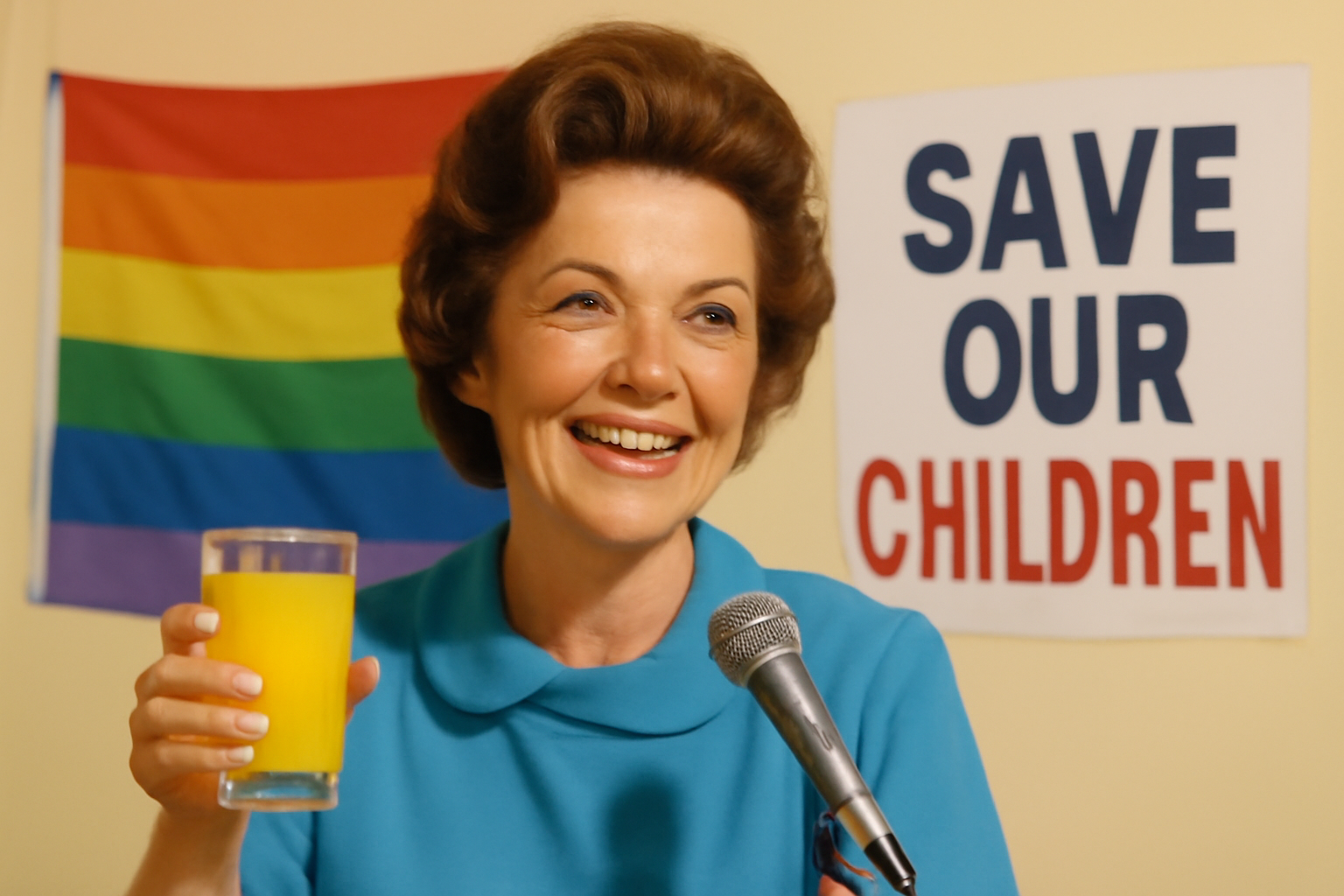
The 1970s were a time of social upheaval and transformation, particularly in the realm of LGBTQ+ rights. Amidst this backdrop, Anita Bryant, a former beauty queen and singer, emerged as an unlikely catalyst for change in the gay rights movement.
In 1977, Bryant, known for her performances at state fairs and her promotion of Florida orange juice, embarked on a controversial campaign titled "Save Our Children." The initiative aimed to repeal a newly passed ordinance in Miami-Dade County that prohibited discrimination based on sexual orientation. Bryant and her husband Bob Green, a former radio DJ, fronted this movement, raising concerns about the influence of gay teachers in public schools.
Religious Rhetoric and Public Perception
Bryant's campaign heavily relied on religious rhetoric, framing the battle against gay rights as a moral imperative. However, this approach backfired, as it drew attention to the dissonance between her public persona and personal integrity. Bryant's assertion that "The Lord wrote my books" was called into question when it became public knowledge that a ghostwriter was involved. This revelation damaged her credibility and intensified scrutiny of her motivations.
Veteran journalist Celestine Sibley of The Atlanta Journal editorialized against Bryant's sanctimonious stance, reinforcing the hypocrisy in Bryant's claims by juxtaposing them with heartfelt excerpts from Lord Alfred Douglas’s letters about his love for Oscar Wilde. Sibley’s column resonated with readers, who overwhelmingly voiced support for her criticism and courage in challenging Bryant's anti-gay crusade.
A Rallying Point for Activism
The fallout from Bryant's campaign was paradoxically beneficial for the LGBTQ+ community. Jean O’Leary, a notable figure in the National Gay and Lesbian Task Force, remarked that Bryant was "the best thing that ever happened to us." Her visibility and outspoken opposition provided a focal point for activists, energizing the community and bolstering its resolve to fight for equality.
In San Francisco, Harvey Milk, a pioneering gay rights leader, acknowledged Bryant's inadvertent contribution to the movement. He noted that her aggressive stance propelled the issue of gay rights to the forefront, ensuring it could no longer be ignored or marginalized. This increased awareness and activism marked a turning point in the struggle for LGBTQ+ rights.
The Personal and Political Impact
Despite her public bravado, Bryant’s personal life began to unravel as the decade drew to a close. In interviews, she admitted to experiencing intense pressures that led to personal turmoil, including suicidal thoughts and financial distress.
By 1980, Bryant had undergone significant personal changes, including a divorce from Bob Green. In a revealing interview with Ladies’ Home Journal, she adopted a more conciliatory tone, expressing an attitude of "live and let live" towards gays. This shift was seen by some as Bryant’s "Coming Out" of her own prejudices, marking an evolution in her perspective.
Legacy of a Complex Figure
Anita Bryant's story is one of complex legacy. While her initial intentions were to curtail the rights of the LGBTQ+ community, her actions inadvertently galvanized a generation of activists and allies. Her campaign underscored the power of collective resistance and the importance of standing up against bigotry and discrimination.
In reflecting on her life and impact, one can see that Bryant's journey mirrored the broader societal shifts occurring in America during those years. Her evolution from a symbol of opposition to a figure of reluctant acceptance underscores the power of dialogue and the potential for personal growth and change.
Ultimately, Bryant’s legacy is a reminder that even those who stand against progress can, in their own way, contribute to the advancement of justice and equality.
Related Posts
Supreme Court to Address State Bans on Trans Women in Female Sports
The upcoming U.S. Supreme Court term promises to be a pivotal moment for transgender rights, as the nation's highest court has agreed to evaluate whether states have the authority to prohibit transgender women from participating in female sports competitions. This case, scheduled to be argued in the next term beginning October, is expected to have a significant impact on the future of sports inclu [...]
Megan Rapinoe and Sue Bird Announce Amicable Separation After Ten Years Together
In a heartfelt announcement that resonated deeply within the sports and LGBTQ+ communities, soccer star Megan Rapinoe and basketball legend Sue Bird have revealed their decision to part ways after nearly a decade together. The couple, who have been icons both on and off the field, shared the news with their fans through a joint statement on social media, expressing that the choice was made with mu [...]
Groundbreaking Ruling Ends Sodomy Ban for Police and Military in the Dominican Republic
The Constitutional Court of the Dominican Republic recently delivered a landmark decision on November 18th, ruling that the nation’s police and armed forces are not permitted to criminalize consensual same-sex relations among their personnel. This pivotal ruling is a significant stride towards equality and the protection of LGBTQ+ rights within these institutions. A Resounding Victory for Equal [...]