
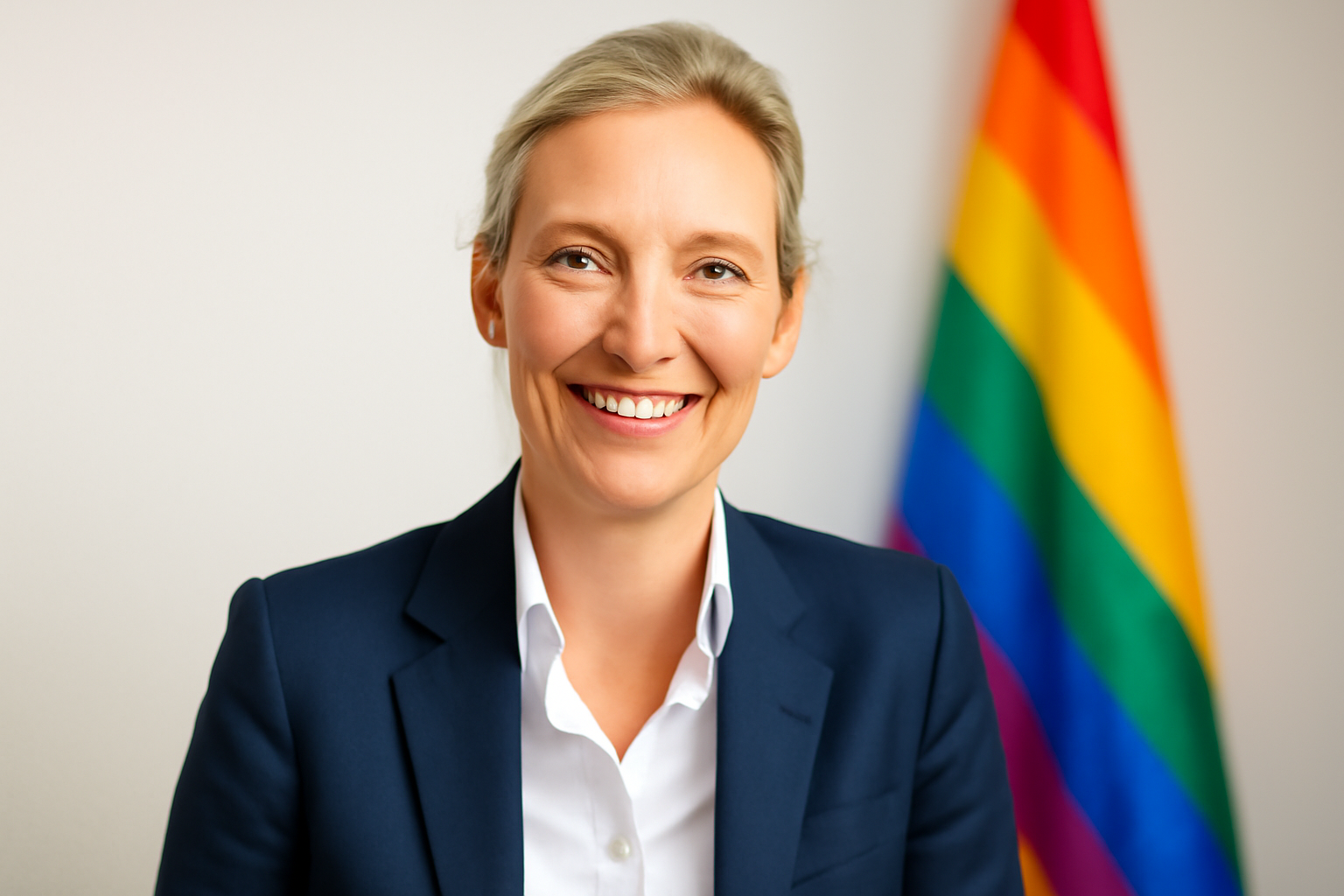
Germany recently witnessed a significant political development with the federal elections, which saw the conservative Christian Democrats (CDU) alongside their Bavarian sister party, the Christian Social Union (CSU), secure a victory, setting the stage for a coalition government. However, the unexpected rise of the Alternative for Germany (AfD), a far-right party, has raised eyebrows as it emerged as the country's second-largest political force.
The AfD's performance in the elections marks a historic moment since World War Two, being the first far-right party to achieve such standing in a national German election. Despite this, it remains doubtful that they will participate in forming the new government.
Central to the AfD's campaign are themes surrounding immigration, violent crime, and rising energy costs, all tied to the party's advocacy for "traditional family values." Founded in 2013 during the aftermath of the 2008 financial crisis, the AfD shifted its focus from economic issues to migration concerns, particularly in response to Germany's acceptance of over a million asylum seekers in 2015. Over the years, the party's support has surged, now spearheaded by a surprising figure: Alice Weidel, a lesbian woman raising two sons with her girlfriend.
Alice Weidel's Political Journey
Alice Weidel entered the political arena by joining the AfD in October 2013, initially drawn to the party by her opposition to the Euro. Her influence within the party has grown since then. By 2015, she had been elected to the AfD’s federal executive committee and has led the party’s parliamentary group in the Bundestag since 2017.
In 2022, Weidel reached a historic milestone by becoming the first lesbian to co-chair the AfD, alongside Tino Chrupalla. Her leadership is underscored by a complex personal history, as her grandfather, Hans Weidel, was a prominent Nazi judge during Adolf Hitler's regime, known for sentencing opponents of the Third Reich.
Personal Life and Relationship with Sarah Bossard
Alice Weidel has been in a relationship with Sarah Bossard since 2009. Bossard, a Sri Lankan-born film producer, was adopted by a Swiss couple and has built a career exploring themes that often conflict with the AfD's conservative stance. Together, Weidel and Bossard have adopted two sons, yet Weidel paradoxically praises the traditional family unit, advocating that children should ideally be raised by a mother and father.
Despite her long-term relationship with Bossard, Weidel has expressed that legalizing gay marriage is not a priority, and the couple remains unmarried after 17 years together. Weidel maintains that her personal life does not conflict with the AfD's traditional values.
Living Arrangements
The family resides in Einsiedeln, Switzerland, while Weidel divides her time between Berlin, where she works, and Switzerland, listing her official residence in Überlingen, Germany. Born in Gutersloh, Weidel's academic and professional journey took her to Bayreuth for studies and later to China, where she worked for Goldman Sachs and the Bank of China before entering politics.
Controversies and Political Stance
Alice Weidel is no stranger to controversy, often making headlines with her outspoken views. Initially interested in economic policies, she became an advocate for the party's far-right shift, emphasizing migration and nationalism. Her remarks about immigrants, which included derogatory stereotypes, drew criticism yet resonated with some right-wing supporters.
Weidel has called for "large-scale repatriation of foreigners" and controversially claimed that Germany is the actual victim in the Ukraine conflict. Her statements questioning the efficacy of Covid vaccines, skepticism about climate change, and support for the "great replacement" theory have been widely disputed.
In discussions with public figures like Elon Musk, Weidel has made historically inaccurate claims, such as describing Nazis as "not right-wing," which contradicts the historical persecution of communists and socialists under Nazi rule. Her recent interview on German broadcaster ARD further fueled debate when she referred to Germany's Holocaust remembrance culture as a "guilt cult," expressing annoyance at the association with her party’s Nazi past.
Weidel's leadership of the AfD continues to spark debates about the role of far-right politics in Germany's future and the contradictions within her personal and political life.
Related Posts
Supreme Court to Address State Bans on Trans Women in Female Sports
The upcoming U.S. Supreme Court term promises to be a pivotal moment for transgender rights, as the nation's highest court has agreed to evaluate whether states have the authority to prohibit transgender women from participating in female sports competitions. This case, scheduled to be argued in the next term beginning October, is expected to have a significant impact on the future of sports inclu [...]
Megan Rapinoe and Sue Bird Announce Amicable Separation After Ten Years Together
In a heartfelt announcement that resonated deeply within the sports and LGBTQ+ communities, soccer star Megan Rapinoe and basketball legend Sue Bird have revealed their decision to part ways after nearly a decade together. The couple, who have been icons both on and off the field, shared the news with their fans through a joint statement on social media, expressing that the choice was made with mu [...]
Groundbreaking Ruling Ends Sodomy Ban for Police and Military in the Dominican Republic
The Constitutional Court of the Dominican Republic recently delivered a landmark decision on November 18th, ruling that the nation’s police and armed forces are not permitted to criminalize consensual same-sex relations among their personnel. This pivotal ruling is a significant stride towards equality and the protection of LGBTQ+ rights within these institutions. A Resounding Victory for Equal [...]