
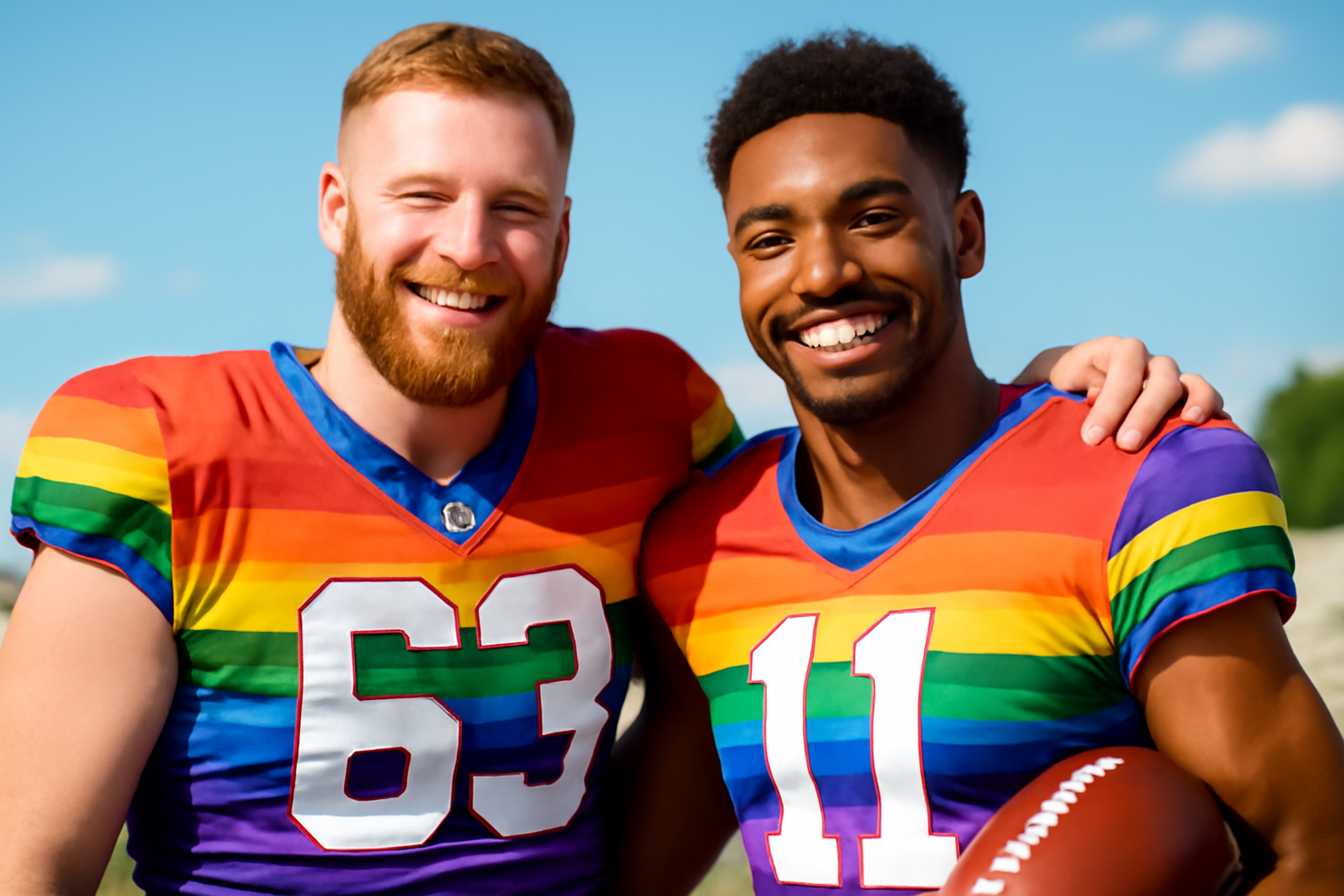
In the world of sports, particularly football, visibility and representation matter immensely. As more athletes come out publicly, it’s fascinating to see how technology, specifically AI, interprets and visualizes these identities. Football players who identify as LGBTQ+ are diverse, much like the sport itself, which features 300-pound linemen like Ryan O'Callaghan and fit, agile players like Wade Davis. The AI community has taken this diversity and created intriguing artistic interpretations of what "gay football players" might look like.
The Artistic Vision of AI: Creating 'Gay Football Player' Images
AI image generators now have a variety of real-world examples upon which to base their interpretations, thanks to the growing number of openly gay football players. These generators are often tasked with creating images of "gay football players," relying on both cultural stereotypes and artistic creativity to deliver their results.
One AI service, when asked to create an image of a "gay football player on a football field," produced what could be described as a handsome, realistic portrayal. This creation process is a fascinating blend of artistic interpretation and technological prowess.
The image showcased a football player who, regardless of his sexual orientation, many might find attractive. Adding flair to this depiction, the AI provided the player with a stylish six-pack and earrings when asked to visualize him shirtless, playing into popular aesthetics associated with style and physique.
Interpreting Confidence and Pride
Another AI, ChatGPT, presented a different approach. It highlighted elements like a chiseled jawline, a rainbow jersey, and vibrant stadium backdrops to convey the "gay" aspect of the football player. Confidence seemed to be a recurring theme, with descriptions emphasizing the player's pride and visibility in a traditionally heteronormative sport.
When tasked with creating a "shirtless" version of the player, ChatGPT incorporated adjectives like "confident" and "proud," subtly reinforcing the notion that being openly gay in football is an act of bravery and self-assurance. This is a sentiment shared by real-life athletes like Michael Sam, Carl Nassib, and Byron Perkins, who have all exemplified confidence in the face of societal norms.
Humorous and Creative Interpretations
On a lighter note, the AI tool Canva added a humorous twist to its creations. It generated images of players with fictitious team names and unconventional jersey numbers, like a player from team "Erasx" sporting the number "G." Such creative liberties taken by AI provide not only amusement but also highlight the flexibility and imagination inherent in AI-generated art.
These AI-generated depictions often lean towards portraying football players as fit, reflecting the typical agile positions such as receivers or linebackers. However, when asked to visualize a "gay lineman," the AI adhered to more traditional linemen characteristics, focusing on size and strength while still infusing elements of identity and expression.
A Nod to AI's Interpretation of LGBTQ+ Representation in Sports
It's intriguing to observe how AI interprets complex human identities and represents them visually. The recurring use of the jersey number "69" by different AI services when imagining a "gay lineman" is a curious trend that underscores a playful engagement with stereotypes.
The exploration of LGBTQ+ identities in sports through AI art is both a reflection of society's growing acceptance and a cheeky nod to the diversity within the sports community. As we continue to move forward, these AI creations offer a unique window into how technology views cultural identities, blending art with representation.
In summary, AI's artistic renditions of "gay football players" serve not only as a form of entertainment but also as a celebration of diversity and individuality in sports. They encourage us to rethink stereotypes and embrace a broader spectrum of what it means to be an athlete, regardless of sexual orientation.
For more stories on LGBTQ+ athletes and sports culture, join our community and subscribe to our newsletter to stay informed and engaged.
Related Posts
Supreme Court to Address State Bans on Trans Women in Female Sports
The upcoming U.S. Supreme Court term promises to be a pivotal moment for transgender rights, as the nation's highest court has agreed to evaluate whether states have the authority to prohibit transgender women from participating in female sports competitions. This case, scheduled to be argued in the next term beginning October, is expected to have a significant impact on the future of sports inclu [...]
Megan Rapinoe and Sue Bird Announce Amicable Separation After Ten Years Together
In a heartfelt announcement that resonated deeply within the sports and LGBTQ+ communities, soccer star Megan Rapinoe and basketball legend Sue Bird have revealed their decision to part ways after nearly a decade together. The couple, who have been icons both on and off the field, shared the news with their fans through a joint statement on social media, expressing that the choice was made with mu [...]
Groundbreaking Ruling Ends Sodomy Ban for Police and Military in the Dominican Republic
The Constitutional Court of the Dominican Republic recently delivered a landmark decision on November 18th, ruling that the nation’s police and armed forces are not permitted to criminalize consensual same-sex relations among their personnel. This pivotal ruling is a significant stride towards equality and the protection of LGBTQ+ rights within these institutions. A Resounding Victory for Equal [...]